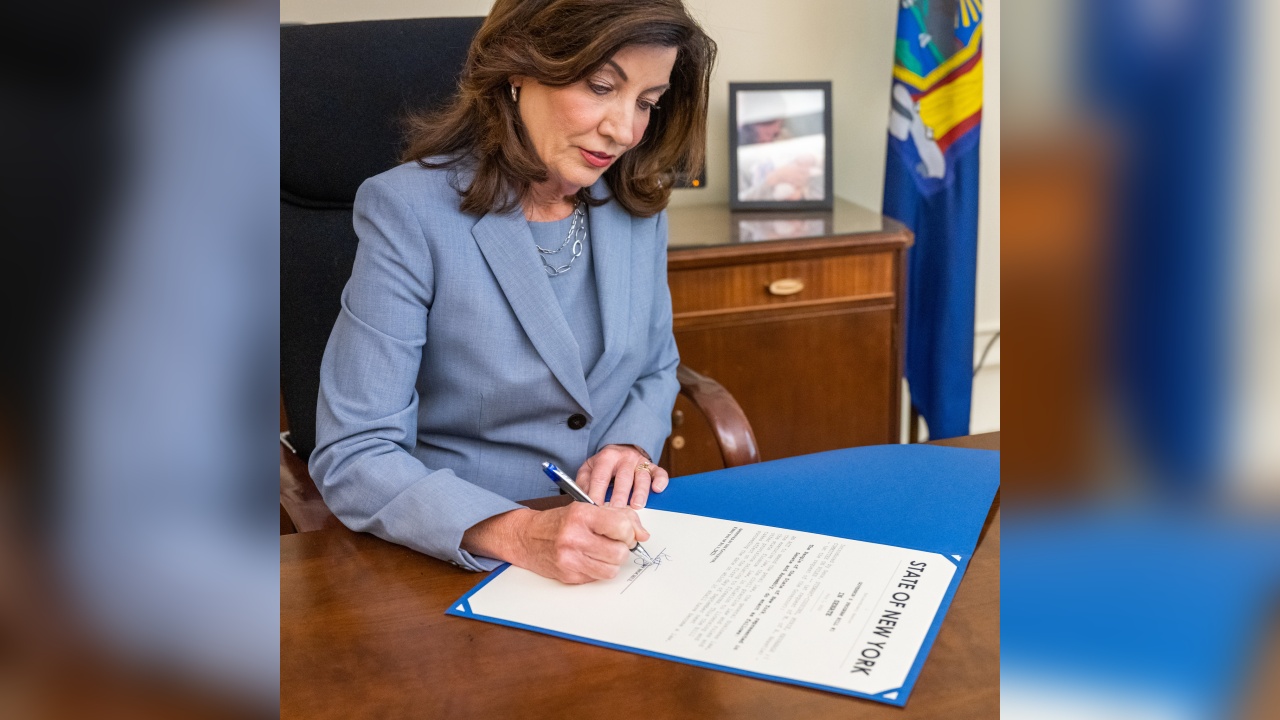
(WNY News Now) – New York – In celebration of Climate Week, Governor Kathy Hochul today announced $7 million in competitive grant funding for community-based, not-for-profit, and tribal organizations to support the construction, or renovation of existing facilities, to create community environmental education centers, which will offer classes and programs on environmental awareness. The centers must be located within or serve a disadvantaged community or an environmental justice community and will help inspire exploration, discovery, and learning about the environment.
“New York State’s innovative work to protect the environment and address climate change’s disproportionate impacts on disadvantaged communities includes ensuring the next generation of environmental advocates have access to nature where they live, work and play,” Governor Hochul said. “Environmental education centers supported by this funding will equip visitors with the knowledge they need to join the charge against climate change, protect our environment for future generations, and encourage people to discover and support local cultural preservation.”
New York’s Climate Leadership and Community Protection Act (Climate Act) recognizes that climate change doesn’t affect all communities equally and charged the Climate Justice Working Group with the development of criteria to identify disadvantaged communities to ensure frontline and otherwise under-resourced communities benefit from the state’s historic transition to cleaner, greener sources of energy, reduced pollution, cleaner air, and improved economic opportunities. Visit New York’s Climate Act website to view an interactive map and a list of disadvantaged communities statewide.
Funding for this grant opportunity is provided from the State’s Environmental Protection Fund (EPF) and is available to support capital costs of new construction or renovation proposals. Grants ranging from $250,000 to $3 million will be awarded to fund education centers that explore a broad range of topics such as urban ecology, environmental justice challenges, green technology, and urban environmental sustainability. Proposals may include capital costs, such as purchasing of building or land; construction or renovation; expansion or updating a facility; purchasing furniture, fixtures, and equipment; and purchasing technological hardware.
New York State Department of Environmental Conservation Interim Commissioner Sean Mahar said, “DEC recognizes that bolstering environmental education is critical to supporting real action to fight climate issues affecting disadvantaged and environmental justice communities statewide. Environmental education centers provide a variety of accessible programs and services for individuals, families, and groups and serve as valuable community assets where people gather to hold events, learn about cultural preservation and environmental stewardship, build community resilience, and engage in community climate action.”
Possible uses or programming for a center include:
- Education about indoor air pollution and modeling methods to reduce exposure to indoor air pollution;
- Education about environmental justice challenges;
- Cultural preservation and environmental stewardship;
- Green jobs training and education;
- Programs, information and exhibits that increase awareness and stewardship of the local environment;
- Models of sustainable development, including LEED Green Building Certification, green infrastructure, and agriculture;
- Extreme weather shelters with innovative architecture or engineering demonstrations;
- Research and monitoring programs, focusing on watershed issues, combined sewer overflow, vehicle emissions, energy generation, solid waste transfer activities and/or other environment issues;
- Community space for local community-based organizations, community events, and workshops;
- K-12 educational programming in STEAM that may include ecology, environmental harms/risks/issues, green technology, and environmental sustainability;
- College level electives in ecology, green energy technology and environmental sustainability; and
- Outdoor components such as community gardens or farms.
The deadline for all applications is 3 p.m. on Jan. 22, 2025. The request for applications (RFA) is only available online through The Statewide Financial System of New York (ny.gov) (SFS). Not-for-profit community-based organizations must be registered and prequalified in SFS to apply.




Leave a Reply