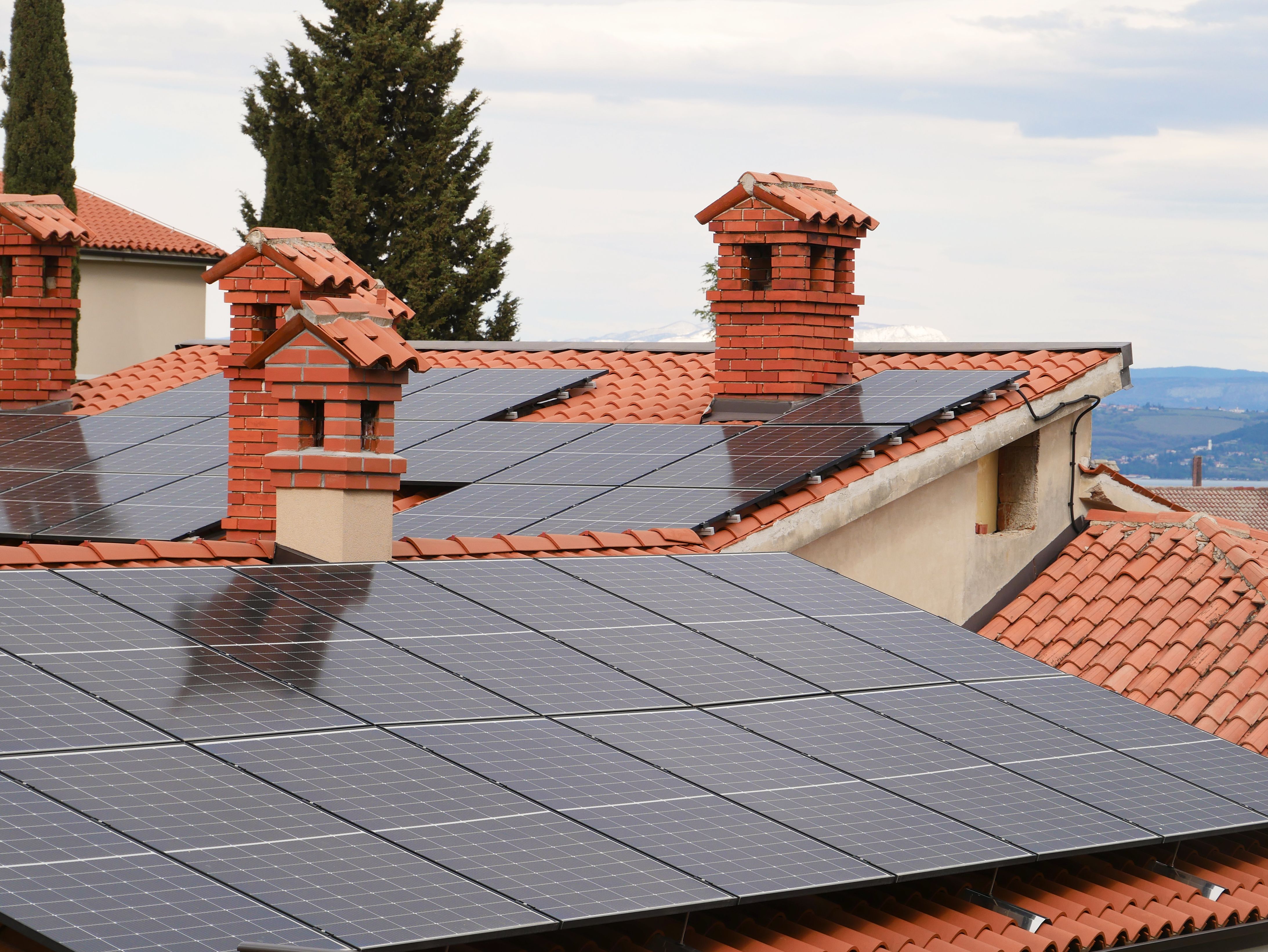
Roof orientation influences how much sunlight a solar array receives and when electricity is generated during the day. It affects panel layout, predicted annual output, and how well production matches household demand.
A south-facing roof is often productive in the UK, but it is not the only workable option. East, west, southeast, and southwest aspects can also support a worthwhile design when other conditions are suitable.
What Does Each Roof Direction Mean for Solar Generation?
Orientation describes the compass direction toward which a roof slope faces. The installer considers it alongside pitch, shading, usable area, roof condition, and local weather data.
Property owners planning solar installations across Edinburgh, East Lothian, and wider Scotland can consult Renew-Able Solutions for a site-specific assessment. A tailored design is more useful than judging solar suitability from roof direction alone.
- South-Facing Roofs
A south-facing array receives strong solar exposure across much of the day. It will often provide the highest estimated annual output in a UK location.
Maximum yearly generation can be useful when the goal is total production. Actual results still depend on pitch, shade, equipment, and local conditions.
- Southeast-Facing Roofs
A southeast-facing array begins producing earlier and can perform strongly through the morning. Its peak arrives before that of a due-south system.
Earlier solar production may suit households with morning electricity demand. Annual generation can remain useful when the roof has limited shade.
- Southwest-Facing Roofs
A southwest-facing array receives more sunlight later in the day. Its output profile may extend further into the afternoon and early evening.
Later daily generation can match demand after occupants return home. The benefit depends on seasonal daylight and the household’s actual usage pattern.
- East-Facing Roofs
East-facing panels generate most strongly during the morning. Their output then falls as the sun moves toward the western side of the property.
Morning-focused output may serve early appliances, home working, or vehicle charging. Total annual production is usually lower than an ideal south-facing array.
- West-Facing Roofs
West-facing panels begin their strongest generation later than east-facing panels. They can contribute during afternoon and early evening use.
Afternoon solar output may increase direct consumption in some homes. The installer should compare this benefit with the expected reduction in annual yield.
- East-West Roofs
Panels can be divided across opposite roof slopes. One group produces earlier, while the other contributes more strongly later in the day.
A broader generation profile may support self-consumption. It can also make use of roof space when a suitable south-facing slope is unavailable.
- North-Facing Roofs
A north-facing slope generally receives less direct sunlight in the UK. Production may be too low to support a strong financial case.
Reduced solar exposure does not automatically settle every project, but it demands careful modelling. Alternative roofs, outbuildings, or ground mounting may be better.
What Else Should Be Checked Alongside Orientation?
A well-oriented roof can still perform poorly if it has heavy shade, limited usable space, structural problems, or an unsuitable pitch. Direction is one part of the survey.
- Roof pitch and how it affects solar exposure
- Chimneys, trees, dormers, and nearby buildings
- Seasonal movement and duration of shadows
- Condition and expected life of the roof covering
- Structural capacity and appropriate mounting system
- Safe access, scaffolding, and working space
- Cable routes to the inverter and consumer unit
- Planning, electrical, and network requirements
How Does Orientation Influence System Design?
The designer should model each usable roof face separately. A mixed array may require different electrical arrangements from a simple group of panels facing one direction.
- It Changes Predicted Annual Yield
Direction affects how much solar radiation reaches the panel surface throughout the year. Software can estimate output using location and roof data.
A professional solar panel installation in Edinburgh should include orientation-based generation estimates rather than relying on panel capacity alone.
- It Shapes the Panel Layout
Some roofs have several slopes, dormers, rooflights, chimneys, or narrow sections. Orientation helps determine which areas justify using.
A survey-led panel layout balances output with safe clearances and mounting needs. Filling every available gap is not always the strongest design.
- It Affects Inverter Configuration
Panels facing different directions experience different solar conditions. Placing them on suitable inverter inputs can help each group operate effectively.
Correct string configuration matters when an array uses several aspects. Microinverters or optimisers may also be considered for complex layouts or shading.
- It Changes the Daily Output Curve
A south-facing array may produce a stronger midday peak. East-west systems tend to distribute generation across a longer part of the day.
The shape of production influences direct use. Two systems with similar capacities can interact differently with appliances, batteries, and export.
- It Influences Battery Sizing
Orientation affects when surplus electricity becomes available. A battery may store midday or afternoon generation for later household use.
Storage should follow measured demand, not orientation alone. Capacity, charge power, tariff, export value, and seasonal generation all affect the decision.
- It Can Affect EV Charging
An east-facing array may offer more morning output, while a west-facing array may align better with a car returning in the afternoon.
Solar-matched charging depends on when the vehicle is parked at home. Smart charger controls can adjust demand to available generation.
- It Changes the Financial Forecast
Annual production affects potential bill reduction and export income. Directly used electricity and exported electricity may have different values.
A realistic savings estimate should combine orientation with tariff rates and consumption. Higher generation does not always mean the shortest payback.
What Should a Solar PV Proposal Explain?
A professional proposal should show how the roof survey led to the recommended layout. It should not present panel quantity as the only measure of quality.
- Compass direction of every roof face being used
- Pitch and usable dimensions of each section
- Shading assumptions and any mitigation proposed
- Estimated annual generation for the designed array
- Expected morning, midday, and afternoon output pattern
- Panel, inverter, and optional optimiser arrangement
- Assumptions about household use, storage, and export
- Roof, access, electrical, and network work included
Conclusion
Roof orientation shapes when PV panels generate electricity and how much they produce across a year. South-facing arrays often maximize annual output, while east-west layouts can spread generation across the day. Direction is only one design factor. A reliable proposal should also assess pitch, shading, usable area, roof condition, electricity demand, inverter design, access and local constraints.



Leave a Reply