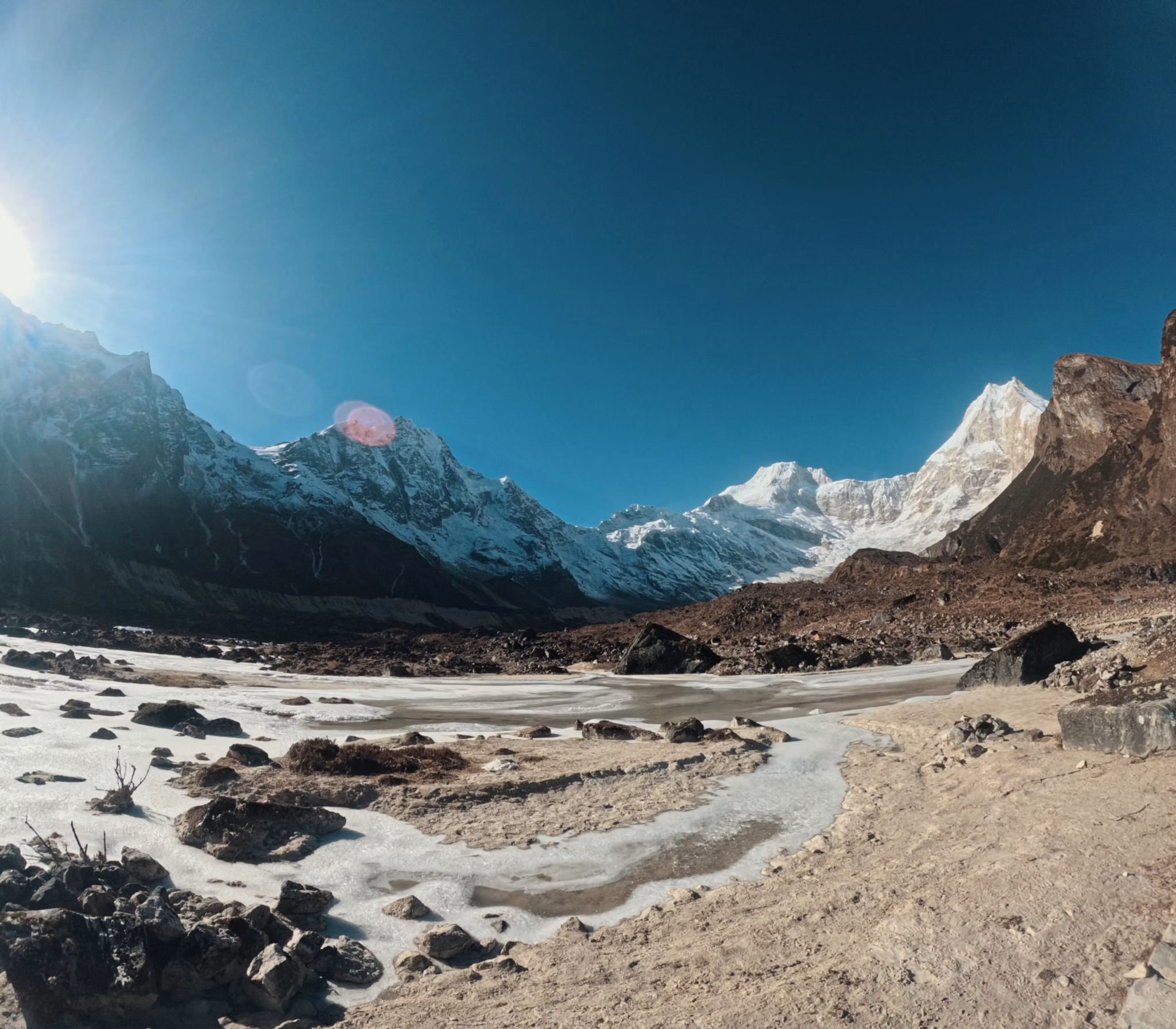
The Manaslu region rewards travelers who enjoy the journey as much as the destination. The trail begins in warm river valleys, follows narrow paths through forested hills, and gradually enters high mountain settlements where Tibetan Buddhist traditions remain part of everyday life. But planning this trek takes more thought than simply choosing a route and booking a flight to Nepal. The Manaslu Circuit Trek Nepal is a demanding high-altitude journey around Mount Manaslu, the world’s eighth-highest mountain at 8,163 metres. Adding the Tsum Valley creates a longer adventure, with extra walking days, remote monasteries, and traditional villages that offer a different perspective on life in the Himalayas.
The main decision is how much time you have and what you want from the experience. The circuit alone provides a challenging mountain crossing, while the extended route gives you more time to explore the cultural landscape before heading towards Larkya La Pass.
What Makes the Manaslu Region Different?
Manaslu offers a combination of changing landscapes, mountain scenery, and cultural experiences. Unlike a trek focused mainly on reaching one famous viewpoint, this route gradually reveals its character as you move between settlements. The lower Budhi Gandaki valley features rivers, waterfalls, terraced fields, and forested slopes. Farther north, the landscape becomes more alpine, with stone-built villages, prayer flags, monasteries, and increasingly dramatic views of the surrounding peaks.
Mount Manaslu remains an important presence throughout the journey, although cloud cover and the shape of the valley mean that views change from one section to another. The region is also less developed for tourism than some of Nepal’s more established trekking destinations. That can make the experience feel quieter, but it also means fewer conveniences, basic accommodation in some settlements, and a greater need to plan carefully.
Manaslu Circuit Trek Nepal: Understanding the Route
The classic circuit follows the Budhi Gandaki River upstream before turning west across Larkya La and descending towards the Marsyangdi valley. Most itineraries begin near Machha Khola and finish around Dharapani, where the trail connects with the Annapurna region. Along the way, trekkers commonly pass through Jagat, Deng, Namrung, Lho, Samagaun, and Samdo. Each settlement marks a gradual change in elevation, scenery, and local culture. Samagaun is particularly important because it provides time to adjust to the altitude and explore nearby surroundings. Depending on the itinerary, trekkers may take a rest day or make an acclimatization walk towards higher viewpoints.
The main physical challenge comes near the end of the route. Larkya La Pass sits at approximately 5,106 metres, although reported elevations vary slightly between maps and measurements. Crossing it usually involves a long day that begins early, often in cold and potentially icy conditions. A typical circuit takes around 14–18 days, depending on the starting point, walking pace, rest days, and transport arrangements. Shorter itineraries exist, but reducing the schedule too much can leave little room for acclimatization or weather delays.
Manaslu Circuit with Tsum Valley Trek: Why Add the Extra Days?

Tsum Valley branches away from the main Manaslu route near the lower part of the trekking corridor. Instead of continuing directly along the circuit, trekkers head into a more secluded valley known for its Buddhist heritage, traditional settlements, and mountain surroundings. The additional walking changes the character of the trip. The circuit is largely about following a long mountain route towards a high pass. Tsum Valley gives you more time to explore village life, visit monasteries, and understand the cultural traditions of the region. Villages such as Chumling, Chhokang Paro, and Nile may feature in the itinerary, depending on the route selected. Mu Gompa, near the upper end of the valley, is another important destination on extended itineraries.
Tsum Valley is not simply a scenic detour. Its religious traditions and local customs are part of what makes the area distinctive. Visitors should treat monasteries and sacred places respectfully, follow local guidance, and ask permission before photographing people or religious activities.
The Manaslu Circuit with Tsum Valley Trek generally requires around 18–22 days, although longer arrangements are possible. The final duration depends on the number of nights spent in the valley, acclimatization plans, and the time needed to complete the circuit safely. For travelers with limited holidays, the classic circuit may be the more practical option. Those with three weeks or more can consider the combined route without having to rush through the cultural sections.
Route Comparison at a Glance
| Feature | Manaslu Circuit Trek | Manaslu Circuit with Tsum Valley Trek |
| Typical Duration | 14–18 days | 18–22 days |
| Main Highlight | Larkya La Pass crossing | Tsum Valley monasteries, plus Larkya La Pass |
| Key Villages | Jagat, Deng, Namrung, Lho, Samagaun, Samdo | Chumling, Chhokang Paro, Nile, Mu Gompa, plus the main circuit villages |
| Cultural Focus | Present, but secondary to the mountain crossing | Stronger, with dedicated time in a secluded Buddhist valley |
| Physical Demand | High, due to the pass crossing and overall distance | Higher, due to the added walking days before the pass |
| Best Suited For | Travelers with a shorter holiday window | Travelers who want deeper cultural immersion alongside the trek |
Note: these figures reflect the general ranges described in this guide rather than a fixed, official schedule, since exact durations vary by operator and itinerary.
When Is the Best Time to Trek?
Spring and autumn are generally the most suitable seasons for trekking in the Manaslu region.
Spring, from March to May, brings gradually warmer conditions at lower elevations and the possibility of clear mountain views. Snow may still affect the high pass early in the season, so conditions should be checked before departure. Autumn, particularly October and November, is popular for its relatively stable weather and clear skies. Nights become cold at higher elevations, and accommodation can be busier during peak trekking periods. Winter brings colder temperatures and a greater chance of heavy snow around Larkya La. Crossing the pass may become difficult or impossible when conditions deteriorate.
The monsoon season, broadly June to September, brings rain, muddy paths, leeches in some lower sections, and a greater risk of landslides or road disruption. Mountain weather is unpredictable, however, and conditions vary between elevations and years. Rather than relying on a calendar alone, ask about recent trail conditions, snow at the pass, and the reliability of road access shortly before travelling.
How Difficult Is the Trek?
The Manaslu Circuit is generally considered challenging, mainly because of its duration, cumulative walking effort, and altitude. You do not normally need technical mountaineering skills for the standard trekking route, but good preparation is essential. Expect several hours of walking on most trekking days, with some stages taking longer because of steep ascents, uneven trails, river crossings, or weather. The pass-crossing day is especially demanding and may require eight to ten hours or more, depending on conditions and individual pace.
Adding Tsum Valley increases the total distance and number of trekking days. The additional section may not involve the same high pass as the main circuit, but the extra walking can still leave you tired before the most demanding part of the journey.
Prepare with regular hill walking, stair climbing, and endurance exercise. Practice walking for several consecutive days if possible, and use the footwear you intend to take on the trek.
A useful planning rule is to choose an itinerary that allows you to walk at a steady pace rather than racing between overnight stops. Fitness helps, but it does not eliminate the risks associated with altitude.
Day-by-Day Itinerary Overview (Indicative)
The exact day count on any itinerary depends on the operator, starting point, and weather, but the general flow of the journey tends to follow the same phases:
| Phase | Approximate Villages Covered | What to Expect |
| Lower Valley (Early Days) | Machha Khola towards Jagat and Deng | River valleys, forested trails, gradual elevation gain |
| Tsum Valley Detour (Combined Trek Only) | Chumling, Chhokang Paro, Nile, Mu Gompa | Monastery visits, traditional villages, a slower cultural pace |
| Mid Valley | Namrung towards Lho | Increasingly alpine scenery, closer mountain views |
| High Valley and Acclimatization | Samagaun and Samdo | Rest day or acclimatization walk, preparation for the pass |
| Pass Crossing | Samdo towards Larkya La and beyond | Long, demanding day over the highest point of the route |
| Descent | Towards Dharapani | Gradual descent into the Marsyangdi valley, trek conclusion |
This overview is meant to show the shape of the journey rather than fixed daily distances or overnight elevations, which vary between itineraries and should be confirmed with your trekking agency.
Acclimatization Matters More Than Speed
As the trail climbs above 3,000 metres, your body needs time to adjust to lower oxygen availability. Headache, nausea, dizziness, unusual fatigue, and disturbed sleep can be symptoms of altitude illness. Samagaun is a common acclimatization stop on the circuit. A sensible itinerary may include a rest day with a short walk, depending on your health, previous altitude experience, and the guide’s assessment.
Walking slowly, drinking regularly, eating enough, and avoiding excessive exertion can help you manage the demands of the trek. However, these measures cannot guarantee protection against altitude illness.
Never continue climbing when symptoms suggest worsening altitude sickness. Severe breathlessness at rest, confusion, loss of coordination, or a deteriorating condition requires urgent assistance and descent. Tell your guide about symptoms early rather than waiting for them to become severe. When reviewing an itinerary, look beyond the total number of days. Check the overnight elevations, how quickly the route gains height, and what contingency plans are available if someone becomes unwell.
Permits, Guides, and Practical Arrangements
The Manaslu region includes restricted trekking areas, so permit arrangements need to be handled before entering the relevant zones. Trekkers generally need a restricted-area permit along with the applicable conservation-area permits. The combined Tsum Valley route involves additional permit requirements.
Rules, fees, and eligibility conditions can change. Confirm the current requirements with Nepal’s immigration authorities or a registered trekking agency before finalizing your budget. Foreign visitors should also verify the current guide and group requirements. A registered agency can arrange the necessary permits, organize a licensed guide, and help coordinate transport and accommodation.
Travelers comparing itineraries with Adventure Great Himalaya should ask for a clear breakdown of included services, permit charges, guide arrangements, porter support, meals, accommodation, and road transport.
Road access to the trailhead can change because of construction, landslides, and seasonal conditions. Leave flexibility around arrival and departure dates, particularly if you have an international flight soon after the trek.
Accommodation, Food, and What to Pack
Most of the route uses teahouses or local trekking lodges. Facilities vary between villages, and rooms at higher elevations may be basic. During busy periods, availability can become limited, especially at the final overnight stop before the pass. Meals commonly include dal bhat, noodles, rice dishes, soups, potatoes, and other simple options. Eating enough is important because cold weather, long walking days, and altitude can reduce your appetite. Pack warm layers, waterproof outerwear, broken-in trekking boots, gloves, a hat, sunglasses, sunscreen, a headlamp, and a reusable water bottle. A sleeping bag suitable for cold mountain nights is useful, even when lodges provide blankets.
Carry a personal first-aid kit and any necessary medication. Discuss altitude-related precautions with a qualified healthcare professional before travelling, especially if you have existing medical concerns.
Cash is also important because reliable card payments and ATMs should not be expected throughout remote sections of the route.
Should You Choose the Circuit or the Combined Trek?
The right choice depends on the balance you want between physical challenge, cultural exploration, and available time.Choose the classic Manaslu Circuit if you want to complete the mountain loop, cross Larkya La, and keep your holiday within a more manageable timeframe. Consider the combined trek of traditional villages, Buddhist monasteries, and a slower journey through a remote valley matter as much to you as the high mountain crossing. The additional days give the cultural experience more room to develop, but they also increase the physical demands and overall cost. Before deciding, compare the complete itineraries rather than relying on the advertised duration alone. Look at overnight elevations, acclimatization days, road transfers, and the arrangements for delays or emergencies.
A Final Thought Before Planning
The Manaslu region is best approached with enough time to appreciate both its mountain landscapes and its communities. The classic circuit offers a rewarding high-altitude challenge, while the Tsum Valley extension adds a deeper cultural dimension and more days away from the main trail.
Plan around realistic walking days, proper acclimatization, current permit requirements, and a little flexibility. Those practical decisions can make the difference between rushing to finish and having the time to appreciate the journey through one of Nepal’s most distinctive trekking regions.
Frequently Asked Questions
How many days are needed for the Manaslu Circuit Trek Nepal?
Allow approximately 14–18 days for a typical circuit itinerary, including travel and acclimatization arrangements. The exact schedule depends on the starting point, route conditions, and the amount of flexibility built into the trip.
How long does the Manaslu Circuit with Tsum Valley Trek take?
Many combined itineraries take around 18–22 days. The route may take longer if you include additional cultural visits, rest days, or contingency time for weather and transport delays.
Is the Manaslu trek suitable for beginners?
A healthy beginner with good fitness may be able to complete it with suitable preparation and support, but it is not an ideal first trek for someone unaccustomed to long mountain walks. The altitude, remote setting, and demanding pass crossing require careful planning.
What is the highest point on the Manaslu Circuit?
The highest point on the standard circuit is Larkya La Pass, approximately 5,106 metres above sea level. Snow, ice, and weather can make the crossing significantly more difficult than the elevation figure alone suggests.
Do I need a guide and permits?
Yes, the route has restricted-area regulations and specific permit requirements. Current guide, group, and permit rules should be confirmed with Nepal’s authorities or a registered trekking agency before departure.


Leave a Reply