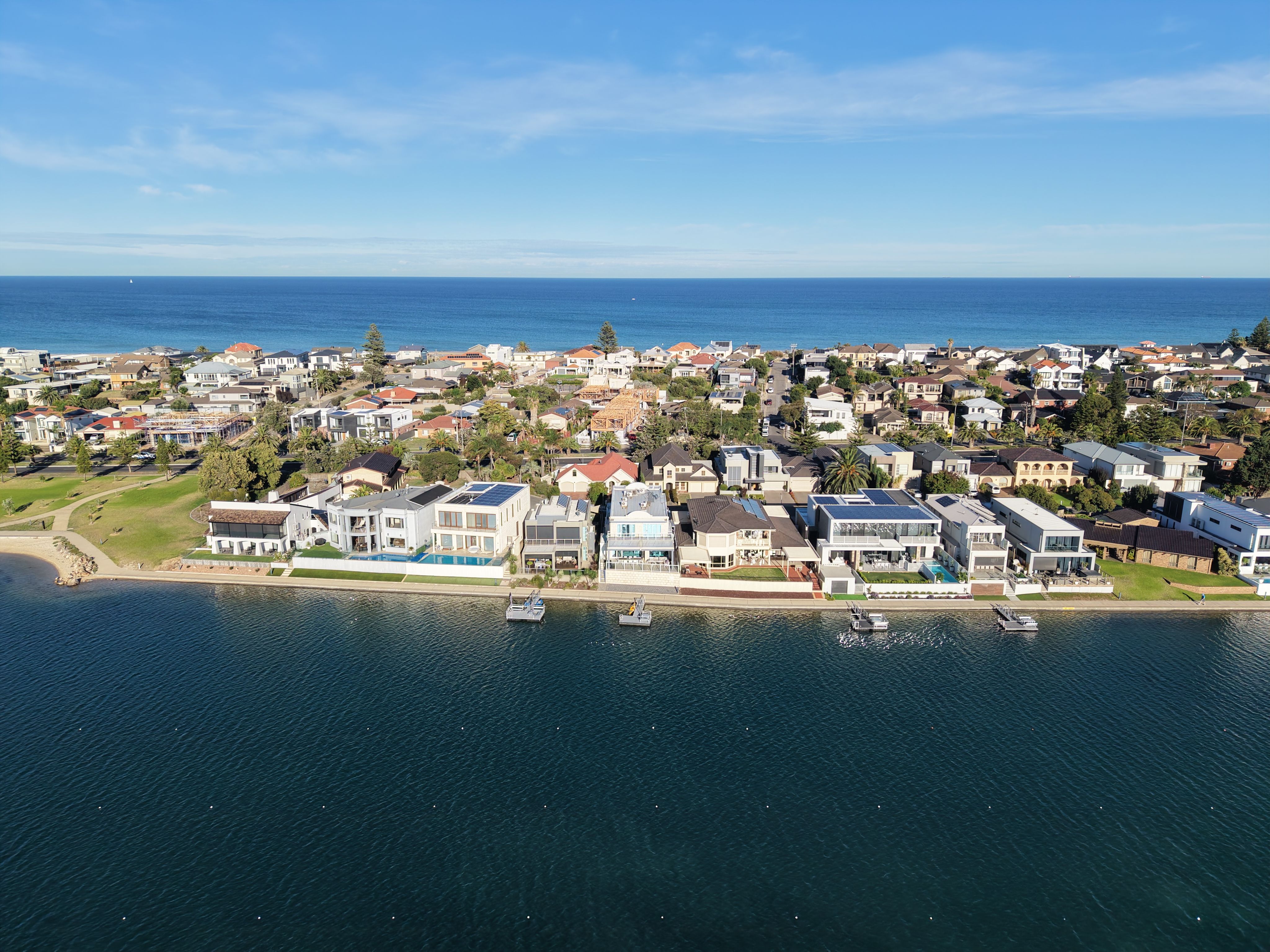
I spent three weekends last spring driving the same stretch of Sarasota with clients who couldn’t decide between a bayfront lot on Longboat Key and a newer build out near Palmer Ranch. Same budget. Same number of bedrooms. Completely different lives. That gap, the one between salt air and sidewalk, is where most Sarasota buying decisions actually get made.
Here’s what I tell people when they ask which side of the line is smarter: coastal Sarasota holds value for reasons that have nothing to do with views, and inland subdivisions win on a different scorecard entirely. This piece breaks down both, so you can pick your side with your eyes open.
What actually drives coastal value in Sarasota
Waterfront and near-water property carries a premium in almost every coastal market in the country. That’s not a Sarasota quirk. It’s the intersection of scarcity and demand, and Sarasota has a very particular version of it: the barrier islands, the bayfront, the keys, and the mangrove buffers that sit between them. Scarcity is the engine. You can build another subdivision off Fruitville Road. You can’t build another Longboat Key. Every lot that fronts the Gulf or sits a short walk from the bay is, by definition, a one-off. When supply is fixed and the market grows, prices don’t drift up so much as they get pushed.
Then there’s the amenity stack. Walkability to a marina, boutique shopping, and dinner is worth real money to a certain kind of buyer. So is the simple fact that a gated bayfront community like Aqua by the Bay or a Gulf-front enclave like 360 North sells a lifestyle you can’t replicate a few miles inland. You’re not buying square footage. You’re buying a morning routine. And here’s the part people underestimate: the salt air itself creates a maintenance premium. Coastal homes need more attention to exteriors, hardware, and finishes. That higher carrying cost acts as a filter. It tends to concentrate ownership among buyers who can absorb it, which keeps the neighborhood stable.
The inland case, and why it’s stronger than people admit
Inland Sarasota and the eastern corridor get dismissed too fast. A newer home in a community like Arbor Lakes on Palmer Ranch, or something near Artistry with quick access to I-75, offers things a 1970s beach cottage never will. Start with the boring stuff. Construction quality and layout are usually better because you’re buying a home built to current standards instead of one that’s been patched for fifty years. You get more storage, more garage, more closet, and a floor plan that assumes two people work from home.
Then there’s commute math. If your job sits anywhere north or south along I-75, an inland address turns a two-hour slog into a twenty-minute drive. That’s not a small thing. It’s the difference between a house you live in and a house you just sleep in. Schools matter too, and they’re a legitimate inland advantage in specific corridors. Several Palmer Ranch and east Sarasota communities sit in highly rated school zones, which pulls in families who’d otherwise be looking at the coast and then quietly choosing the suburbs instead.
Flood exposure is the other lever. Inland parcels generally sit outside the coastal high-hazard zones, and that changes your insurance picture, your elevation requirements, and how you sleep during a named storm. According to the National Oceanic and Atmospheric Administration, storm surge and coastal flooding are the leading weather-related threats to life and property along the U.S. coastline. Inland living doesn’t erase that risk, but it does move you further from the front edge of it.
Who actually belongs on the coast
Coastal Sarasota isn’t for everyone, and I’d rather tell you that than sell you a view you’ll resent in August. You’re a good fit for the coast if you prioritize daily water access over square footage, if you’d rather walk to dinner than drive, if you’re comfortable with higher carrying costs for insurance, maintenance, and repairs, and if you’re buying for the long hold rather than a quick flip. Coastal property rewards patience. It punishes people who buy on a whim and need to sell in eighteen months.
You should lean inland if you want newer construction, a shorter commute, a larger home for the same money, or a lower-maintenance ownership experience. There’s no shame in that. Plenty of buyers start the search dreaming about the Gulf and end it happily in a Palmer Ranch backyard with a screened pool.
Some buyers split the difference. Central Sarasota neighborhoods like Arboreal sit a short drive from downtown and the beaches, with I-75 close enough for commuting. You give up the postcard and keep most of the convenience. That middle ground is where I’d personally land if I wanted both, because you rarely regret a fifteen-minute drive and you very often regret a two-hour one.
Waterfront, near-water, and dry land: know your tier
Before you tour anything, figure out which tier you’re shopping. It changes your budget, your insurance quote, and your resale story.
| Tier | Typical Setting | What It Costs You |
|---|---|---|
| Direct waterfront | Gulf-front or bay-front lots, barrier islands | Highest price, highest insurance and upkeep |
| Near-water | Minutes from a bay or beach, inland of the dunes | Moderate premium, easier maintenance |
| Inland | Subdivisions east of the trail, near I-75 | Lower insurance, newer homes, longer beach drive |
If you’re building a shortlist, do these four things in order. Pull the flood zone for every address before you fall in love with the photos. Get a real insurance quote before you make an offer, not after. Drive the commute at 8 a.m. on a Tuesday, not on a Sunday afternoon. And check the community’s HOA rules on rentals, because a maintenance-free neighborhood like Barrington Woods plays by different rules than a bayfront condo tower.
The demand curve behind all of this
None of this exists in a vacuum. Florida has been one of the fastest-growing states in the country for years, and Sarasota County has absorbed a meaningful share of that inflow. According to the U.S. Census Bureau, Florida consistently ranks among the top states for annual population gains. More people moving in, fixed coastal supply, and a limited number of bayfront lots. That’s the whole story in one sentence.
The counterweight is infrastructure. Roads, utilities, and drainage all have to keep pace with growth, and inland corridors are where most of that expansion happens. According to the Environmental Protection Agency, stormwater runoff is one of the leading sources of water quality problems in developed coastal areas. That’s a real consideration for anyone buying near a bay or canal, and another reason newer inland communities with modern drainage systems attract buyers who’ve done their homework.
This is where local guidance stops being optional. Zoning overlays, flood designations, and community-specific restrictions vary block to block, and a brokerage that has worked the same coastline for decades knows which streets flood and which ones just look like they might. A firm like Candy Swick Real Estate operates in exactly this pocket of the market, which is the kind of local depth that turns a generic search into a specific shortlist.
Picking your side
Coastal Sarasota wins on scarcity, lifestyle, and long-hold appreciation. Inland Sarasota wins on space, newness, commute, and carrying cost. Neither is a mistake. The mistake is buying the coast for the view and then resenting the maintenance, or buying inland for the price and then realizing you wanted to smell salt air every morning. So before you tour another house, answer one question honestly: are you buying a location or a lifestyle? Your answer narrows the map faster than any search filter will.



Leave a Reply