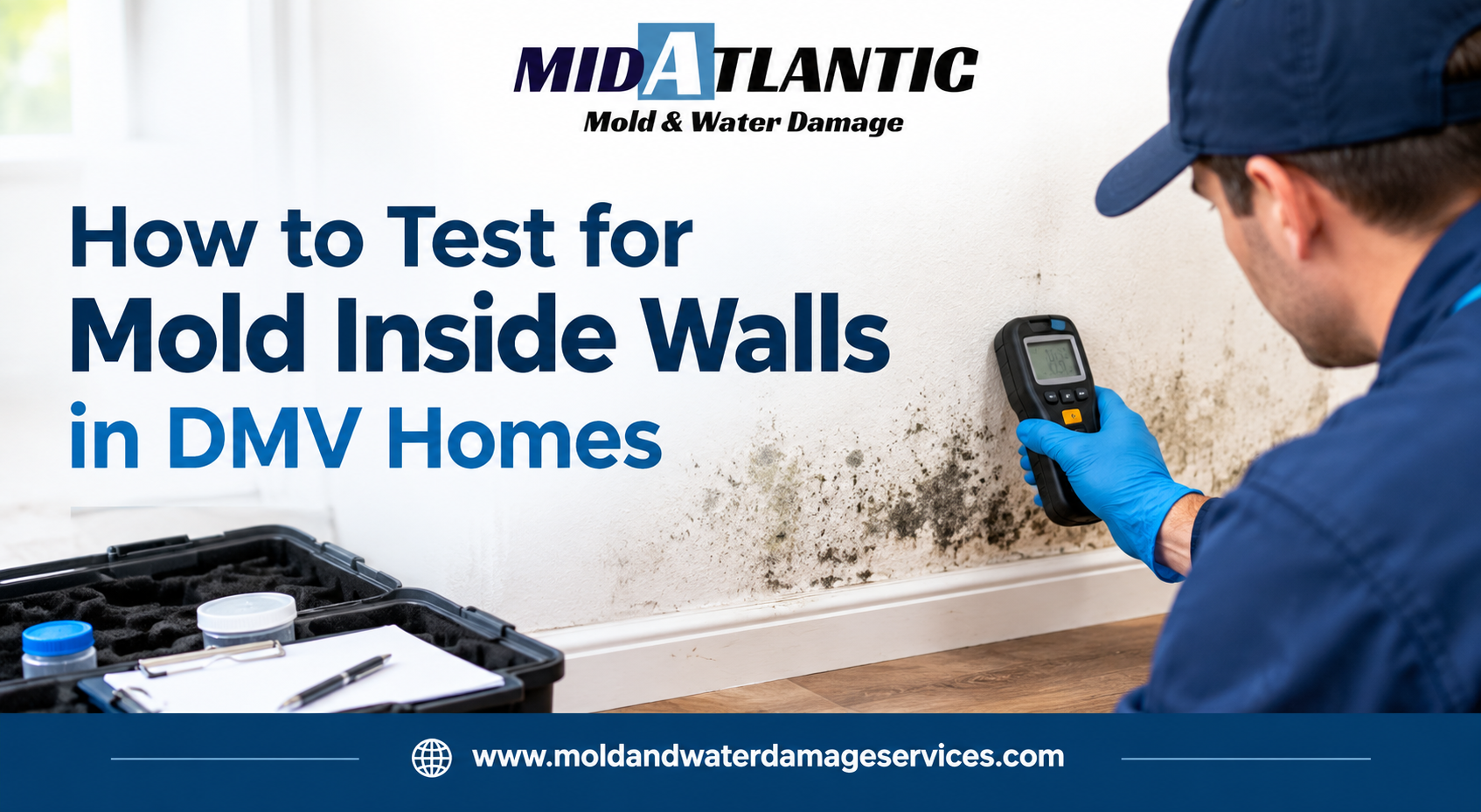
To test for mold inside walls in DMV homes, look for moisture warning signs, use appropriate moisture-detection tools, and arrange professional mold testing when hidden growth is suspected. MidAtlantic Mold and Water Damage helps homeowners identify potential mold problems through appropriate testing and indoor air quality evaluations.
Mold can grow behind drywall, beneath wallpaper, around plumbing lines, and inside damp wall cavities. Because hidden mold may not be visible, identifying moisture sources and selecting the right testing method are important steps toward protecting your property.
What Causes Mold to Grow Inside Walls in DMV Homes?
Homes across Washington, DC, Maryland, and Northern Virginia experience humid summers, heavy rainfall, plumbing leaks, and seasonal temperature changes. These conditions can allow moisture to accumulate inside walls and create an environment where mold may grow.
Common causes include:
- Leaking pipes behind bathroom or kitchen walls
- Roof leaks and water intrusion around windows
- Basement seepage and foundation moisture
- Flooding or previous water damage
- Poor ventilation and persistent indoor humidity
- Condensation around cold exterior walls
Mold can develop on drywall, wood framing, insulation, and other materials when sufficient moisture is present. Finding and correcting the moisture source is essential because testing alone does not prevent mold from returning.
7 Signs of Mold Inside Your Walls
Hidden mold may not produce obvious visual evidence. Watch for these warning signs:
- Musty odors: Persistent earthy smells may indicate mold or trapped moisture.
- Water stains: Brown or yellow marks can suggest past or ongoing water intrusion.
- Peeling paint: Bubbling paint or loose wallpaper may indicate moisture behind the surface.
- Soft drywall: Swollen, crumbling, or weakened drywall can signal water damage.
- Recurring condensation: Repeated moisture around windows or exterior walls may contribute to mold growth.
- Previous leaks: Areas affected by plumbing failures, roof leaks, or flooding deserve closer inspection.
- Visible mold nearby: Mold around baseboards, wall openings, or adjacent materials may indicate a larger moisture problem.
These signs do not confirm mold by themselves. A qualified inspection can help determine whether further investigation or testing is appropriate.
How to Test for Mold Inside Walls
The right method depends on the building materials, moisture history, and suspected location of the problem.
| Testing method | What it helps identify | When it may be useful |
| Visual inspection | Stains, damaged surfaces, and visible mold | Initial assessment |
| Moisture meter | Elevated moisture in building materials | Suspected leaks or damp drywall |
| Thermal imaging | Temperature patterns that may indicate moisture-related concerns | Investigating suspicious wall areas |
| Indoor air sampling | Airborne mold particles in a sampled area | Evaluating suspected indoor mold conditions |
| Surface sampling | Mold or fungal material on an accessible surface | Examining a specific suspected area |
| Wall cavity inspection | Conditions inside a wall through an appropriate opening | Persistent concerns requiring direct access |
Important: Thermal imaging does not confirm mold, and moisture meters do not identify mold species. Air and surface samples also have limitations and may not detect every hidden mold source.
Step 1: Check for Moisture
Look for plumbing leaks, water stains, damaged caulking, and signs of water intrusion. A moisture meter can help locate unusually damp materials that require further investigation.
Step 2: Inspect Suspicious Areas
Pay attention to bathrooms, kitchens, basements, exterior walls, and areas around windows. These locations may be more vulnerable to leaks or condensation.
Step 3: Avoid Opening Walls Without Assessing the Risk
Cutting into drywall can release dust and potentially disturb mold-contaminated materials. If hidden growth is suspected, seek qualified guidance before opening the wall, especially when extensive water damage is present.
Step 4: Consider Professional Mold Testing
A qualified mold test company can evaluate the moisture history, inspect accessible areas, and determine whether air, surface, or other sampling methods are appropriate. Testing should address a specific concern rather than rely on a one-size-fits-all approach.
Step 5: Correct the Moisture Problem
Repair leaks, address water intrusion, and dry affected materials appropriately. If mold is confirmed or visible, determine whether cleaning, removal of damaged materials, or professional remediation is needed.
When Should You Hire Mold Testing Experts?
DIY inspections can identify warning signs, but they cannot reliably rule out mold hidden inside wall cavities. Consider hiring mold testing experts when a musty smell persists, water damage has occurred, or moisture problems continue despite repairs.
MidAtlantic Mold and Water Damage provides information and service options for homeowners seeking mold evaluation and related restoration support throughout the DMV region.
Relevant local service areas include:
- Mold testing services Montgomery County MD: For homes in Silver Spring, Rockville, Bethesda, and surrounding communities.
- Mold remediation Prince George’s County MD: For properties requiring assessment and potential mold removal following moisture damage.
- Mold testing services Anne Arundel County MD: For homeowners investigating suspected mold in damp or previously damaged areas.
- Mold testing Columbia MD: For properties experiencing musty odors, leaks, or indoor moisture concerns.
- Mold testing Washington DC: For houses, apartments, and commercial buildings with suspected hidden mold.
- Mold testing Northern Virginia: For properties affected by plumbing leaks, basement moisture, or water intrusion.
When choosing a mold testing company, ask about the inspection process, sampling rationale, laboratory analysis when applicable, reporting, and recommendations for addressing moisture. Testing findings should be interpreted alongside the property’s condition and moisture history.
Why Professional Mold Testing Matters
Professional mold testing can help clarify whether sampling is appropriate, identify potential concerns in accessible areas, and provide information for deciding what to investigate next.
MidAtlantic Mold and Water Damage serves residential and commercial properties across Maryland, Washington, DC, and Virginia. The company offers mold testing and indoor air quality service options to help property owners investigate suspected mold and moisture issues.
Remember that mold testing and mold remediation are different services. Testing evaluates specific conditions, while remediation addresses mold-contaminated materials and the underlying moisture problem. Not every situation requires extensive sampling, and no single test can guarantee that a building is entirely mold-free.
Schedule Mold Testing for Your DMV Property
Hidden mold can be difficult to identify without investigating moisture conditions and selecting appropriate testing methods. MidAtlantic Mold and Water Damage helps property owners explore professional mold testing and indoor air quality services across Maryland, Washington, DC, and Northern Virginia.
If you suspect mold inside your walls, investigate the moisture source, document signs of damage, and arrange an appropriate assessment to determine the next steps.
Frequently Asked Questions
1. Can mold grow inside walls without being visible?
Yes. Mold can grow on drywall backing, insulation, and wood framing when moisture is present. Persistent musty odors, water stains, and previous leaks may justify further investigation.
2. Can I test for mold inside walls myself?
You can inspect for moisture and visible damage, but consumer mold kits and home inspections have limitations. They may not identify the location or extent of hidden growth. A qualified professional can recommend suitable testing based on the circumstances.
3. Does a moisture meter detect mold?
No. A moisture meter measures moisture in materials. Elevated readings can help identify areas for further inspection, but they do not confirm mold growth.
4. Is air testing enough to confirm hidden mold?
Not always. Air sampling measures airborne particles during a particular sampling period and may not detect a concealed source. Inspection, moisture assessment, and other methods may be needed.



Leave a Reply