Introduction
Energy efficiency has become an important consideration for businesses operating manufacturing plants, commercial buildings and industrial facilities. Rising operating costs and increasing expectations around energy management have encouraged organisations to examine how their buildings and equipment use and retain heat.
One area that deserves particular attention is insulation. Poorly insulated systems can experience unnecessary heat transfer, affecting temperature stability and increasing the energy required to maintain suitable operating conditions.
Choosing appropriate insulation materials can help businesses improve thermal management across different applications. Among the available options, polyurethane-based materials offer useful properties for projects requiring lightweight construction and effective insulation.
Understanding the Role of Industrial Insulation
Industrial facilities contain numerous systems that depend on controlled temperatures. These include refrigeration equipment, heating systems, manufacturing machinery, storage installations and temperature-sensitive production processes.
When heat moves through poorly insulated surfaces, equipment may need to work harder to maintain the desired conditions.
Insulation materials help reduce this heat transfer by introducing a layer with suitable thermal resistance.
The effectiveness of an insulation system depends on several factors, including material conductivity, thickness, installation quality and environmental conditions.
For manufacturers, selecting the right material is essential because different applications have different temperature requirements.
Why Businesses Consider Polyurethane Foam Insulation
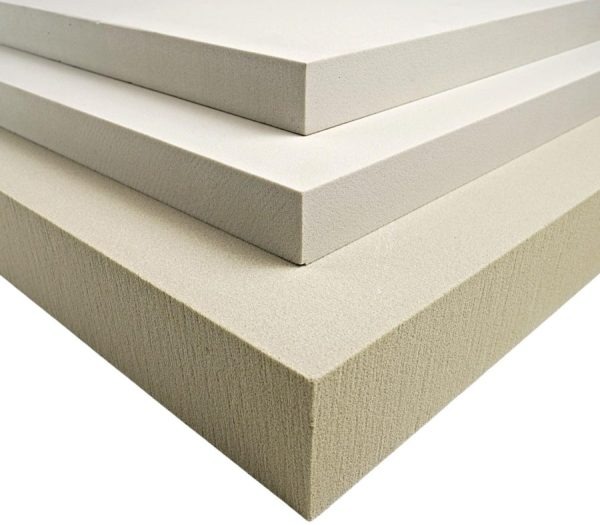
Polyurethane foam insulation is widely considered in applications where thermal performance, weight and dimensional flexibility are important.
Polyurethane foam is produced through a chemical reaction that creates a cellular structure. Depending on its formulation and manufacturing process, the finished material can have different physical properties.
Rigid polyurethane foam is particularly useful where manufacturers need a relatively lightweight material with insulating characteristics.
Its cellular structure contains gas within numerous small cells, helping reduce heat transfer through the material.
This makes it suitable for selected applications involving equipment housings, insulated panels, technical enclosures and temperature-controlled installations.
The exact thermal performance depends on the specific product specification and should be confirmed using the manufacturer’s technical documentation.
Understanding the Advantages of Rigid Foam
Rigid polyurethane foam offers several characteristics that make it valuable in industrial manufacturing.
One important feature is its relatively low weight compared with many traditional insulation materials. This can be useful when developing equipment or structures where additional mass needs to be minimised.
Its rigidity also provides dimensional stability for applications requiring shaped insulation components.
Depending on the formulation, rigid foam can be manufactured into different thicknesses and dimensions, allowing it to fit particular product designs.
Another advantage is its potential suitability for composite constructions. Manufacturers may combine rigid foam with facing materials or other layers to produce components with specific surface and structural characteristics.
These features make it relevant to a variety of commercial and industrial projects.
Applications Across Industrial and Commercial Sectors
Polyurethane-based insulation materials are used in several industries.
1. Refrigeration and Cold Storage
Refrigeration systems depend on effective insulation to maintain low temperatures.
Cold storage facilities, refrigerated cabinets and temperature-controlled equipment need materials that help limit unwanted heat transfer.
Rigid foam can be incorporated into selected insulated structures and panels, depending on the required thermal specifications.
Proper installation is essential because gaps and poorly sealed joints can reduce the effectiveness of the complete insulation system.
2. Manufacturing Equipment
Industrial machinery may contain components that operate within specific temperature ranges.
Insulation can help manage heat transfer between different sections of equipment.
Rigid foam may be considered for suitable external housings, panels and assemblies where the operating temperature and mechanical conditions allow its use.
It is important to keep insulation materials away from direct heat exposure unless the product is specifically rated for those conditions.
3. Commercial Buildings
Commercial properties use insulation in walls, roofs and other building elements to support indoor temperature management.
Rigid foam boards can be incorporated into suitable building assemblies where their thermal characteristics meet the design requirements.
Building professionals should also consider moisture management, fire performance and compatibility with surrounding construction materials.
4. Transportation and Logistics
Temperature-controlled transport requires insulation that helps maintain internal conditions during distribution.
Refrigerated vehicles and specialised storage units may incorporate rigid foam components within their construction.
Material weight, dimensional stability and thermal performance are important considerations when developing these products.
Factors to Consider When Selecting Insulation Materials
Choosing an insulation material requires more than comparing its thickness or purchase price.
Businesses should examine the complete technical requirements of the application.
Thermal conductivity: This indicates how readily heat passes through a material. Lower conductivity generally means better insulation performance under comparable testing conditions.
Material thickness: Thickness influences the overall thermal resistance of an insulation layer.
Density: Different foam densities can provide different physical and mechanical characteristics.
Temperature range: The material must be suitable for the expected operating conditions.
Moisture exposure: Environmental conditions and potential water exposure should be considered during material selection.
Fire performance: Applicable building and industrial safety requirements must be reviewed, with supporting test documentation obtained where necessary.
Mechanical properties: Compression strength and dimensional stability may matter when the insulation is incorporated into a manufactured assembly.
Considering these factors helps businesses avoid selecting products that are unsuitable for their intended use.
Custom Manufacturing and Component Design
Standard insulation boards are useful for many applications, but specialised equipment may require components with particular dimensions or shapes.
Custom processing allows foam materials to be cut and converted into parts that fit individual designs.
For example, a manufacturer may require shaped insulation inserts for an equipment housing or components that fit around existing structural features.
Precision cutting can help achieve the required dimensions and improve consistency between production batches.
Specialist manufacturers can also advise on suitable material formats and processing methods according to the intended application.
Acoustafoam provides foam manufacturing and conversion services, supporting industrial and commercial customers with different material requirements.
Improving Energy Management Through Better Insulation Planning
Insulation should be considered as part of a wider energy management strategy.
Businesses can begin by identifying areas where heat transfer is affecting equipment performance or building efficiency.
This may involve reviewing refrigeration systems, pipework, storage installations and building envelopes.
The next step is to evaluate whether existing materials remain in suitable condition and whether additional insulation could provide practical benefits.
Installation quality is equally important. Gaps, compressed sections and poorly sealed joints can reduce the effectiveness of an otherwise suitable material.
Regular inspections can help identify deterioration and maintain the performance of the complete system.
Conclusion
Thermal insulation is an important part of energy management in modern industrial and commercial environments. Selecting suitable materials can help businesses control heat transfer across refrigeration equipment, manufacturing systems, buildings and specialised transport applications.
Polyurethane foam provides useful manufacturing flexibility, while rigid formulations offer characteristics suited to various insulation requirements.
By assessing thermal performance, operating conditions, fire safety and installation requirements, businesses can select appropriate materials for their projects and develop more efficient equipment and building systems.


Leave a Reply