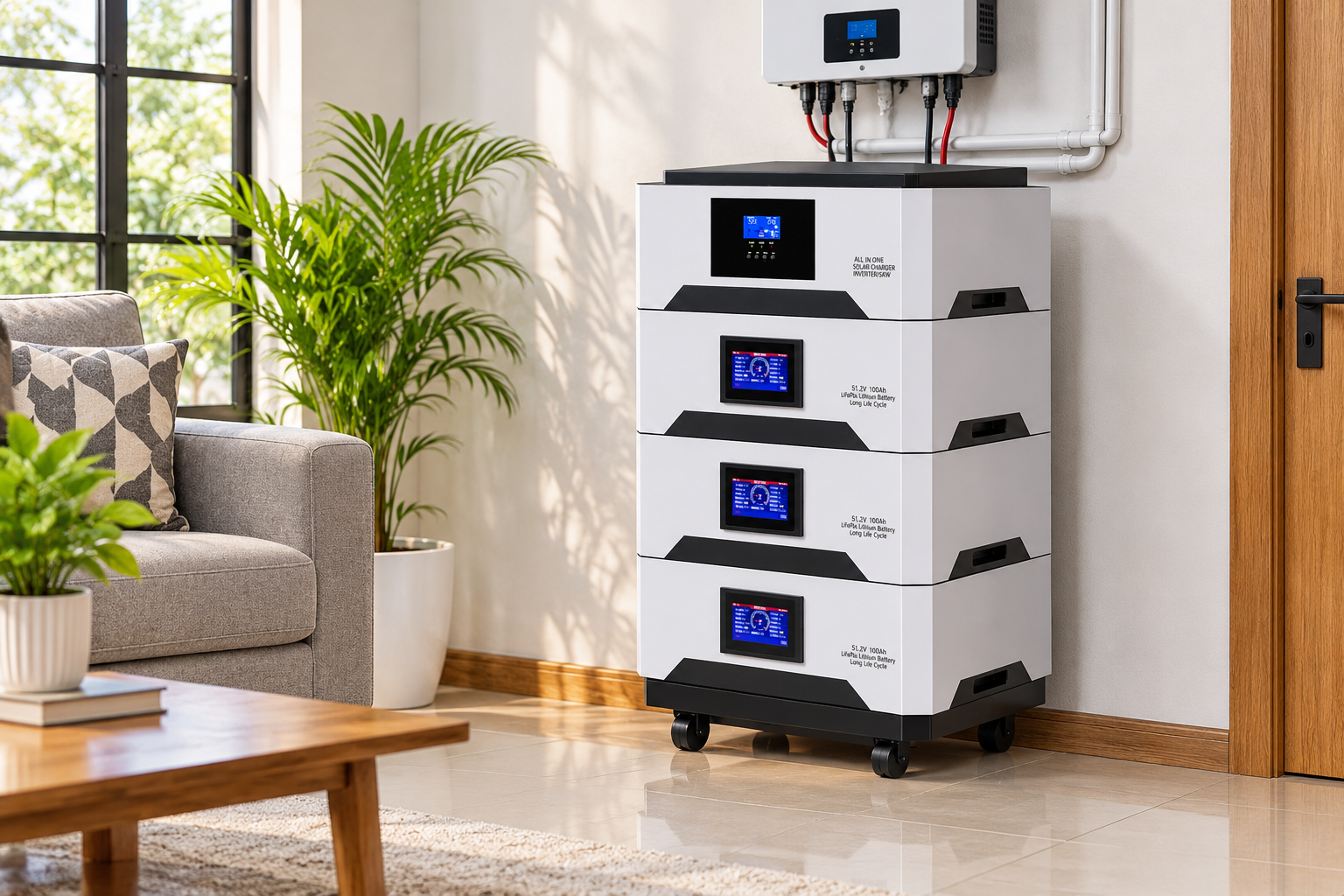
Western New York winters can bring lake-effect snow, freezing rain, and strong winds that interrupt electricity when homes depend on heating and refrigeration. A home battery can keep selected equipment running, but buying one is not the same as having a dependable backup plan. Residents must identify essential loads and required backup duration.
Installers must match battery capacity, inverter output, and site conditions to those needs. The best system is not automatically the largest; it is the one whose capabilities suit the household and whose limits everyone responsible for using it understands.
Why Home Battery Backup Planning Matters in Western New York
Western New York’s winter weather makes outage preparation a practical concern. During Winter Storm Ezra on December 29, 2025, NYSEG and RG&E reported interruptions associated with hazardous winds, lake-effect snow and icing. The utility update reported approximately 14,000 outages in NYSEG’s Lancaster division and 7,000 in Rochester Central. Such events show why households should plan for winter outages.
A battery can supply designated circuits when the grid fails, provided the system has suitable backup equipment and islanding capability. It cannot prevent outages or guarantee whole-home power. Before comparing products, agree on the intended outcome: essential-circuit, selected-appliance, or whole-home backup. That choice determines inverter output, storage capacity, transfer equipment, and budget.
Which Household Loads Should a Backup System Support?
Start by listing what must remain available. Refrigerators, selected lights, phone chargers, internet equipment, a sump pump, and essential outlets are common priorities. Heating needs individual assessment: a gas furnace may need electricity for its controls and blower, while an electric furnace or large heat pump can draw substantial power. Treat medical equipment as critical and plan separately for interruptions, including how essential devices will be powered if the battery is depleted.
Installers should record each priority circuit’s running demand, starting surge and likely operating hours, then assess which devices may run simultaneously. A household might protect refrigeration, communications and a sump pump while leaving discretionary loads disconnected. Electric water heaters, dryers, ovens, and central air-conditioning may require much larger equipment. The aim is a deliberate load plan, not an assumption that every circuit can be backed up.
How Much Battery Capacity and Power Does a Home Actually Need?
Battery capacity and inverter power describe different limits. Kilowatt-hours (kWh) measure stored energy; kilowatts (kW) measure the rate of delivery. A battery may contain enough energy for several hours of modest use but still be unable to start a pump or compressor if the inverter cannot handle its surge. The design must match energy consumption and peak simultaneous demand.
Estimate the energy required by selected loads over the intended backup period. For illustration, 4kWh of usable energy divided by an average 500-watt load gives a simple estimate of eight hours. This is not a promise: losses, reserve settings, temperature and demand affect runtime. Ask the installer to distinguish nominal from usable capacity and explain the assumptions behind every estimate.
What Should Installers Verify Before Selecting a Battery?
Matching nominal voltage is only the beginning. The exact battery and inverter models must be supported by their manufacturers, and communication settings must work together. CAN or RS485 describes an interface, not a universal protocol. Pin assignments and configuration can differ. Installers should obtain compatibility information and confirm how the battery management system (BMS) communicates charge limits, discharge limits, alarms and protective shutdowns.
Compare continuous and peak current ratings with inverter requirements. Verify charging voltage, charge profile, temperature limits, parallel configuration, cable sizing and protective devices. Check firmware and commissioning instructions before use. Keep current datasheets, manuals and manufacturer confirmation with the project record. During commissioning, test backup transition and confirm that the system reports battery status and faults correctly.
How Do Western New York Winters Affect Battery Installation and Performance?
Cold-weather performance depends on the model and on whether it is charging or discharging. Avepower lists a charging range of 0°C to 45°C and a discharging range of -20°C to 60°C for its 51.2V, 100Ah wall-mounted LiFePO4 battery. These are product-specific, not universal, limits. Charging below a cell’s permitted temperature can cause damage, so installers must check the manual and confirm low-temperature protection.
Choose a location that keeps the battery within approved conditions. A garage or basement may offer more stable temperatures than an exposed wall, but assess moisture, flooding, impact, and clearances. Neither indoor nor outdoor placement is automatically suitable. Follow the product instructions and include required temperature controls. The installation must account for seasonal conditions rather than assuming a battery will perform identically at every temperature.
Fixed-Size or Stackable Battery Systems: Which Is More Practical?
A fixed-size wall-mounted battery can suit a home with a defined storage requirement and suitable space. A modular system may allow you to add capacity in stages as needs change. Expansion is not simply connecting another battery: the inverter, BMS, communication protocol, cabling, protective devices, and manufacturer-approved parallel limits must support the configuration.
Avepower lists a 51.2V, 100Ah wall-mounted LiFePO4 model with 5.12kWh nominal energy and a separate stackable range in approximately 5kWh, 10kWh and 15kWh configurations. A stackable battery can support staged planning when the modules and inverter are approved for that arrangement. Compare usable energy, output, footprint, installation cost, and expansion limits—not advertised kWh alone.
What Should Installers and Distributors Verify About Battery Suppliers?
Supplier evaluation should cover technical evidence as well as price and availability. Request model-specific datasheets, manuals, test reports and applicable certification documents; confirm they match the exact battery and intended market. Ask how production quality is checked, whether components are traceable, what the warranty excludes and how faults or replacements are handled. A certification claim alone is not sufficient evidence.
Trade buyers should assess the manufacturer’s support after delivery. Useful checks include:
- Inverter protocol confirmation and technical support
- Written OEM/ODM, label and packaging specifications
- Quality, delivery and replacement arrangements
For local installers, choosing a wholesale energy storage battery system supplier should involve documentation, engineering communication, and fulfillment capability—not just unit price. Confirm order specifications and responsibilities in writing.
Which Permits, Electrical Codes and Installation Requirements Matter?
New York’s 2025 Uniform Code and Energy Code took effect on December 31, 2025. The state Department of State says permit applications submitted from that date must follow applicable 2025 provisions. Energy storage projects can also involve fire-code and electrical requirements. Requirements depend on equipment, building and jurisdiction; old checklists may not apply.
Before work begins, confirm requirements with the local Authority Having Jurisdiction (AHJ), and coordinate with the utility where interconnection applies. Review equipment listing, location, clearances, fire protection, grounding, overcurrent protection, disconnects, transfer equipment and inspections. New York’s Fire Code includes dedicated provisions for residential energy storage systems. Qualified electrical professionals should follow adopted code, manufacturer instructions and project approvals, and retain inspection records for the homeowner.
How Should Households Prepare for Extended Power Interruptions?
A battery is part of emergency planning, not a guarantee during a prolonged outage. Residents should know which circuits are backed up, how to check charge and what happens at the reserve limit. Keep phones charged, maintain flashlights and essential supplies, and follow utility alerts. Never approach downed power lines; report them.
Ask whether solar can recharge the battery during an outage and whether the system can operate independently of the grid. Snow cover, short winter days and cloud can limit production, so recharging is not guaranteed. Plan to reduce consumption and arrange alternatives for longer outages. Anyone relying on powered medical equipment needs a contingency plan developed with their care provider.
What Should Residents and Installers Confirm Before Finalizing a System?
Before approving a proposal, residents should understand what the system will power, for how long under stated assumptions, and which appliances must remain off. The written design should identify backed-up circuits, usable energy, inverter output, operating limits, installation location, and expansion options. Homeowners should receive clear operating and shutdown instructions, warranty information, and a support contact.
Installers and procurement teams should verify model numbers, approved battery-inverter compatibility, communication settings, current documentation, code requirements, commissioning procedures, and technical support. Distributors should confirm configuration, quality records, packaging, delivery terms, and agreed customization. At handover, label backed-up circuits, document settings, demonstrate backup mode, and explain maintenance. These checks support safe, realistic operation.
Conclusion
Reliable home battery backup in Western New York begins with essential loads, realistic runtime expectations, and equipment suited to the installation conditions. Residents need to understand what a system can—and cannot—power; installers and buyers need verified compatibility, documentation, and supplier support.
Avepower offers LiFePO4 storage products and OEM/ODM options for trade partners assessing project requirements. Discuss the intended application, inverter and capacity with its team, then confirm the design against local code and manufacturer instructions. A realistic plan is more valuable than an oversized system with unclear limits
FAQs
How much battery storage does a home need for backup power?
A home’s battery storage needs depend on essential electricity loads, desired backup duration, and inverter capacity. Calculate daily energy use for critical appliances before choosing a battery.
Can a home battery work during a power outage in Western New York?
Yes. A properly configured home battery system can power selected circuits during an outage. It needs compatible backup equipment and sufficient stored energy to support the connected loads.
Do LiFePO4 batteries work in cold weather?
LiFePO4 batteries can discharge in cold conditions within their specified operating limits. However, charging below the manufacturer’s permitted temperature can damage cells, so temperature protection is important.
What is the difference between battery capacity and inverter power?
Battery capacity, measured in kWh, indicates how much energy is stored. Inverter power, measured in kW, indicates how much electricity the system can deliver at a given time.
Are stackable batteries suitable for residential solar backup?
Yes. Stackable batteries can provide flexible storage capacity and allow system expansion. However, the inverter, BMS communication, wiring, and battery configuration must support the additional modules.



Leave a Reply