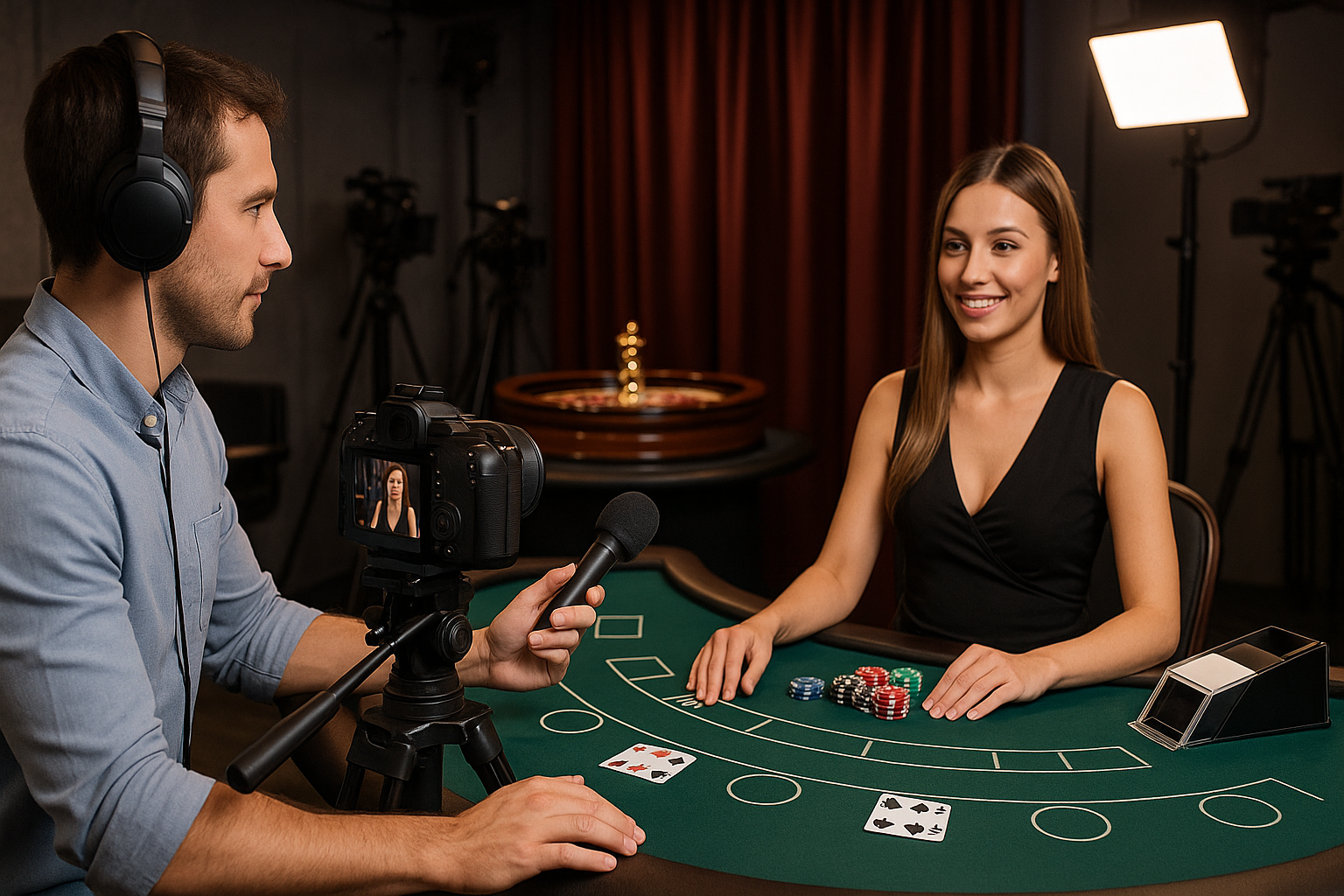
Most players don’t think twice about what’s happening behind the screen when they log into Casino Mate for a live blackjack session. You see the dealer, the cards, the digital interface. Clean, seamless, real-time. But there’s a full-blown operation humming behind the curtain. From lighting to latency control, human dealers to production supervisors, the studio runs like a small TV network with zero room for error.
We spoke with insiders working behind the scenes at live studios that supply Casino Mate to figure out exactly how it all comes together—and why it’s not as glamorous as it looks.

The Setup: A Studio That Thinks It’s a Casino
The first thing to understand is that a live dealer studio isn’t built like a casino. It’s more like a compact production facility crossed with a digital control centre. There are no players walking around, no ambient casino noise (unless it’s added in post), and no natural lighting. Everything is tightly controlled for consistency.
Studios are split into dedicated tables—roulette, blackjack, baccarat, poker—with physical tables, real dealers, and high-definition cameras. Every table has its own set of lighting rigs, microphones, and green screens if required.
The design isn’t for show. It’s engineered to meet technical demands: shadowless lighting to improve card visibility, special chips with RFID tags for automatic reading, and fixed camera angles for optimal player view.
And this is where latency becomes king. According to a senior tech coordinator we interviewed, “Every second delay is a second the player might lose trust. We aim for sub-200ms lag between dealer action and player screen.”
Who’s Really in Charge of the Game?
Most players assume the dealer runs the show. Not quite. Dealers are the front-facing talent, trained to maintain pace, keep chat civil, and follow the standard dealing procedures. But they’re not calling the shots.
There’s usually a floor manager or “game controller” monitoring each table. They track card deals, betting windows, and system logs, jumping in if there’s a misdeal or suspicious betting behaviour.
Then there are production staff: directors switching camera feeds, audio technicians adjusting mic levels, and software operators making sure the user interface matches the real-time footage.
Here’s a quick look at the typical live studio team:
- Game presenters (dealers);
- Floor managers overseeing compliance;
- Technical staff handling video/audio/data feeds;
- Chat moderators keeping conversations safe;
- Production directors running the overall stream.
It’s like a low-budget Netflix shoot—with better suits and way more RNG.
Not All Dealers Are Created Equal
Live dealers at Casino Mate might smile and joke, but their training is anything but casual. Most studios run intensive onboarding programs, combining casino floor rules with broadcast protocol.
You’ve got to deal fast, speak clearly, maintain eye contact with the camera—not the table—and do it all without glancing at your script (because there isn’t one).
What’s surprising is the number of rejected applicants. According to one studio trainer, “Roughly 60% of people fail to complete the training. Either they’re too slow, too stiff, or just not cut out for live video.”
And don’t forget time zones. Studios operate 24/7 to match international markets, so you’ve got people working midnight-to-8 shifts on a weekday just to support the Aussie crowd logging into Casino Mate Login after work.
Casino Mate Login: Why Stability Matters
When players click Casino Mate Login, they expect the live games to be instant, smooth, and glitch-free. That means the studio better have solid infrastructure. Redundancy servers, backup power, uninterrupted fibre lines. Failover protocols are standard.
Studios often keep spare dealers on standby, just in case someone gets sick mid-shift. The room has to go quiet, another presenter walks in, and the stream continues without a hiccup.
But that kind of seamless transition only works when your tech’s rock solid. And that’s part of the reason Casino Mate continues to outperform smaller platforms—they don’t cut corners on backend operations.
What About Cheating?
Everyone wants to know: can you cheat in live dealer games?
Short answer: not really.
Studios follow strict licensing guidelines, especially for platforms like Casino Mate, which are audited regularly. All card decks are shuffled under camera before each shift, and equipment is inspected by third-party regulators.
Plus, everything’s recorded. Every stream, every hand, every user bet—archived for months. If anything shady happens, the logs are reviewed, often in slow motion.
We asked a compliance officer whether there have been major cheating incidents. “Players try more than dealers. Card counting, betting patterns. But it rarely gets past the system. Our AI flags strange behaviour fast.”
That AI is more than just detection—it’s integrated into the betting engine. If you try to hedge your bets across tables or exploit a delayed stream, the software will shut you down automatically.
Pay Attention to the UI
One of the most underrated parts of live dealer gaming on Casino Mate is the user interface. That’s the layout showing your cards, bet sizes, payout boxes, and dealer info.
It’s designed to be minimal but responsive. And here’s the tricky bit: it must align perfectly with the video feed. If the dealer flips a card but the UI shows the wrong suit, you’ve lost the player’s trust.
Developers and testers work together to time-sync each action frame by frame. This is especially true for mobile, where screen sizes vary and input can lag.
The result? A system that feels natural, like you’re sitting at the table—only faster and with fewer interruptions.
Live Dealer Studio Technology Table:
Before we move on, here’s a breakdown of the tech used inside a typical studio supporting Casino Mate.
| Feature | Purpose |
| HD Cameras (60fps+) | Captures every dealer movement with minimal motion blur |
| RFID-Tagged Cards/Chips | Auto-read data for seamless UI sync |
| Optical Character Recognition | Tracks card faces in real time for instant results |
| Green Screens | Customisable backgrounds and immersive studio design |
| Audio Dampening Booths | Clean audio with no background echo or interference |
| Sub-200ms Stream Latency | Keeps gameplay smooth and reduces decision lag |
Studios have little tolerance for failure. Everything you see (and don’t see) is part of a finely tuned system that leaves no room for downtime.
Real People, Real Pressure
Most dealers say the hardest part isn’t the cards—it’s the people. Live chat can be a minefield. Angry players, inappropriate comments, rude trolls. Every dealer needs thick skin.
There are strict chat rules. Cross a line, and the moderator bans you. Repeat offenders get suspended at the account level via the Casino Mate Login system.
But that doesn’t mean dealers aren’t human. In fact, many become minor celebrities within the casino. Regulars request their tables, comment on their haircuts, and even send virtual tips (if allowed by the platform).
It’s a weird mix of professionalism and parasocial interaction. One dealer joked, “Some of these guys know more about my dog than my friends do.”
The Money Question: What Do Dealers Make?
Not a fortune—but more than you’d think. Entry-level pay sits around AUD $18–22/hour, with experienced staff pulling closer to $30. There are also bonuses for uptime, player engagement, and performance reviews.
Managers, supervisors, and techs earn more. But the real money’s in licensing—Casino Mate doesn’t own the studios but partners with them. So when a studio signs with 3–4 major platforms, their profit model explodes.
Here’s a quick comparative table of roles and pay:
| Role | Average Hourly Rate (AUD) | Notes |
| Live Dealer | $18–30 | Based on experience and shift time |
| Floor Manager | $30–40 | Oversees 3–5 tables |
| Production Tech | $25–35 | Handles live stream, camera, audio |
| Chat Moderator | $20–25 | Works from home or on-site |
| Game Director | $40–60 | Manages stream flow and technical issues |
For a job that feels like customer service on steroids, it’s not bad pay—but the burnout is real.
The Future of Live Studios
It’s getting more advanced. Studios are experimenting with motion-capture suits, augmented reality environments, and AI-assisted moderation. One provider we spoke with is testing holographic dealers for 3D game tables.
But until that’s mainstream, you’re still getting real people, real cards, and real pressure every time you hit Casino Mate Login for a round of roulette or blackjack.
That’s the part most players don’t realise: behind every card flip and virtual coin toss, there’s a full team making sure it all looks effortless.




Leave a Reply