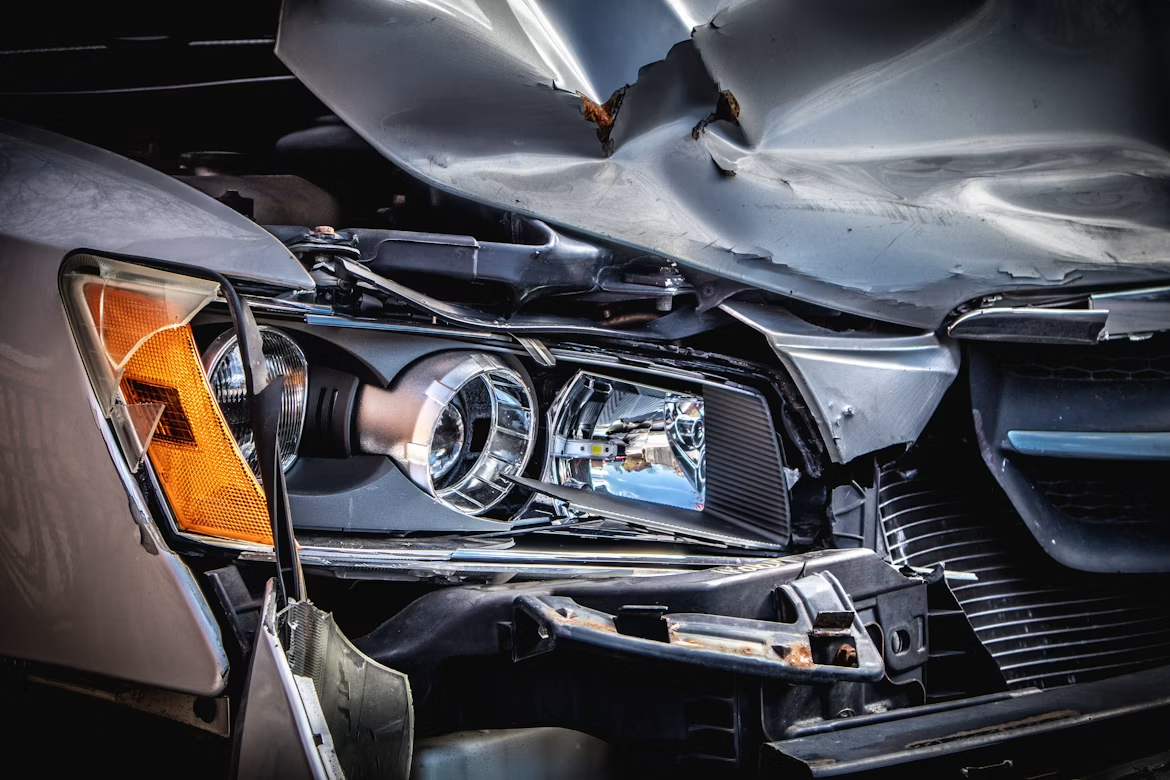
Ever wondered what really happens to your money after a bad crash?
A devastating car accident can change your entire life in an instant. You’re driving home from work… then suddenly you’re looking at a wrecked car, a pile of hospital bills and an insurance company that won’t pay you one dime.
Here’s the scary part:
The driver who struck you …and their insurance company… will fight tooth and nail to save themselves money. Not you. That’s just the way it works.
So how do you fight back and keep the compensation you deserve?
Everything begins with knowing about at-fault driver liability. You could have a valid claim if the other driver was responsible for the crash. But proving at-fault driver liability and taking on their insurance company is seldom easy. That’s where local auto accident legal representation can help hold them accountable and ensure you get every penny you deserve.
Everything is covered here — step by step — so you won’t be surprised.
Here’s what’s inside:
- What At-Fault Driver Liability Really Means
- The Numbers You Need To Know
- Mistakes That Wreck Your Claim
- How To Protect Your Compensation
What At-Fault Driver Liability Really Means
At-fault driver liability is a simple idea with some very big consequences.
Simply put, negligence means the person who caused the accident is liable for their actions. Whether they ran a red light, were distracted by text messages, or were driving intoxicated — they’re “negligent.” And negligence means they (or their insurance company) are responsible for paying for the damages they caused.
That harm usually includes:
- Medical bills and future treatment
- Lost wages from missed work
- Vehicle repairs or replacement
- Pain and suffering
Fair enough, wouldn’t you agree? Well sure, until you have to prove exactly who was at fault.
The other driver will probably claim that they weren’t at fault. Their insurance company may even try to say you were responsible. Evidence can help prove exactly what happened. Police reports, photographs, witness statements and medical records are all important. The stronger your evidence, the less likely someone can dispute it.
The Numbers You Need To Know
Car crashes are far more common (and far more costly) than most people realise.
Just look at this:
Per the latest from NHTSA, an estimated 39,345 people lost their lives in traffic crashes in 2024. That means tens of thousands of families impacted by loss, grief and financial hardship from just one day on the road.
Deaths are just one part of the equation. According to the National Safety Council, an estimated 4.9 million people experienced injuries that required medical attention in 20 24. They calculate the total cost to be $559.3 billion dollars.
Let that sink in for a second.
Behind every one of those digits is a real individual fighting for monetary recompense. And lots of them lose out – not because they weren’t owed money, but because they didn’t know how to fight for their claim.
Don’t be one of them.
Mistakes That Wreck Your Claim
Getting into a serious accident is stressful. Stress causes people to act in ways that damage their case later. Here are the mistakes you should avoid making:
1. Saying “I’m fine” at the scene. Sometimes injuries can take hours or days to become evident. Claiming that you are okay can be used against you later.
2. Going without seeing the doctor. If you don’t see a doctor, you have no medical record. No medical record means you have no evidence of injury. If you fail to seek medical attention, the insurance company will contend you were not really injured.
3. Taking the first offer. The first settlement offer will almost always be lowball. The insurance company is hoping you’ll take the easy money and leave.
4. Posting on social media. One picture of you smiling at a barbecue can be used to prove you are not hurt at all.
5. Giving a recorded statement. They may sound nice, but they were trained to trick you into saying something that hurts your claim.
See the pattern here?
Each of these errors gives the negligent driver’s insurance company an excuse to compensate you less. Once made, they are extremely difficult to correct even if you had a great case.
How To Protect Your Compensation
Ok, now for the good stuff. Here’s how to get the money owed to you after an accident.
Gather Evidence Early
As soon as you’re out of harm’s way, begin gathering evidence. Photograph the vehicles, roadway, and any injuries you suffer. Obtain the contact information of witnesses. The better evidence you have, the less likely someone will be able to contest liability of the at-fault driver later on.
See A Doctor Right Away
See a doctor, even if you feel fine. Having a medical record connects the crash to your injuries. It can be one of your strongest pieces of evidence when filing your claim.
Keep Every Document
Hold onto absolutely everything:
- Medical bills and reports
- Repair estimates
- Pay stubs showing lost income
- Receipts for accident-related costs
Without these documents you are merely estimating what the crash cost. Guess what … Insurers love guesses.
Don’t Rush The Settlement
Patience will be rewarded. When you settle, you generally can’t ask for more money later if your injuries turn out to be worse than you initially thought. Be sure you know how much your accident is really going to cost you before you accept a settlement, as that agreement is typically binding when you sign it.
Get The Right Help In Your Corner
Insurance companies have entire teams of lawyers and adjusters whose job is to pay you the least amount possible. Let someone who understands at-fault driver liability even the odds quickly. They’ll take care of the paperwork, phone calls and hard negotiations — letting you focus on healing and getting back to normal.
The Bottom Line
Going through a serious car accident is extremely stressful. Claiming your compensation shouldn’t be.
Just remember the basics:
- The at-fault driver is responsible for the damage they caused
- Strong evidence is what wins claims
- The insurance company is not on your side
- Small mistakes can cost you very big money
Once you know how at-fault driver liability truly works — and avoid the pitfalls that ensnare so many others — you’ll be in the best position to collect everything you’re entitled to.
Demand what you are really owed. Don’t let the insurance company for the other driver dictate your recovery.



Leave a Reply