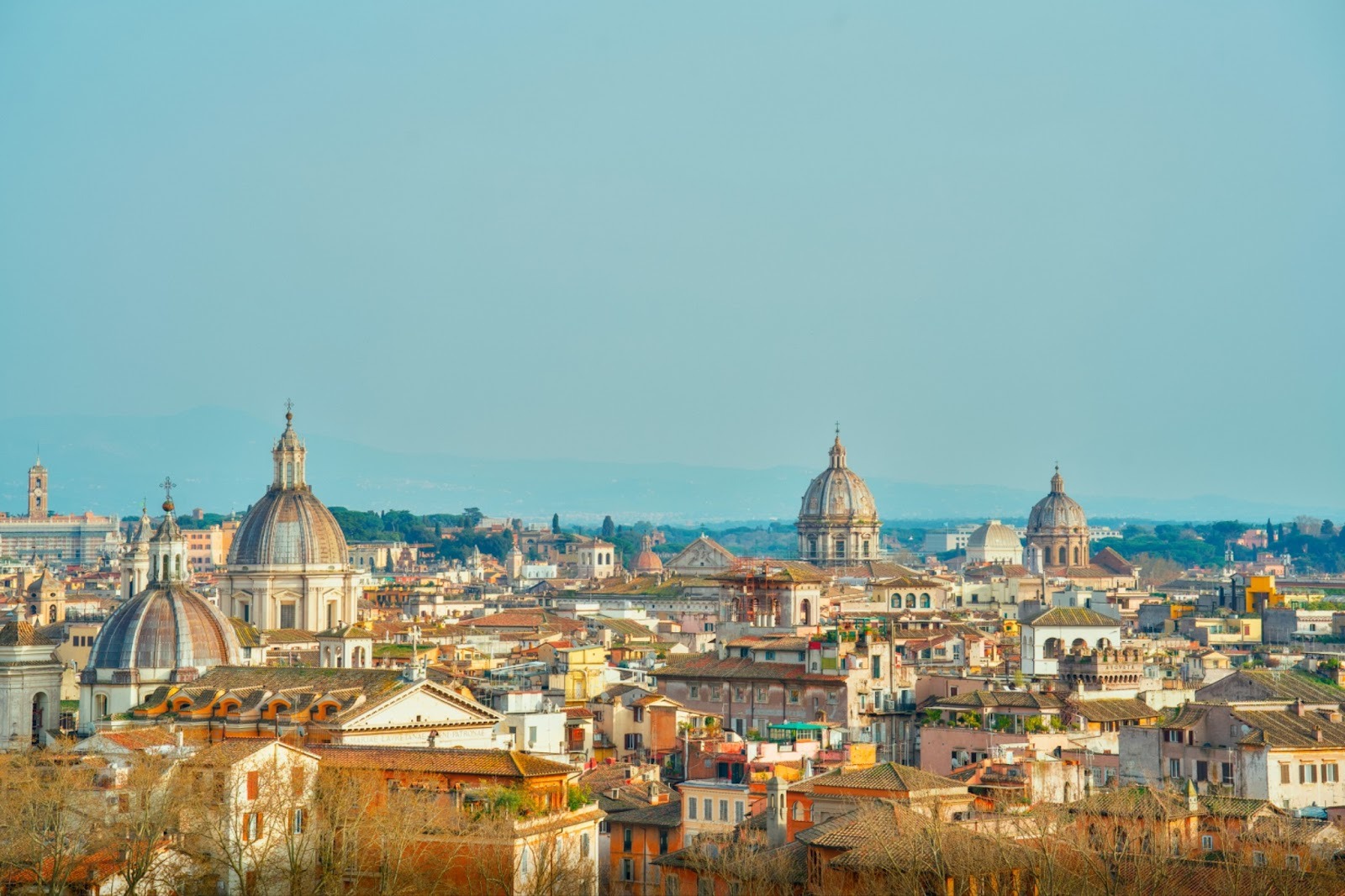
The city doesn’t appear in a single frame. It builds through layers. A wall, a rooftop, then another just beyond it that wasn’t visible a moment before. The colour holds for a while—warm, muted, then slightly darker where shadow settles. Nothing stays in full view for long. You notice one surface, then another replaces it. There’s movement below, though it doesn’t rise to meet what sits above it.

Where the Rooftops Gather
Rome stretches outward rather than upward at first. The rooftops form a pattern, though not one that repeats exactly. Some sit lower, others rise just enough to break the line. Terracotta holds the surface together. The tone shifts slightly depending on the light, though it remains consistent enough to feel continuous. You don’t take it in all at once. The view moves as you move.
What the City Holds
The structures don’t align perfectly. Edges meet, then separate again. Lines form briefly, then disappear into something less defined. Across a departure board in the distance, the Milan to Florence train appears for a moment before being replaced by another route. It doesn’t draw attention away from the rooftops. The city remains as it was.
Movement That Carries Through
At some point, the structure begins to change. The streets widen. The sense of enclosure softens. You don’t notice when it begins, only that it already has. The light spreads differently here. It doesn’t stay confined to narrow spaces.
Between One Roof and the Next
Walking through the streets changes the view entirely. The rooftops disappear, replaced by narrow passages and shifting light. You turn, then turn again. The direction doesn’t feel fixed. The rhythm of movement adjusts with each space—wider, then narrower, then open again. A scrolling display briefly lists the Milan to Rome train, then moves on without pause.
Where the Form Rises
Florence doesn’t unfold the same way. It rises into view. The dome of Santa Maria del Fiore appears gradually. First a curve, then a surface, then the full shape once you’ve stepped far enough back. The stone carries a different weight. It reflects light more evenly, though it still shifts with the time of day. You don’t see it all at once.
What the Surface Holds
The material feels more defined here. Lines hold longer. Edges remain visible even as the light changes. Details emerge slowly—patterns in the stone, shapes that repeat without matching exactly. You focus on one section, then another, though neither holds your attention for long. The structure remains steady.

Between Height and Distance
Looking upward changes how the space feels. The height doesn’t close in. It opens outward instead. Movement continues below, though it feels separate from what rises above. You don’t take in both at the same time.
Where the View Extends
Beyond the immediate structures, the city stretches further. Roofs return in the distance, though not in the same pattern as before. The horizon forms gradually. You don’t follow it directly. It remains in view without asking to be.
What Doesn’t Settle
The difference between Rome and Florence doesn’t stay fixed. One feels layered, the other more defined. Still, they connect through the movement between them. You notice it gradually. It doesn’t form a clear contrast.
The Space Between Cities
The transition doesn’t feel like a break. It carries through in smaller shifts—narrow streets to open space, terracotta to stone, contained views to wider ones. Nothing interrupts it. You don’t feel like you’ve arrived somewhere entirely separate.
A Landscape That Continues
Looking back, the details don’t return in order. The rooftops, the dome, the shifting light across both overlap rather than form a sequence. They sit alongside each other without needing to connect directly. There is no clear ending point, only the sense that the landscape continues beyond where you last saw it.



Leave a Reply