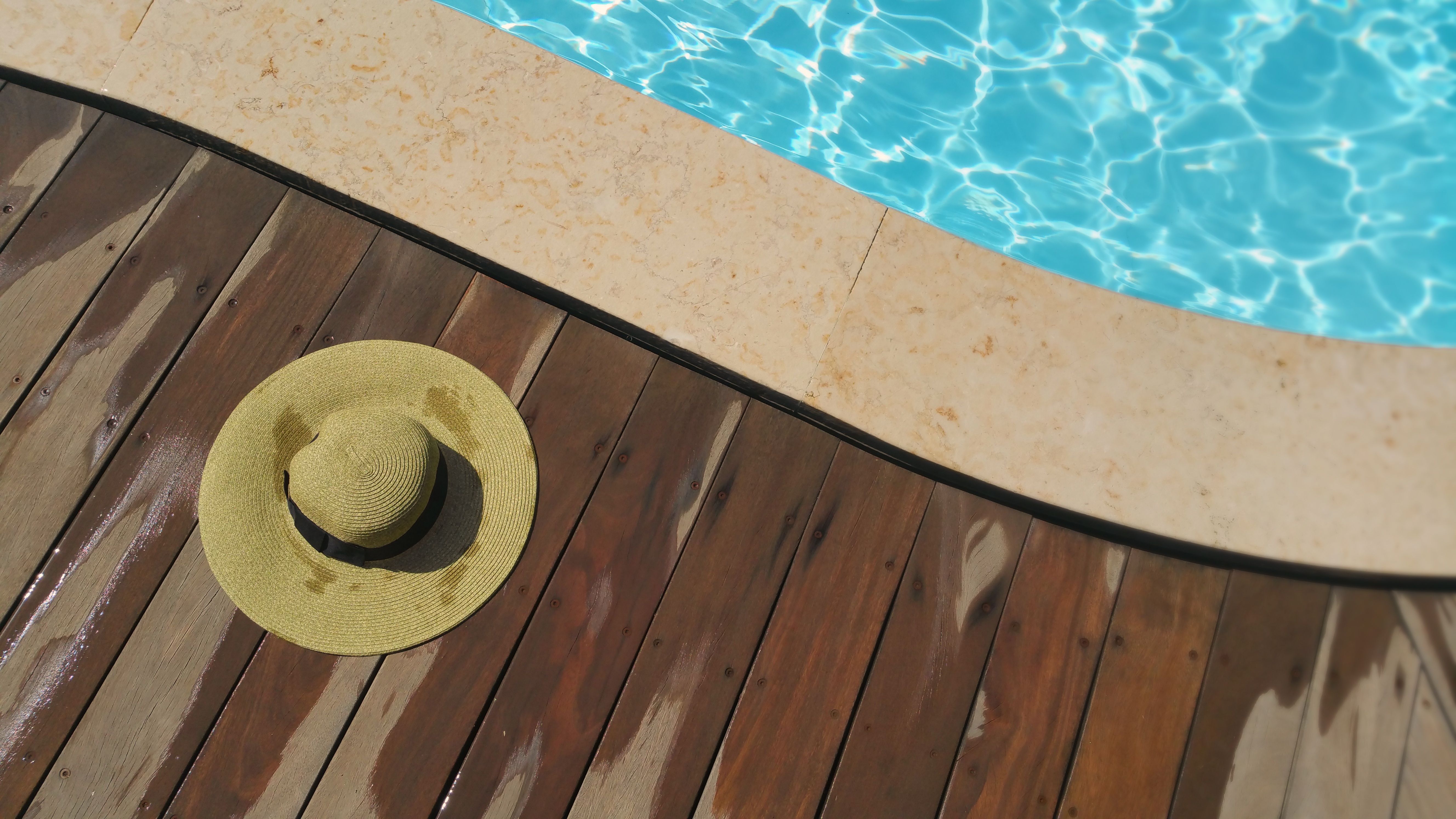
The new inground pool went in last May, and by the Fourth of July the Bedford backyard was full of dripping kids. The concrete apron poured around it looked finished the day it cured, pale and smooth. Then the first cannonball sent water across it, a four-year-old cut the corner at a run, and the family learned why a deck contractor NH worth hiring designs the surface for wet feet before anyone picks a color. A pool deck that stays safe when wet is not luck. It is a slip-resistant surface, real railings, planned stairs, and honest drainage, all decided up front instead of patched in later.
Wet Pool Edges Cause Most Falls

Falls near the water are the pool injury most families never plan for, and the edge is where they start. The failure we see most often is a good troweled concrete apron that goes slick the moment a swimmer climbs out dripping. The numbers above make the point: smooth concrete and smooth wood sit around or below the industry slip threshold once wet, while textured composite clears it. That gap is why the surface, not the railing, catches a slip before it becomes a fall. A slip-resistant deck surface stops more falls than any bolt-on safety feature. Railings and alarms matter, but only after a foot has already slid. Parents watch the deep end and forget the two feet of wet edge where the real slips happen.
Check Slip Resistance Before The Design
Settle the slip number before you settle on a look. The standard worth citing is ASTM D2047, which draws the line at a 0.50 static coefficient of friction. Textured composite usually tests between 0.55 and 0.65 when wet, above that mark, while smooth troweled concrete lands right at or under it. Material cost has quietly joined the decision too. According to Gordian’s RSMeans lumber tracking, framing lumber climbed to $916.62 per thousand board feet in April 2026, up 5.11% for the quarter and 4.21% year over year. The old gap that made wood the automatic choice has narrowed, so the safer surface is often the smarter buy.
Surface Temperature Matters More Than Looks
Heat is the safety problem people forget until a barefoot child hops across the boards at noon and yelps. Dark surfaces in direct sun get hot enough to sting small feet, which sends kids sprinting for the grass, and sprinting is how falls happen at the edge. How many degrees hotter a dark board runs than a light one on a July afternoon, I honestly cannot pin down for your yard. It shifts with color, cloud cover, board core, and afternoon shade. A deck contractor NH families hire for pool work should steer you toward lighter tones and capped boards, not the darkest sample in the display.
Material quality also decides how a surface holds its grip through years of wetting, and not every composite behaves the same. A peer-reviewed wood-plastic composite durability study in Heliyon found boards made from recycled plastic absorbed 20.5 to 29.2% water and swelled far more than virgin stock, which held to 6.6% absorption and 0.8% swelling. That swelling changes the texture underfoot, and texture is what keeps a wet deck slip-resistant. A bargain board tends to start failing around year three, right when the kids run harder.
Railings And Stairs Need Real Planning
Railings and stairs are where planning either shows or falls apart. Code in most New Hampshire towns treats a raised pool deck like any elevated surface, so guards and handrails carry real height rules, and the gate needs self-latching hardware a toddler cannot work. The CPSC runs a free portal, PoolSafely.gov, that spells out barrier and gate guidance in plain language before you meet a contractor. Stairs into and out of the water want deep treads, a gentle rise, and a slip-resistant nosing, because that zone is wet every time.
Plan the wet path first. Every surface a dripping child touches between the water and the towel needs grip, not just the deck field.
Confirm Drainage And Permits Early
Drainage is the unglamorous line item that decides whether the deck is safe in year five. Water needs a slope carrying it away from the pool and the house, plus channel drains where the deck meets the coping, or it pools in the low spots and grows a slick algae film. Permits and inspections belong at the start, not after the crew has framed the thing, because a New Hampshire pool enclosure has its own barrier requirements the inspector will check. A contractor who folds the permit into the quote is telling you the drainage and barriers were designed, not guessed. A quick garden-hose test on the finished slope shows in seconds whether water runs off or sits.
Build A Pool Deck That Stays Safe
A safe pool deck comes down to sequence: choose the surface for grip and heat first, then design the railings, stairs, and drainage around how wet feet move. The material choice does most of the safety work, which is why the slip number and surface temperature outweigh whichever sample photographs best. A pool deck earns its keep on the worst afternoon, when four kids are out at once and nobody has a free hand to watch the edge. Hire the contractor who plans for that afternoon first, and the rest of the season stops being something you brace for.




Leave a Reply