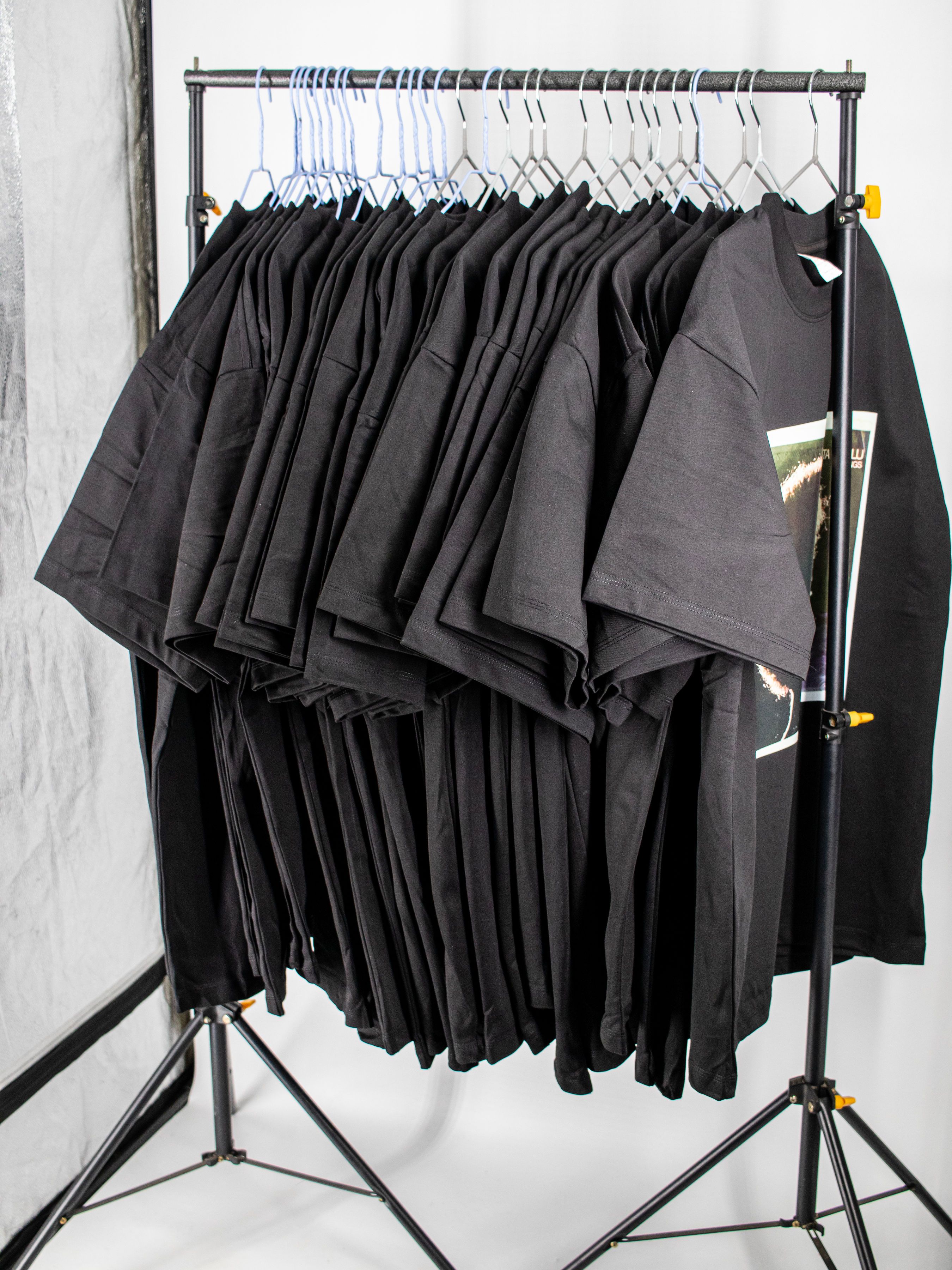
Learning to design custom apparel designs is a rapidly expanding field. Customers would like to have shirts, hoodies, and other apparel custom-made for them. This demand leads to new opportunities for entrepreneurship.
The Direct-to-Film (DTF) printing method has emerged as a favourite printing technique for apparel companies. It has one of the best prints, can be used on a variety of fabrics, and is very efficient to use.
It’s essential to your DTF business to be prepared. One must have adequate equipment, business planning, and understanding of the printing procedure. This blog will give you a full overview of the vital considerations to start a successful DTF printing business.
What is DTF Printing?
DTF printing is a new technique of textile printing. Prints a design onto textiles using heat and pressure from a special film. It basically is printing pieces of art onto transfer film. Now, adhesive powder is applied and cured. Last but not least is a heat press that can be used to place the design on clothing.
DTF can be done on the following materials:
- Cotton
- Polyester
- Nylon
- Blended fabrics
- Denim
This versatility opens good application possibilities for products in the apparel industry.
Why should one start a DTF printing business?
New businesses have several distinctive benefits from utilizing DTF printing.
Low Production Limitations
Contrary to traditional methods, DTF does not involve any complex setup.
You can produce:
- Single custom shirts
- Small batches
- Large orders
Hence, it is appropriate for various business models.
Wide Product Range
As part of a DTF business, they can produce:
- T-shirts
- Hoodies
- Jackets
- Sportswear
- Work uniforms
- Promotional clothing
The more products you have available, and the greater the variety of products, the more sales opportunities you have.
High-Quality Results
DTF printing produces:
- Bright colors
- Sharp details
- Durable designs
- Smooth finishes
Repeat customers are drawn by the professional quality.
Steps to Start a DTF Printing Business
- The first step is to research your target market.
It’s important to know your customers before investing in equipment.
Look for potential customers including:
- Fashion brands
- Schools
- Sports teams
- Businesses
- Event organizers
- Online shoppers
It’s great to understand your audience, because they help you make products!
- Develop a Business Plan
You’ll be more successful if you have a plan.
You Should Have A Plan, which means the following:
- Startup budget
- Product selection
- Pricing strategy
- Marketing methods
- Target customers
- Expected profits
With the help of a business plan, planning of resources can be done in a better way.
3. Select the appropriate DTF Equipment
The quality of the equipment is important and directly influences print results. DTF printers have the following basic components:
- DTF printer
- Transfer film
- DTF inks
- Adhesive powder
- Curing system
- Heat press machine
- Computer and design software
4. Select a Suitable DTF Printer
DTF LINKO solutions are a popular choice for beginners and professionals alike due to their reliability, which ensures consistent print quality and efficient workflows.
Your printer is the lifeline of your business.
It’s up to you to choose from:
- Production volume
- Budget
- Business size
- Customer demand
Most of the businesses are rather small and require compact machines. Opting for faster and bigger models may be needed for growing businesses.
As most business-heavy pieces will come with a high price tag, there is always a chance that the business owner may search for the best cheap DTF printer for sale when the company initiates its operations. Although the price shouldn’t be the only factor, consider it. Take into account print media quality, durability, maintenance, and customer support.
5. Learn the DTF printing process
It is helpful to understand how it works so you can find out how to avoid the pitfalls. The simple “upside down” operation takes the following steps:
Design Preparation
Develop visual creations using graphically-based software.
A higher resolution design will yield results that will be more impressive.
Film Printing
Your design is printed onto a special film with the DTF printer. The DTF printer will print the design on the special film.
Powder Application
The printed film is covered with the adhesive powder. The adhesive powder is spread over the printed film.
Curing
The adhesive powder is superheated.
Heat Transfer
A heat press makes the design transfer to the cloth.
Finishing
Quality control and cooling of the product.
6. Calculate Your Costs
It is necessary to have an idea of the costs.
Common costs include:
Equipment Costs
The largest investment will be your printer and heat press.
Material Costs
Regular supplies will be needed, including:
- Ink
- Film
- Powder
- Packaging materials
Operating Costs
Consider:
- Electricity
- Maintenance
- Workspace expenses
- Marketing
An adequate setting of a profitable price with the help of proper cost calculation.
7. Set Competitive Prices
The price must be reflective of cost and profit.
Consider:
- Material usage
- Production time
- Design complexity
- Customer demand
- Don’t go for excessively low prices.
Build a customer relationship based on quality and service for the long term.
8. Market Your DTF Printing Business
Don’t forget to market your DTF printing business.
Growth is critical and dependent upon marketing.
Effective strategies include:
Social Media Marketing
Share:
- Product photos
- Customer reviews
- Behind-the-scenes videos
- New designs
Online Store
People can easily order from an online store.
Local Partnerships
Work with:
- Schools
- Companies
- Sports clubs
- Event organizers
A consistent order stream can result from these partnerships.
Common Challenges in DTF Printing
All new businesses are beset by problems.
Common issues include:
- Learning machine settings
- Managing maintenance
- Controlling production costs
- Finding customers
But problems can be solved with proper training and quality control measures.
Will a DTF Printing Business be profitable?
With correct planning, yes, DTF printing makes good money!
Profit depends on:
- Product quality
- Pricing strategy
- Marketing efforts
- Customer retention
Some custom apparel products have a high demand level due to the customer’s desire for unique designs. Small businesses can ease their way in and out and grow with them as demand arises.
Conclusion
Embarking on a new journey of starting a DTF printing enterprise is thrilling in the expanding custom apparel industry. The technology is flexible, delivers great quality prints, and can be used to print a range of different fabrics.
If you’re successful, it demands careful planning, the right equipment, and also a successful marketing. The right printer, managing business costs, and prioritizing customer satisfaction are the key factors that can help you establish a profitable DTF printing business. Collaborating the right way, DTF printing can be a lucrative enterprise to sustain.



Leave a Reply