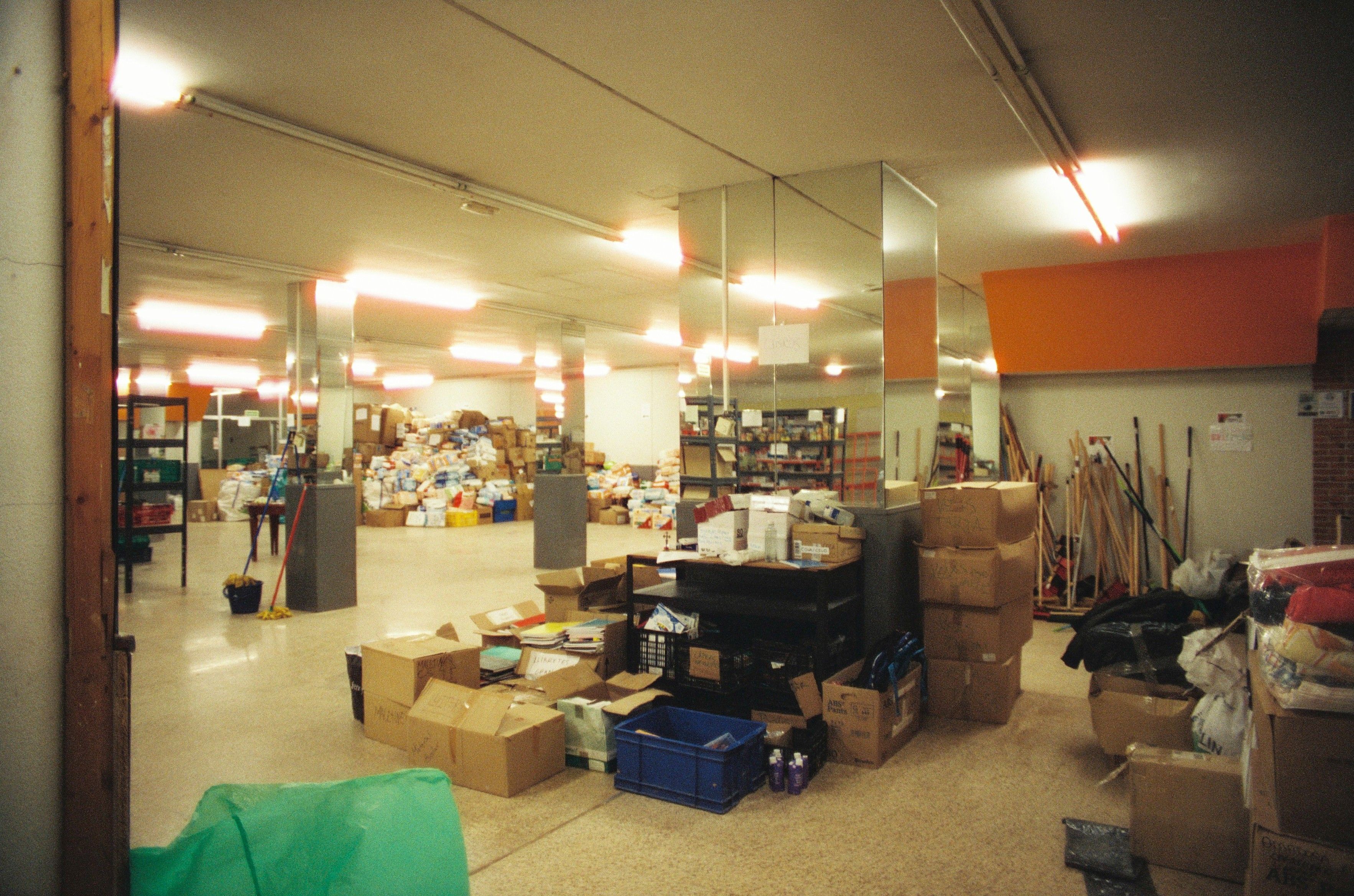
Every storefront on Sherman Avenue has one. A back room, a storage closet, a stretch of basement — somewhere behind the part customers actually see, where things get set aside “for now” and quietly stay there for years. Walk into almost any small business downtown and ask what’s back there, and most owners will hesitate before answering, because even they’re not entirely sure anymore.
Why This Space Fills Up Faster in a Tourist Town
Businesses built around a seasonal rhythm accumulate differently than year-round operations. A restaurant that doubles its staff and inventory for summer ends the season with extra supplies, worn-out equipment, and furniture that didn’t survive the busiest months. A retail shop that stocks up hard for the Fourth of July crowd and the Street Fair often finishes the season with leftover seasonal merchandise that never quite got cleared out before the next batch of inventory arrived. Hotels and lodging businesses coming off a record summer — and this one, by most measures, was exactly that — tend to have a similar problem: furniture replaced mid-season, old signage, equipment that’s been “temporarily” set aside since June.
None of this is a sign of bad management. It’s simply what happens when a business runs at full capacity for months and doesn’t have a natural pause to deal with what’s piling up behind the scenes — until the season winds down and there’s finally a moment to look.
What Actually Accumulates Back There
A few categories show up in almost every back room, regardless of what the business out front actually sells. Furniture and fixtures top the list — chairs, tables, display units, and shelving that got replaced or upgraded but never made it out the door. Old equipment is close behind: point-of-sale systems, kitchen appliances, office electronics that stopped working months ago and got shoved aside rather than dealt with in the moment. Leftover inventory and seasonal displays pile up too, especially for retail shops that rotate merchandise several times a year and don’t always have a plan for what doesn’t sell. And for any business that’s done even minor renovation work — a new counter, updated flooring, a remodeled back office — there’s usually a stack of leftover materials sitting exactly where the contractor left it.
That last category deserves its own mention, since it behaves differently than everyday clutter. Renovation leftovers — scrap wood, old fixtures, drywall, flooring remnants — aren’t just taking up space, they’re often the kind of material that needs a specific disposal approach rather than a regular trash pickup, which is a big part of why it tends to sit there the longest.
Why It’s Easier to Let It Sit Than Deal With It
The honest answer is that clearing out a back room competes with everything else a small business owner is already juggling. During peak season, there’s simply no time — the priority is the customers walking through the front door, not the pile behind the kitchen. Once the season slows down, the urgency fades along with it, and a back room that isn’t blocking anything critical rarely makes it to the top of anyone’s list. There’s also the practical problem of scale: a single owner or a small staff can’t easily haul out a broken walk-in cooler, a stack of old shelving, or a pile of construction debris on their own, especially without the right vehicle or the time to make multiple trips to a disposal site.
What This Costs a Business Beyond the Clutter
A full back room isn’t just an eyesore — it has real operational costs. Storage space that’s occupied by things nobody uses is space that can’t be used for actual inventory, seasonal stock, or simply room to move efficiently during a busy shift. Old equipment sitting unused for months can become a safety or liability concern, especially anything electrical or anything blocking a fire exit or utility access point. And for businesses gearing up for the holiday season — which downtown Coeur d’Alene starts prepping for earlier than people expect, with the Holiday Light Parade and the season’s décor rotation right around the corner — a back room that’s already full leaves nowhere to store the incoming seasonal inventory without adding to the chaos.
Clearing It Out Without Losing a Week of Operations
The good news is that dealing with this doesn’t have to mean shutting down or dedicating days of staff time to it. A commercial cleanout handles exactly this kind of accumulated back-of-house clutter — old furniture, outdated equipment, leftover inventory — without requiring a business to close its doors or pull staff away from actual work to manage the hauling themselves.
It’s also worth knowing that not everything in a back room needs the same kind of handling. Renovation debris and leftover building materials fall under a different category of service entirely, one built specifically around construction waste rather than general clutter. And anything metal — old shelving units, broken equipment, appliance frames — often has real recycling value, which means it doesn’t need to go to a landfill at all when it’s handled through the right scrap metal disposal process instead of getting bundled in with everything else.
Fall Is the Natural Point to Finally Deal With It
Late summer into early fall tends to be the one stretch of the year when downtown businesses actually have a bit of breathing room — after the tourist rush has eased but before the holiday season ramps up demand again. It’s a practical window to finally clear out what’s been accumulating since spring, freeing up space before seasonal inventory and holiday displays need somewhere to go. Businesses that use this lull to reset tend to head into the next busy season with noticeably more usable space than the ones that let the back room carry over year after year.
Every business downtown has its own version of that back room — some just have a bigger pile than others. Clearing it out isn’t about hiring extra hands for a big project; it’s about finally closing the loop on months of “we’ll deal with it later.” If your business has one of these spaces that’s overdue for a reset, it’s worth seeing what a full cleanout actually looks like: https://www.azjunkremovalcda.com/




Leave a Reply