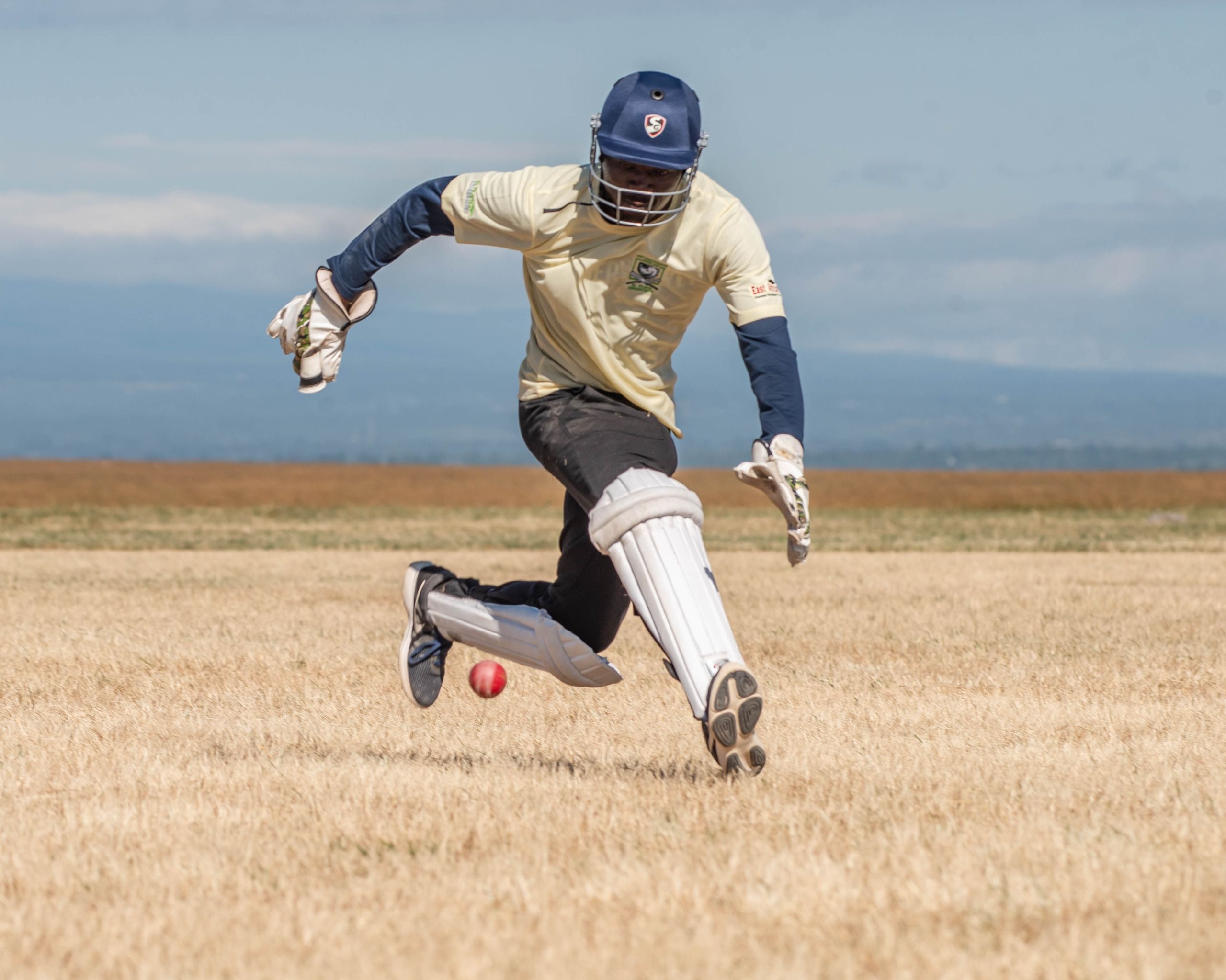
Your fielding unit drops two catches in the first ten overs. The opposition scores 40 extra runs. You lose by 32. That sequence plays out at every level of the game, and it almost never comes down to talent. It comes down to preparation. The fielders who hold their catches under pressure are not lucky. They have drilled the same movements so many times that the action fires before the brain has time to hesitate.
This guide gives you the drills that fix the most common fielding breakdowns: dropped catches, slow reaction times, and inaccurate throws. The right footwork and body position are woven into every drill, because your feet reach the ball before your hands ever do. Wearing the right cricket shoes matters here too, because grip and lateral support are the foundation every movement is built on.
Catching Drills That Build Real Reliability Under Pressure
Start with Footwork, Good catching starts with good footwork. Most dropped catches happen because players reach the ball late or are off balance, rather than because of poor hand skills. Move early, get your body behind the ball, and create a balanced position before making the catch..
1. Reactive Drop Catch
Trains your first-step reaction and body position for low catches below knee height.
- Stand 8 metres away from your partner.
- Your partner holds two balls, one in each hand.
- Without warning, they drop one ball.
- React immediately, get low, and catch the ball below knee height.
- Focus on a quick first step, getting your body low, moving through the ball, and avoiding a lazy or half-hearted lunge.
- Complete 3 sets of 12 catches.
2. High Ball Pressure Circuit
Builds your ability to attack high catches on the move and adjust to changing ball flight.
- Mark a 10-metre square.
- A feeder hits high catches towards different corners.
- Sprint towards each ball and attack it on the move.
- Take the catch at chest height or higher.
- Focus on your running angle and movement, not just the catch.
- Do not wait underneath the ball.
- Learn to adjust quickly to changes in wind, light and ball flight.
3. Slip Cradle Work
Develops fast hand reactions with minimal preparation time, replicating the flat edges slip fielders face.
- Use a cradle machine for 15 minutes at the start of each session, if available.
- If not, use a rebound net from 4 metres.
- React with your hands while keeping your eyes forward.
- Focus on quick hand reactions with little preparation time.
Throwing Drills That Add Accuracy and Remove Wasted Time
- Ground-Up Throw Sequence
Start lying flat on the ground, ball in hand, 20 metres from the stumps. On the signal, get up, set your feet and throw at the stumps. Complete 5 sets of 6 throws.The drill forces you to build the throw from a strong base. Watch for an open front shoulder, poor foot alignment or a late release. These faults become much easier to spot when you have to get up and throw quickly. - Cone Accuracy Circuit
Place three cones at 15, 25 and 40 metres from the stumps. Pick up the ball at each distance and throw at the same target.Give yourself 1 point for every hit and record your accuracy percentage. Track the result over four weeks. Having a number to beat turns accuracy into a measurable challenge. - Turnaround Throw
Stand with your back to the stumps. A feeder rolls the ball in front of you. Turn, pick it up and throw towards the stumps in one fluid movement.This replicates situations such as boundary saves and long-on retrievals, where you need to turn and find the stumps quickly.
The key is simple: set your feet as you turn, not after the turn. This gives you a stronger base and helps you release the ball accurately without losing time.
Reaction Speed Drills That Make Fielders Harder to Score Against
Check Your Setup First
Stay on your toes with a slight forward lean. Flat-footed fielders are slower off the mark.
Good cricket shoes provide the grip needed to push off hard on any surface.
- The Mirror Drill
Builds lateral quickness for wide throws and diving chances at mid-wicket or cover.- Two fielders stand 3 metres apart, facing each other.
- One leads with lateral movements; the other mirrors every move.
- Work for 30 seconds, rest for 15 seconds, and repeat for 6 rounds.
- Builds lateral quickness for wide throws and diving chances at mid-wicket or cover.
- Also helps identify a fielder’s slower side.
- The Ball-Drop Reaction Test
Trains the body to process and respond in real time, exposing slow first-step reactions faster than a standard sprint drill.- Stand 5 metres from a wall and throw the ball hard against it.
- React to wherever the ball bounces; you cannot predict the angle.
- Work for 2 minutes at maximum intensity.
- Trains the body to process and respond in real time.
- Exposes slow first-step reactions faster than a standard sprint drill.
- The Colour Call Drill
Trains split-second decision-making and hand-eye coordination, replicating close-fielding situations where catches come from deflections and glances rather than clean edges.- A feeder holds several balls in different colours.
- They call a colour and throw the balls at the same time.
- Catch only the ball of the called colour and let the others drop.
- Trains split-second decision-making and hand-eye coordination.
- Replicates close-fielding situations where catches come from deflections and glances, rather than clean edges.
Start One Drill Today and Track It
Good fielding teams are built on simple drills done consistently, not complicated routines done once. Pick one drill from each section above, run it for four weeks, and measure something: catch percentage, throw accuracy from the cone circuit, or your mirror drill duration before your form breaks down. The number tells you what to fix next.



Leave a Reply