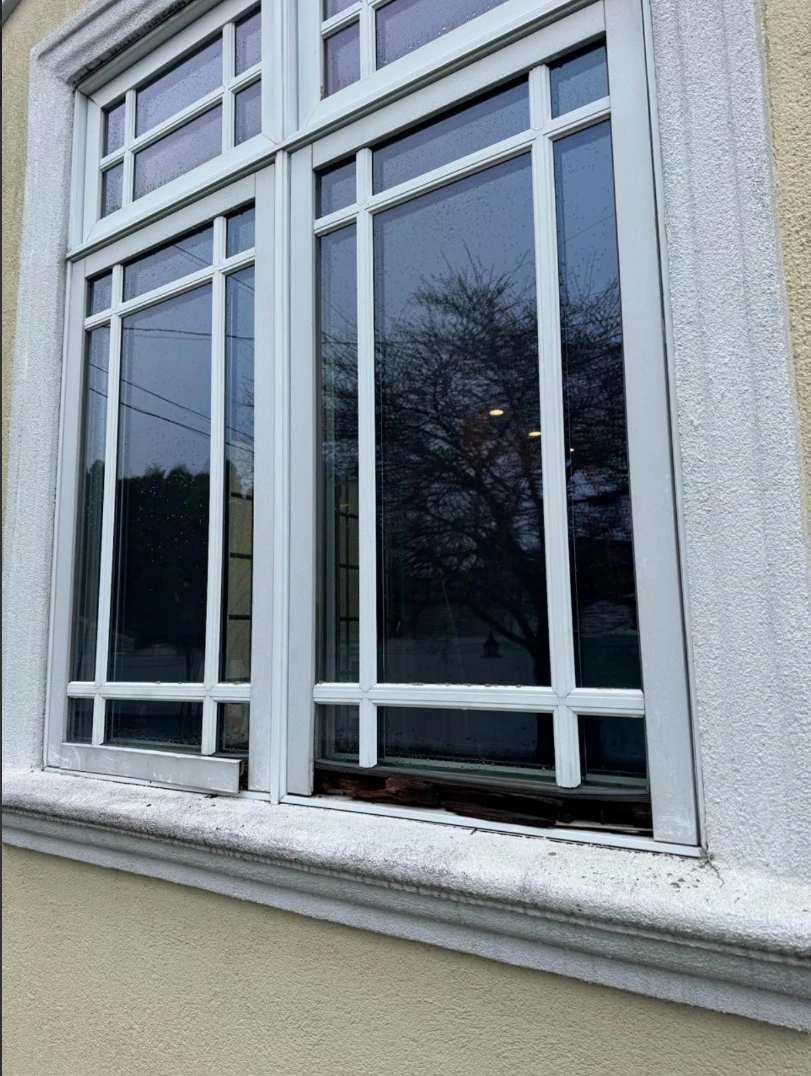
Double-hung windows are common in older American homes because both the upper and lower sashes can move vertically, allowing homeowners to control ventilation. However, years of use, worn hardware, paint buildup, and changes in the window frame can make these windows increasingly difficult to operate.
For homeowners in New York, a window that sticks, slips out of position, or refuses to close properly can be more than a minor inconvenience. Understanding the cause of the problem is the first step toward determining whether the window can be repaired without replacing the entire unit.
When a Window Starts Sticking
In a residential home in Nassau County, the owner noticed that a double-hung window in an upstairs bedroom had become progressively harder to open. The lower sash required extra force to move, while closing the window took several attempts to get it seated properly.
The homeowner also noticed a small gap near one side of the sash when the window was closed. Although the glass and exterior frame appeared intact, the window no longer operated as smoothly as it once had.
These symptoms can have several causes. Paint buildup may restrict movement, worn balances may prevent the sash from staying in position, and misaligned components can interfere with proper closing. A careful inspection is needed to identify which issue is responsible rather than assuming that the window itself has failed.

Common Reasons Double-Hung Windows Stop Working Properly
A double-hung window relies on several components working together. When one part wears out or becomes misaligned, the entire assembly can become difficult to operate.
- Worn sash balances: These mechanisms help support the weight of the sash. When they fail, the window may become difficult to lift or may slide downward unexpectedly.
- Paint buildup: Multiple layers of paint can seal moving joints or create friction along the sash tracks.
- Misaligned sashes: Changes in alignment can cause the sash to bind against the frame or leave uneven gaps.
- Damaged hardware: Locks, guides, and other moving parts may wear out or become loose over time.
- Deteriorated weatherstripping: Worn seals can contribute to drafts and prevent the window from closing snugly.
Because these problems can produce similar symptoms, identifying the underlying cause is essential before selecting a repair method.
How a Professional Window Assessment Helps
The first step in repairing a difficult double-hung window is to examine how the sash moves and how it sits within the frame. A technician may check whether the sash travels evenly, whether the balances support its weight, and whether the locking hardware engages correctly.
The inspection should also distinguish mechanical problems from damage to the wood itself. A sash that sticks because of paint buildup requires a different solution from one affected by a distorted frame or deteriorated joints.
Once the cause is identified, the repair can focus on the affected components. This may involve correcting alignment, addressing paint interference, repairing or replacing worn hardware, or restoring damaged sash sections where necessary.
Repairing the Sash Instead of Replacing the Entire Window
Difficulty opening a double-hung window does not automatically mean that a new window is required. If the existing frame and sash remain in serviceable condition, targeted repairs may restore normal operation.

Depending on the findings, the work may involve adjusting the sash, servicing its moving components, replacing failed balances, or repairing damaged wood. The objective is to help the sash move smoothly, close securely, and fit properly within the existing frame.
Homeowners considering restoration can explore sash window repair and restoration services to learn more about options for addressing worn, sticking, or poorly functioning window sashes.
Replacing the complete window may be appropriate when damage is extensive or the existing assembly cannot be restored reliably. However, the decision should follow an assessment of the actual condition of the window rather than being based solely on difficulty operating it.
What About Drafts Around a Double-Hung Window?
Air leaks can occur when the sash does not close evenly or when weatherstripping has deteriorated. A small gap around the sash may allow outdoor air to enter, making a room feel less comfortable during colder weather.
The solution depends on where the air is entering. If the sash is misaligned, correcting its position may improve the fit. If the weatherstripping is worn, replacing the affected seals may help reduce drafts. Gaps around the stationary frame may require a different approach.
It is important to distinguish between air leakage around the sash and problems caused by the surrounding wall or frame installation. Sealing the wrong area may not resolve the underlying issue.
Maintaining Double-Hung Windows Over Time
Regular inspection can help identify operating problems before they become more disruptive. Homeowners should pay attention to changes in how easily the sash moves, whether it stays in position, and whether the lock engages without excessive force.
Avoid forcing a window that has become stuck. Excessive pressure can damage the sash, hardware, or frame. Instead, investigate whether paint buildup, misalignment, or a mechanical fault is preventing normal movement.
Keeping the tracks and moving components in suitable condition, maintaining the exterior finish, and addressing worn seals can also help preserve window performance.
Final Thoughts
A double-hung window that sticks, slips, or leaves drafts does not necessarily need complete replacement. The cause may be a worn balance, misaligned sash, paint buildup, damaged hardware, or deteriorated weatherstripping.
By identifying the specific problem and repairing the affected components, homeowners may be able to restore the window’s operation while preserving the existing assembly. A proper assessment helps determine whether targeted sash repair is sufficient or whether more extensive work is needed.


Leave a Reply