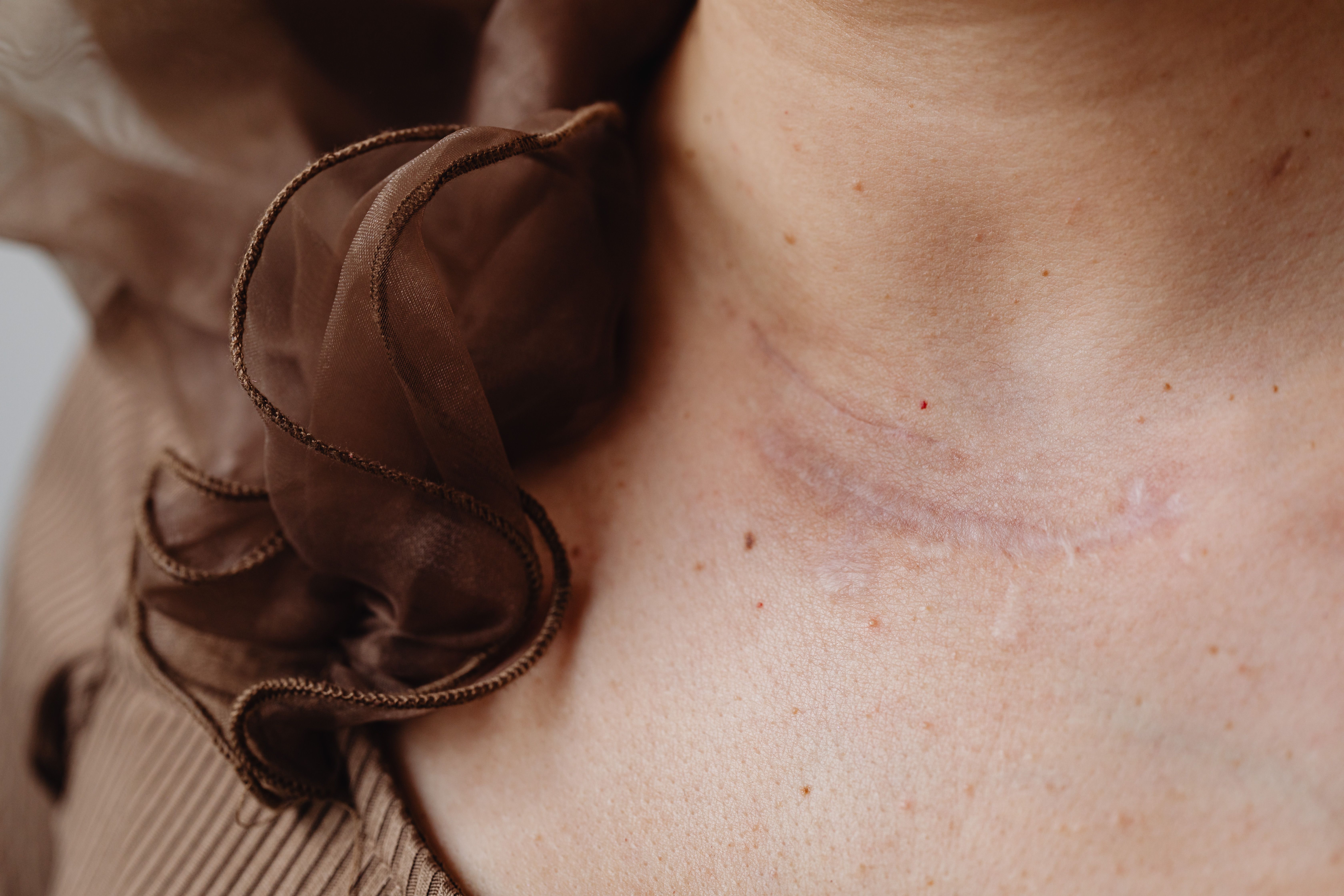
A wound may close and appear settled while scar tissue continues changing below the surface. A keloid can become noticeable weeks, months, or even years after the original injury.
Delayed growth does not mean every raised scar is a keloid. The scar’s borders, texture, symptoms, location, and history all help a qualified clinician distinguish it from other skin changes.
The Basic Features of Delayed Keloid Formation
Keloids result from an excessive scar response involving collagen production. They can continue growing beyond the boundaries of the original injury instead of gradually flattening.
Specialist keloid scar treatment in London may include a plan for present symptoms and future recurrence risk.
Common features associated with keloids include:
- Growth beyond the original wound borders
- A firm, smooth, or shiny surface
- Pink, red, brown, purple, or skin-coloured tissue
- Itching, tenderness, soreness, or prickling
- Continued enlargement over months or years
- Development after surgery, acne, burns, or piercings
- Greater frequency on the chest, shoulders, neck, and ears
- A history of earlier keloids after skin injuries
The Reasons Keloids Can Appear After a Delay
The skin’s repair process continues after the surface has closed. Collagen remodelling can last for months, and an abnormal response may gradually create a raised scar.
Prolonged Collagen Production
Collagen gives healing tissue structure and strength. Excess collagen formation can cause scar tissue to become thick and enlarged.
In a keloid, this growth extends beyond the original injury. The reason some people develop this response is not fully understood.
Very Minor Initial Injuries
The original trigger may be so small that it is barely remembered. Minor trauma can matter in someone prone to keloids.
Acne, insect bites, injections, scratches, or small piercings may leave little initial damage but still produce an excessive scar.
Slow and Gradual Enlargement
A keloid may begin as a small raised area before expanding. Gradual change can make the early stage easy to overlook.
The scar may become firmer, wider, darker, or more noticeable over time. Photographs can help show whether it is genuinely enlarging.
High-Risk Body Locations
Some areas develop keloids more often than others. The chest, shoulders, neck, jawline, and ears are commonly affected.
Tension, movement, and local skin characteristics may influence scar behaviour. Keloids can still occur on other parts of the body.
Previous Keloid Formation
Someone who has developed one keloid may be more likely to form another. Personal scar history is clinically important.
A consultation at Rejuvence Clinic can assess a raised or changing scar, discuss its likely diagnosis, and explain suitable treatment options and limitations.
Infection or Wound Tension
A wound that becomes infected or heals under tension may have a greater scarring risk. Complicated healing can prolong inflammation.
This does not mean every infected wound becomes a keloid. Individual susceptibility remains an important part of the response.
Hormonal and Life Changes
Some keloids may appear or enlarge during periods such as pregnancy. Biological changes can influence scar activity.
Age also matters. Keloids most commonly arise between puberty and early adulthood, although they can affect people outside this range.
The Differences Between Keloids and Other Scar Changes
A raised scar should be assessed according to its pattern rather than its appearance alone. Keloids, hypertrophic scars, cysts, infections, and other lesions may require different care.
The table below highlights general distinctions, but it cannot provide a diagnosis:
| Feature | Keloid scar | Hypertrophic scar | Possible infection |
| Growth pattern | Extends beyond the original wound | Remains within wound borders | Swelling around the affected area |
| Development | Weeks to years after injury | Usually develops earlier | Can arise during or after healing |
| Texture | Firm, smooth, and raised | Thick and raised | May feel warm or soft |
| Symptoms | Itching, pain, or tenderness | Itching or discomfort | Pain, heat, pus, or increasing redness |
| Natural course | May keep growing | May flatten over time | Requires prompt medical assessment |
- Growth Beyond the Wound
A defining keloid feature is expansion beyond the original damaged area. Border extension separates it from many hypertrophic scars.
The original wound may be difficult to identify years later. Earlier photographs or medical records can help establish the starting point.
- Persistence Over Time
Hypertrophic scars often improve and flatten gradually. Keloids may remain raised or continue enlarging without treatment.
A stable scar can still cause cosmetic or physical concerns. Location near a joint may also affect comfort or movement.
- Changes in Colour
Keloids can be pink, red, purple, brown, or darker than nearby skin. Colour alone cannot confirm the diagnosis.
Inflammation, infection, pigmentation, and other lesions can also change colour. A clinical examination considers the complete pattern.
- Itching and Tenderness
Growing keloids may itch, sting, feel sore, or become tender. Symptoms can indicate activity, although some remain painless.
New pain, warmth, discharge, bleeding, or rapid change deserves medical attention because another condition may be responsible.
- Firm and Smooth Texture
Many keloids feel firm and have a smooth, shiny surface. Texture provides a clue but is not diagnostic by itself.
Avoid cutting, shaving, piercing, or attempting to drain the area. Additional trauma may worsen scarring or introduce infection.
- Uncertain Scar Diagnosis
Most keloids can be diagnosed through history and examination. Unusual findings may require further investigation.
A clinician may consider biopsy when the diagnosis remains uncertain. This decision must account for the risk of further scar formation.
- Recurrence After Treatment
Keloids can return after treatment, particularly when removed surgically without additional measures. Recurrence is a central concern.
Treatment may aim to flatten the scar, reduce symptoms, improve colour, or control growth rather than promise permanent removal.
The Practical Steps for Monitoring a Changing Scar
A delayed scar change should be documented and reviewed instead of repeatedly irritated or treated at home. Clear information helps a clinician assess its development.
Useful steps include:
- Photograph the scar in consistent lighting
- Place a ruler beside it to record size
- Note when growth or symptoms began
- Record itching, pain, tenderness, or tightness
- Avoid scratching, cutting, or piercing the area
- Protect the scar from unnecessary friction
- Seek advice for rapid or unexplained changes
- Mention previous keloids and family history
Seek prompt medical advice if the area becomes hot, increasingly painful, swollen, ulcerated, or produces discharge. These signs may suggest infection or another problem.
Conclusion
A keloid may appear weeks, months, or years after the original injury seems healed. It can also keep growing beyond the wound’s borders for a long time. Any late change deserves assessment, especially if it enlarges, itches, hurts, or changes colour. Early medical review can clearly confirm the diagnosis, explain suitable treatments, and set realistic expectations about improvement and recurrence.



Leave a Reply