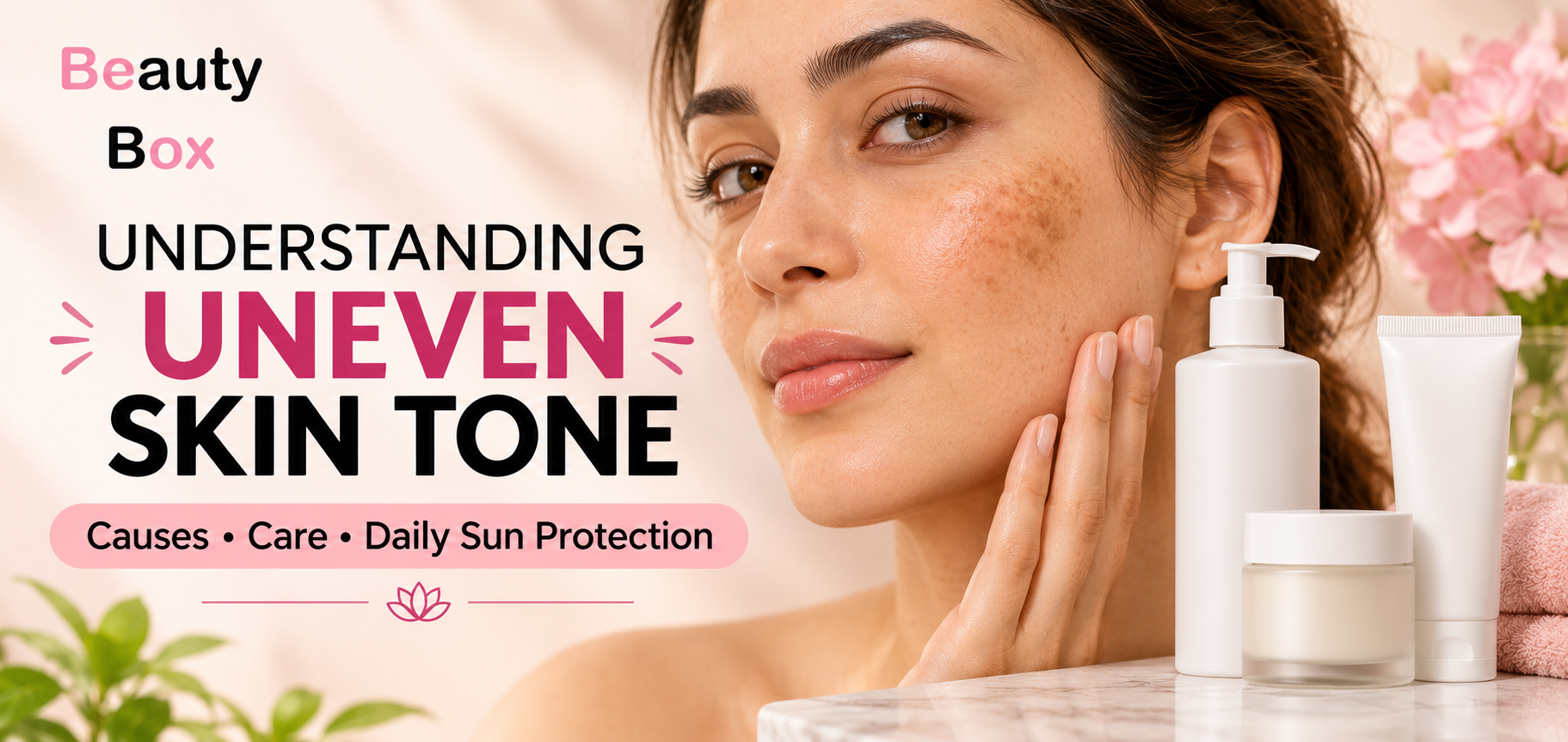
Healthy skin does not always have a completely even appearance. Some people notice dark patches, acne marks, redness, or areas that look darker than the surrounding skin. These changes are common and can develop for several reasons, including sun exposure, hormonal changes, acne, and skin irritation. Understanding what causes uneven skin tone is the first step toward choosing the right skincare routine.
Uneven skin tone refers to differences in the color or appearance of certain areas of the skin. It often develops when melanin, the natural pigment responsible for skin color, becomes concentrated in specific areas. With the right daily care and consistent habits, you can improve the appearance of your skin and reduce the chances of further discoloration.
What Is Uneven Skin Tone?
Uneven skin tone occurs when certain areas of the face or body appear darker, lighter, or redder than the surrounding skin. It often develops gradually and becomes more noticeable over time.
Common signs include:
- Dark spots left behind after acne.
- Brown patches on the cheeks, forehead, or upper lip.
- Redness caused by irritation or inflammation.
- Areas of pigmentation caused by repeated sun exposure.
- Uneven color around the mouth, chin, or other parts of the face.
Uneven skin tone is different from uneven skin texture. Skin tone relates to color, while texture refers to how smooth or rough the skin feels. Both concerns can appear together, but they require different care approaches.
What Causes Uneven Skin Tone?
Several factors contribute to changes in skin color. Identifying the possible cause helps you choose suitable products and avoid habits that make discoloration worse.
1. Sun Exposure
Sun exposure is one of the most common causes of uneven skin tone. Ultraviolet rays encourage the skin to produce more melanin as a natural protective response. When melanin production increases in certain areas, dark spots and patches can develop.
People who spend long hours outdoors without sunscreen often notice pigmentation on their cheeks, forehead, nose, and other exposed areas. Sun exposure also makes existing dark spots more noticeable.
Daily sun protection is important even when the weather is cloudy. Applying broad-spectrum sunscreen with SPF 30 or higher helps protect the skin from UVA and UVB rays. Reapply it every two hours when outdoors, especially after swimming or sweating.
2. Acne and Skin Inflammation
Acne does not always disappear without leaving marks. Pimples, blackheads, and other inflammatory skin conditions sometimes leave dark spots after they heal.
This condition is known as post-inflammatory hyperpigmentation. It occurs when inflammation triggers increased melanin production in the affected area.
Picking or squeezing pimples often increases inflammation and raises the risk of marks and scarring. A gentle skincare routine and suitable acne treatments help reduce irritation and support skin recovery.
3. Hormonal Changes
Hormonal changes can affect melanin production and contribute to pigmentation. One common example is melasma, which appears as brown or grey-brown patches, often on the cheeks, forehead, nose, and upper lip.
Pregnancy, hormonal medications, and certain other hormonal changes are associated with melasma. Sunlight and visible light can make these patches darker.
Melasma often requires consistent sun protection and guidance from a dermatologist. Avoid using strong skin-lightening products without professional advice.
4. Using Unsuitable Skincare Products
Not every skincare product works well for every skin type. Products containing strong fragrances, harsh cleansers, or unsuitable active ingredients might cause irritation.
Repeated irritation can trigger inflammation and lead to dark marks, particularly in people who are prone to pigmentation.
Using too many active ingredients at once can also weaken the skin barrier. Introduce new products gradually and avoid combining several strong treatments without understanding how they interact.
5. Age and Natural Skin Changes
As people get older, years of sun exposure and natural skin changes become more visible. Age spots, also known as solar lentigines, often appear on areas that receive regular sunlight.
These flat brown spots commonly develop on the face, hands, shoulders, and arms. Although they are often harmless, any new, changing, or unusual pigmented spot should be checked by a dermatologist.
How Should You Care for Uneven Skin Tone?
A consistent skincare routine helps improve the appearance of uneven skin tone. The goal is to protect the skin, support its natural barrier, and use suitable ingredients that address discoloration.
1. Start with a Gentle Cleanser
Cleansing removes dirt, sweat, excess oil, and makeup that collect on the skin throughout the day.
Choose a cleanser that suits your skin type. People with dry or sensitive skin often benefit from mild, hydrating formulas. Those with oily skin might prefer a gentle gel cleanser.
Avoid scrubbing your face aggressively. Excessive friction can irritate the skin and make existing dark marks more noticeable.
2. Use Ingredients That Support a More Even Appearance
Certain skincare ingredients help improve the appearance of dark spots and uneven pigmentation. Choose products according to your skin’s needs and introduce active ingredients slowly.
Some useful ingredients include:
- Niacinamide: Helps support the skin barrier and reduce the appearance of uneven skin tone.
- Vitamin C: An antioxidant that helps protect against environmental damage and improves the appearance of dull skin.
- Azelaic acid: Helps address acne-related discoloration and supports a more even-looking complexion.
- Retinoids: Encourage skin cell turnover and help improve the appearance of certain pigmentation concerns over time.
- Alpha arbutin: Helps reduce the appearance of dark spots by influencing melanin production.
These ingredients work differently, and results depend on the formulation, concentration, and consistency of use. Avoid starting several active ingredients at once, especially if your skin is sensitive.
3. Choose a Suitable Moisturizer
Moisturizing is important even when your main concern is pigmentation. A healthy skin barrier helps maintain hydration and reduces the risk of irritation.
When selecting a moisturizer, consider your skin type. Lightweight lotions or gel formulas often suit oily skin, while creams with ingredients such as ceramides, glycerin, and hyaluronic acid help support dry skin.
Choosing suitable skin care products makes it easier to maintain a consistent routine without exposing your skin to unnecessary irritation.
4. Make Sunscreen Part of Your Morning Routine
Sun protection is one of the most important steps when managing uneven skin tone. Without it, dark spots might become darker even when you use products designed to improve pigmentation.
Choose a broad-spectrum sunscreen with SPF 30 or higher. Apply it to your face, neck, and other exposed areas every morning.
If you spend time outdoors, reapply sunscreen every two hours. Wear protective clothing, sunglasses, and a hat when possible.
People with melasma or pigmentation concerns might benefit from a tinted sunscreen containing iron oxides, as it also helps protect against visible light.
5. Exfoliate Carefully
Exfoliation helps remove dead skin cells from the skin’s surface. Some chemical exfoliants, such as lactic acid and glycolic acid, also help improve the appearance of uneven texture and discoloration.
However, excessive exfoliation can damage the skin barrier and increase irritation. Start with a low-strength product once a week and observe how your skin responds.
Avoid combining multiple exfoliating products in the same routine unless a skincare professional recommends it.
Daily Habits That Help Maintain an Even Skin Tone
Skincare products are only one part of maintaining healthy-looking skin. Everyday habits also influence how your skin looks and feels.
Consider these practical steps:
- Avoid picking pimples or scratching irritated areas.
- Clean your face gently after sweating.
- Use sunscreen consistently.
- Get enough sleep to support general skin health.
- Maintain a balanced diet with fruits, vegetables, and other nutrient-rich foods.
- Drink enough water to maintain normal hydration.
- Avoid introducing several new skincare products at the same time.
- Follow a regular skincare routine instead of frequently changing products.
These habits support general skin health, although they do not replace targeted treatment for persistent pigmentation.
When Should You Consult a Dermatologist?
Some types of uneven skin tone respond to regular skincare, while others need professional treatment.
Consult a dermatologist if dark patches continue to spread, pigmentation does not improve, or you experience persistent redness and irritation.
A dermatologist can identify whether the concern is melasma, post-inflammatory hyperpigmentation, sun damage, or another skin condition. Depending on the cause, treatment might include prescription creams, chemical peels, or selected laser procedures.
Seek medical advice promptly if a pigmented spot changes in size, shape, or color, develops irregular borders, or starts bleeding.
Avoid unregulated skin-lightening creams. Some products contain ingredients that are unsafe when used without medical supervision.
How Long Does It Take to Improve Uneven Skin Tone?
Improving uneven skin tone takes time. The results depend on the cause, skin type, treatment, and consistency of your routine.
Some mild acne-related dark marks gradually fade over several months. Deeper pigmentation, such as melasma, often takes longer and might need professional treatment.
Do not expect immediate results from brightening products. Give suitable skincare ingredients enough time to work, and continue using sunscreen to prevent further discoloration.
Conclusion
Uneven skin tone can develop because of sun exposure, acne, hormonal changes, irritation, and natural skin ageing. Understanding the cause helps you choose suitable treatments and avoid products or habits that worsen pigmentation.
A simple routine with gentle cleansing, regular moisturizing, suitable active ingredients, and daily sunscreen provides a good starting point. Consistency is more important than using many products at once.
For your skincare routine, choose products that match your skin type and address your specific concerns. Beauty Box offers a range of skincare options from trusted brands, making it easier to explore products for your daily skin care needs.



Leave a Reply