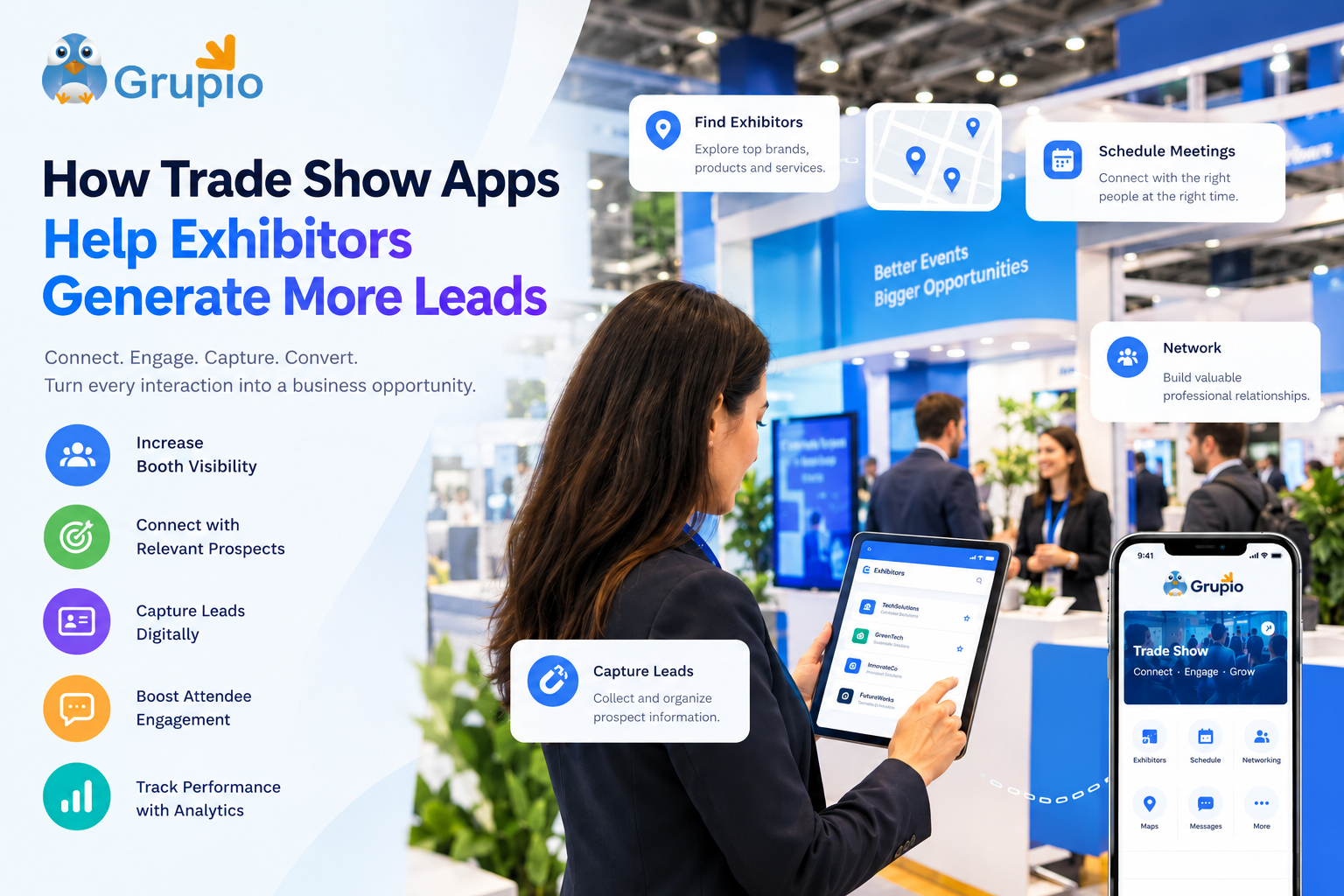
Trade shows give businesses an opportunity to showcase their products, connect with potential customers, and build relationships with industry professionals. However, attracting visitors to a booth is only one part of a successful exhibition. Exhibitors also need to identify qualified prospects, start meaningful conversations, and follow up with potential buyers after the event.
A trade show app can help simplify this process by connecting attendees with exhibitors, providing access to event information, and supporting lead generation activities. With the right event technology, businesses can make their booths more discoverable, improve attendee engagement, and turn event interactions into valuable sales opportunities.
1. Improve Booth Visibility and Discovery
At large trade shows, attendees often have limited time to explore hundreds of exhibitors. Businesses need to make it easy for visitors to find their booths and understand what they offer.
A trade show app can include exhibitor directories, booth numbers, interactive venue maps, and company profiles. Attendees can browse participating businesses, search for specific products or services, and plan which booths to visit.
For exhibitors, this visibility creates additional opportunities to connect with people who are already interested in their industry or offerings. A well-organized company profile that includes product information, website links, and contact details can help potential customers decide whether to visit a booth.
When event organizers provide searchable exhibitor listings, businesses can reach relevant attendees even before face-to-face conversations begin.
2. Connect with More Relevant Prospects
Generating leads is not simply about collecting as many contacts as possible. The quality of those contacts matters because sales teams need to focus on people who are genuinely interested in their products or services.
An event networking app can help attendees discover exhibitors, explore professional profiles, and identify businesses that match their interests. Depending on the platform’s features, attendees may also be able to request meetings or connect with exhibitors before the event.
These interactions help businesses prepare for conversations with potential customers. Instead of relying entirely on walk-in booth traffic, exhibitors can plan meetings with prospects who have already expressed interest.
For example, a software company exhibiting at a technology trade show might connect with attendees looking for automation solutions. By identifying these prospects early, its sales representatives can prepare relevant demonstrations and address specific business challenges.
3. Make Lead Capture More Efficient
Traditional lead collection methods, such as paper forms and manually entered business cards, can create additional work for exhibition teams. Information may be incomplete, difficult to read, or entered into a database only after the event.
A trade show app with suitable lead-capture capabilities can help exhibitors collect and organize prospect information digitally. Depending on the platform, teams may be able to scan attendee badges, record contact details, add conversation notes, or categorize leads by interest.
Digital lead capture can reduce manual data entry and make information easier to access after the exhibition. Sales representatives can record important details while the conversation is still fresh, such as the product a visitor asked about, their purchasing timeline, or the next action required.
Businesses should also follow the event’s privacy rules and applicable data protection requirements when collecting and using attendee information.
4. Increase Attendee Engagement at the Booth
Visitors are more likely to remember an exhibition experience when they actively participate rather than simply collect brochures. Exhibitors can use interactive activities to encourage conversations and help attendees understand their products.
Depending on the event app’s capabilities, engagement activities may include live polls, surveys, quizzes, product demonstrations, or scheduled presentations. These features can encourage visitors to spend more time exploring an exhibitor’s offerings.
For instance, a company launching a new product could use a short survey to understand attendee preferences and then invite interested participants to a demonstration. The responses may provide useful insights into customer needs while creating opportunities for follow-up conversations.
Event engagement tools can also help organizers communicate session schedules and booth activities, making it easier for attendees to discover relevant experiences throughout the exhibition.
5. Promote Products and Demonstrations Before the Event
Lead generation can begin before the trade show opens. Early communication gives exhibitors an opportunity to introduce their offerings and encourage relevant attendees to schedule a booth visit.
A trade show app may allow exhibitors to publish company descriptions, product details, promotional materials, and demonstration schedules in their profiles. Attendees can review this information while planning their event itinerary.
Exhibitors can use these listings to highlight product launches, showcase specific solutions, and communicate the benefits of visiting their booths. If meeting scheduling is supported, interested attendees may also arrange conversations in advance.
This preparation helps businesses use exhibition time more effectively. Rather than waiting for visitors to discover their products, exhibitors can give prospects a clear reason to stop by.
6. Improve Follow-Up After the Trade Show
The value of a trade show does not end when the exhibition closes. Timely follow-up is essential for turning initial interest into meaningful business relationships.
Information recorded through an event app can help sales teams organize their next steps. For example, leads can be grouped according to product interest, purchasing readiness, or the type of discussion held at the booth.
A sales representative might send product specifications to someone who requested technical information, arrange a demonstration for a qualified prospect, or share a relevant case study with a potential customer.
When the app integrates with a customer relationship management (CRM) system, supported contact information and lead details may be transferred into existing sales workflows. This can reduce repetitive work and help teams maintain a consistent follow-up process.
Follow-up messages should be relevant to the conversation and sent only when permitted by the attendee’s communication preferences and applicable privacy requirements.
7. Measure Lead Generation and Event Performance
Exhibitors need to understand whether their participation is producing meaningful results. Counting booth visitors alone may not reveal how effectively an event supports business development.
Depending on the available features and reporting access, event analytics may provide information about profile views, product interactions, meeting requests, session participation, or other engagement activities. These indicators can help exhibitors evaluate attendee interest and identify which activities attracted attention.
Businesses can compare these results with their lead-generation objectives. Useful measures may include qualified leads collected, meetings completed, follow-up responses, sales opportunities created, and revenue eventually generated.
For example, if a product demonstration receives substantial interest but produces few qualified leads, the exhibitor may need to improve its targeting or refine the demonstration’s call to action. Measuring results helps businesses make better decisions about future exhibitions.
8. Choose a Trade Show App That Fits Your Goals
Not every event app offers the same capabilities. Before selecting a solution, exhibitors and organizers should identify the features most relevant to their objectives.
Important considerations include searchable exhibitor directories, interactive maps, attendee networking, meeting scheduling, digital lead capture, engagement tools, analytics, and integrations with existing business systems. Custom branding and flexible content management may also be useful for organizations hosting recurring exhibitions or multiple events.
Security, data privacy, ease of use, and technical support deserve equal attention. An app should be straightforward for attendees to navigate and practical for exhibition teams to manage.
Organizers may also consider a branded event app that presents schedules, exhibitors, networking opportunities, and event updates within a consistent digital experience. The best solution is one that supports the event’s needs without adding unnecessary complexity.
Conclusion
Trade show apps can help exhibitors improve booth visibility, connect with relevant prospects, capture lead information, and maintain relationships after an event. They also provide opportunities to engage attendees and measure which activities contribute to business goals.
However, technology alone does not guarantee more sales. Results depend on offering relevant products, starting meaningful conversations, collecting appropriate information, and following up consistently.
By combining a suitable trade show app with a clear lead-generation strategy, exhibitors can make better use of their event participation and create more opportunities for long-term business growth.


Leave a Reply