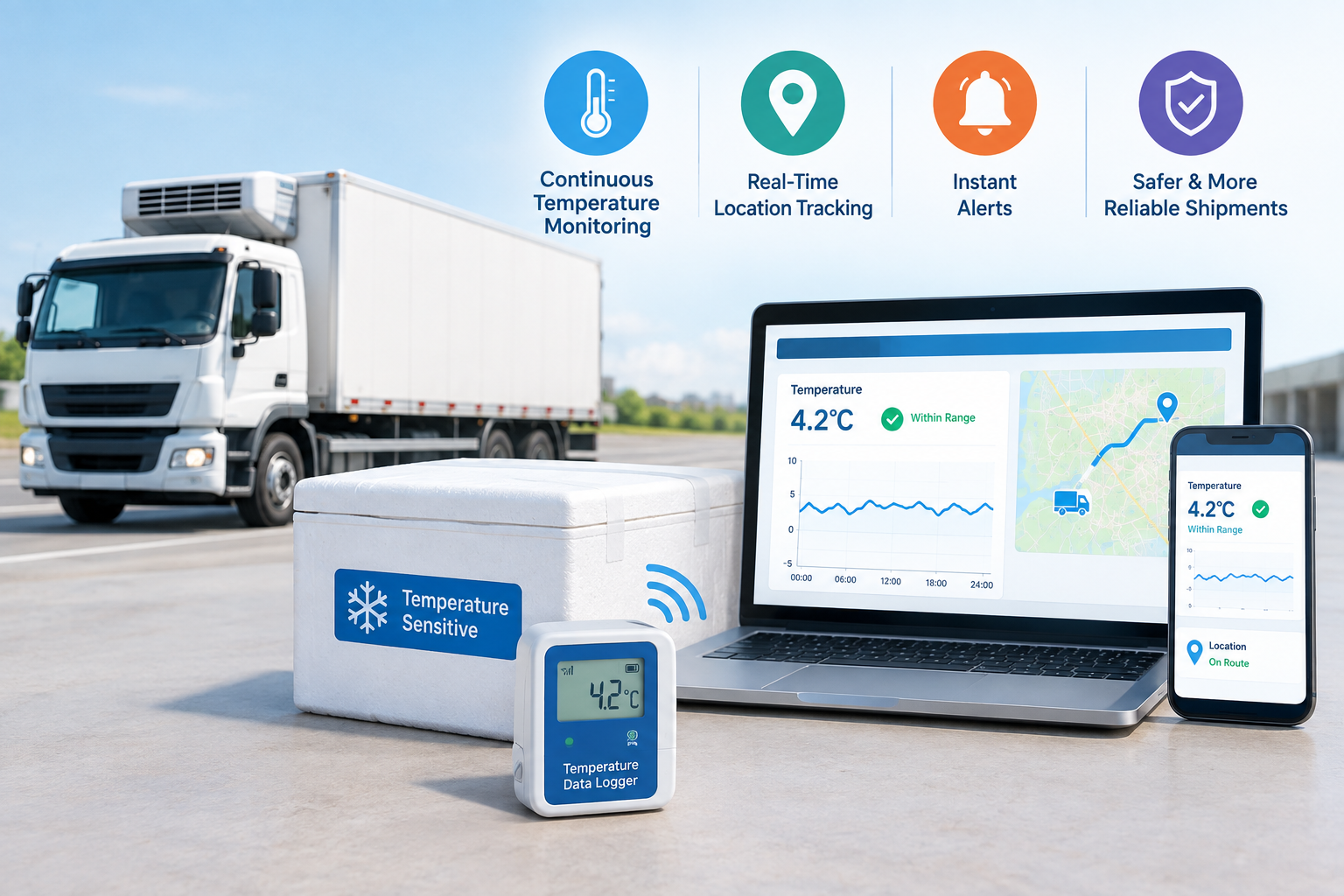
Temperature-sensitive products that are stored, handled and transported in an environment that must remain constant throughout. When temperatures fall outside of recommended ranges, pharmaceuticals, vaccines, biological samples, frozen foods, and specialty chemicals can be negatively affected. Reliable temperature monitoring in modern supply chain management is crucial since it can impact the product stability, even with brief changes in temperature.
A Real-Time Temperature Data Logger is a great way for companies to monitor temperature conditions constantly and retrieve information when the time comes for transporting or storing. Real-time monitoring technology gives timely data on environmental changes, as opposed to the traditional monitoring methods that rely on manual inspections.
They provide increased visibility, quicker reaction to temperature fluctuations and more chain traceability. Using a combination of temperature sensors, communication technology, and monitoring platforms, companies can have a better handle on temperature-sensitive goods.
So what is a Real-Time Temperature Data Logger?
A real-time temperature data logger is an electronic monitoring system that is used to measure, record and report temperature information at preset intervals. The information gathered can be sent over cellular networks, wireless or other communication methods, depending on the device.
Temperature can be viewed on the user by using the software that is compatible or on the cloud-based dashboard. Warning messages can also be configured on some of the devices if the temperature goes over the set limits.
These monitoring solutions are especially beneficial for:
The transport of pharmaceuticals and vaccines.
- Cold storage warehouses
- Refrigerated trucks and containers.
- Food processing and distribution.
- Laboratory sample transportation
- Temperature-controlled export shipments
By continuously monitoring as the goods move, companies can get a clearer idea of the environment conditions during the transport process as well as at the start and end points.
Real-Time Temperature Monitoring Matters
In the past, temperature monitoring was typically done manually at specific times. While these methods are useful in providing records, they may not give an instant view of any unanticipated temperature changes between inspections.
This is overcome by real-time monitoring, which provides more frequent insight into the condition of the shipment.
The ability to sense temperature differences immediately.The ability to sense temperature differences on the spot.
Equipment failure, shipment delays, mishandling, or changes in external factors such as temperature can cause temperature excursions.
A real-time logger can alert authorized staff if the temperature hit the set limits. It enables logistics teams to delve into possible issues and make suitable corrective action.
An example of this would be if a refrigerated vehicle has an issue with its cooling system, an alert for monitoring would be useful to help the operator determine the problem before the shipment arrives at its destination.
2. Improved Shipment Visibility
Information on temperature in real-time provides businesses with an understanding of product handling during transit.
Recorded data can be viewed during delivery by authorised users to monitor environmental conditions, rather than waiting until after delivery.
The visibility helps communicate between the manufacturer, logistics provider, warehouse operators, and receiving team.
3. Better Documentation
Temperature data is crucial to provide evidence of the correct monitoring process.
Digital data logging saves the reliance on hand recorded data and allows data to be organized for internal review, quality investigation and relevant compliance documentation.
Monitoring equipment, calibration practices, data storage and operating methods should be configured accordingly with the industry requirements.
The Importance of GPS Temperature Data Loggers in Present-day Logistics.The Function of GPS Temperature Data Loggers in Modern-day Logistics.
A GPS Temperature Data Logger is a device that allows the tracking of temperature along with the location of the shipment.
A conventional temperature logger will collect information about the environment, but a GPS device can link monitoring data to geographical location during transport.
This pairing allows logistics teams to know when and where temperature excursions are happening within the transportation process.
The benefits of GPS-enabled monitoring are clear:The advantages of GPS-enabled monitoring are evident:
Approximate shipment tracking: GPS data aids in determining the approximate location of tracked shipments, based upon the capability and connectivity of the device.
Temperature/location correlation: Businesses can view the temperature events when they are paired with the location information, and can determine the cause of the event.
Transportation visibility: GPS tracking allows for the tracking of transport movements and can facilitate the logistics team’s coordination of deliveries.
Incident investigation: If a temperature excursion does happen, by knowing the location, one may be able to narrow down the focus of an investigation to the transportation stages or handling points that may have caused the excursion.
Temperature records in conjunction with location data can aid in more comprehensive transportation documentation for pharmaceutical shipments and other sensitive goods.
But GPS tracking cannot be a substitute for temperature measuring. These two functions are used for different things and are best judged by how they are going to be used in the operation.
Thermal applications in sensitive industries.
The transportation of drugs and vaccines.
Pharmaceutical products can have to be stored and transported under specific conditions to ensure the product remains of its desired quality.
A real-time temperature logger can assist pharmaceutical companies, distributors, and logistics partners in the monitoring of shipping conditions and in detecting conditions that may cause an excursion.
Continuous monitoring can be used to document the temperature during vaccine transportation.
The necessary temperature range, accuracy, calibration, communication coverage, and shipment time should all be considered when selecting monitoring equipment.
Food & Beverage Logistics is the name of the game.
Refrigerated or frozen transportation may be necessary to ensure the quality and limit the loss of perishable food products.
Temperature Monitoring provides the distribution team with the ability to detect refrigeration issues and review storage conditions when moved to transit.
When temps are being tracked and deviate from configured operating range, real-time alerts can help in the timely investigation.
Warehouse Warehouse: Healthcare and Laboratory Transportation.
Controlled transportation may be required for biological samples, diagnostic materials, and laboratory products.
Digital monitoring means the temperature data is recorded and this can help receiving teams in checking the shipment as well as investigating any possible shipping deviations.
Cold Storage Warehouses
In pharmaceutical storage facilities and refrigerated warehouses, temperature monitoring is also crucial.
Using data loggers, operators can monitor environmental factors, check past readings and look for any temperature fluctuations that are common and need to be investigated further.
When picking a data logger, there are several features that are critical to consider.
Selecting the right monitoring device depends on the requirements of the shipment or storage facility.
Temperature Measurement Range
Choose equipment that is capable of measuring the temperature(s) needed for the desired application. Monitoring requirements may vary for frozen shipments, refrigerated pharmaceuticals and cryogenic materials.
Measurement Accuracy
For products that have a limited temperature window, accuracy is critical when monitoring. Before using a device, check the device specification and applicable calibration document.
Communication Technology
Devices could communicate via cellular, wireless or other technologies, depending on the shipment route.
The equipment should be picked for domestic or international transit based on network coverage, connectivity restrictions and data transmission frequency.
Battery Life
The expected duration of shipment, frequency of monitoring and requirements for communicating should be supported by the performance of the battery.
Data Storage
Local memory may be used to store information for a short period of time when connections are lost. Once there is some communication, businesses need to assess how the device stores and transmits data.
Alarm Configuration
Users can set up their own temperature limits and alert settings to react to relevant deviations.
GPS Functionality
If you need to know where the shipment is, you’ll want to know that the GPS is available, the frequency of updates, the accuracy of the location, and the requirements of the device.
Real-Time Data Loggers play a crucial role in ensuring compliance with cold chain regulations.Real-Time Data Loggers are essential tools for cold chain compliance.
Cold chain compliance refers to the ability to keep the product suitable and to adhere to the documented procedure during storage and transport.
Producers can benefit from monitoring devices by providing temperature data that may help with quality management practices.
These records can assist businesses:
- Review temperature excursions.
- Investigate transportation incidents.
- Continue to keep documentation of shipment monitoring.
- Determine reoccurring operational issues.
- Assess logistics provider effectiveness.
- Facilitate internal quality audits.
Installing a data logger does not, however, mean that compliance with regulations is being met. The correct operating procedures, equipment qualification and calibration, employee training, data management and corrective action procedures are all also necessary.
Combining Temperature Monitoring with Supply Chain Operations
Monitoring is more than just the deployment of a device. A formalized temperature information usage process should be created in the business.
The first step is to determine the temperature needs for the products being moved. Then, identify a monitoring device that has the appropriate measurement and communication capabilities.
Set monitoring periods, alarm levels and user notifications before the dispatch. Set up the device as required for the monitoring procedure and make sure that the calibration status is suitable.
While transporting, authorized personnel should check and investigate alerts and look for unusual readings. Following delivery, temperature logs should be checked and documented in line with the procedures.
Businesses that have temperature-sensitive products may require temperature monitoring solutions and cold chain services from organizations like Temp Note.
With the right monitoring tools and record-keeping, businesses can enhance visibility of their shipments and ensure more robust temperature management.
This article explores the potential of new technology to monitor temperature in real-time.
The emergence of connected monitoring technologies in the application of cold chain operations is giving rise to greater ease of access to data and greater coordination of operations.
Current monitoring systems can incorporate temperature data, GPS details, cloud-based reporting and automated notifications.
The capabilities enable businesses to shift from periodic inspection to more continuous monitoring and data-informed decision making.
In a more complex supply chain, reliable temperature data will continue to play a vital role in pharmaceutical distribution, healthcare logistics, food transportation and other temperature-sensitive applications will continue to rely on temperature data.
Real time monitoring is not a replacement for good packaging, refrigeration, established transportation protocols and trained staff. Rather, it offers valuable information that aids these processes in better functioning and visibility.
Conclusion
The Real-Time Temperature Data Logger is a crucial piece of equipment in today’s modern cold chain logistics solutions, ensuring real-time temperature data, timely alerts and enhanced transportation visibility.
By adding GPS capabilities to monitoring systems, they can provide more details about the condition of a shipment during transit, as well as its location.
These technologies enable businesses to detect temperature issues, assess any discrepancies, and keep all monitoring data organized and documented.
Appropriate equipment used with appropriate operating procedures are important in helping to ensure more reliable temperature control throughout the supply chain.


Leave a Reply