The driver takes the exit from a freeway when it is dark and does not know where they are going. In the next moment, they might be heading directly into the face of approaching cars. At times like this, having the proper sign in the right place can save lives.
Wrong Way road signs alert drivers that they are traveling against the correct flow of traffic. These road signs are very common along freeway exit ramps, divided highways, one-way streets, parking structures, and private roads where wrong way travel may be dangerous.
Their intended use is rather simple, and they must immediately grab the attention of any driver in order to convey their message.
What Are Wrong Way Signs?
Wrong Way signs caution motorists when they are going against the official flow of traffic. These signs are common at freeway exit ramps, divided highways, one-way streets, parking structures, and private roads where going in the wrong direction can pose hazards.
The purpose of these signs is straightforward; they must command immediate attention and clearly communicate their message because motorists only have a second or two to respond to them.
What Do Wrong Way Signs Look Like?
There are some common elements incorporated in all standard wrong way signs, which make them easy to identify.
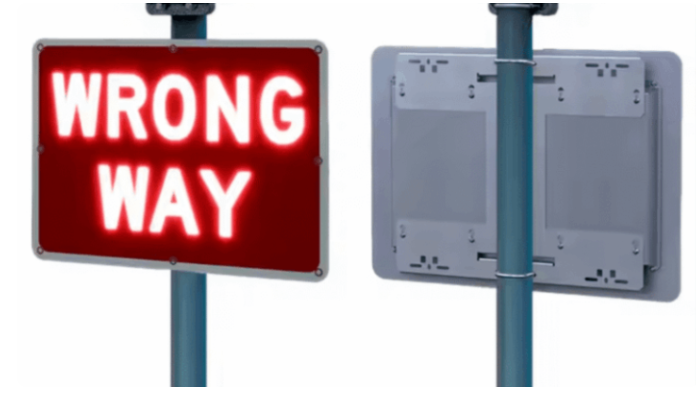
Bright red background. The color red indicates danger, prohibition, and stop.
White letters. The message “WRONG WAY” is printed in large white capitalized letters.
Rectangular form. All wrong way signs have a horizontal rectangle form, which is used for regulatory signs.
Reflective sheeting. Good quality reflective sheeting is used for the sign to become visible from distance during night or bad weather.
All these elements are combined into one sign. Even a tired, distracted, and inexperienced driver can understand the meaning of the sign instantly.

Wrong Way Signs vs. Do Not Enter Signs
The two signs can be used in tandem and they complement each other. However, they are quite different.
- Do Not Enter signs are generally square or circular regulatory signs having a red ring with a white horizontal bar. This indicates that the driver is not allowed to enter the road from that point.
- The Wrong Way signs come next; they are found some distance ahead of the entering point and are meant for those drivers who have entered the road from the wrong side.
So it is like a double warning; the former prevents the error while the latter offers another opportunity to make good the error.
Standard Colors and What They Mean
Colors play an important role in reading signs without thinking about them. The following is a brief description of the use of colors in wrong way signs and other signs that usually accompany them.
- Red symbolizes prohibition and danger; therefore, it is the primary color used in wrong way signs and do not enter signs.
- The white color is used for contrast and to convey the message.
- Black and white colors are frequently used in regulatory signs like the one way sign where there is an arrow indicating the direction.
All these colors become retro reflective when it gets dark.
The use of proper colors is important because it helps in conveying the message within seconds.
How Wrong Way Signs Work with One Way Signs
One way signs and wrong way signs work well together in one instance. One way signs tell the direction that drivers can travel in, while wrong way signs will tell the drivers that they are traveling in the opposite direction.
One way signs are generally black and white with an arrow and words that say “ONE WAY.” They are usually placed at intersections to warn drivers about traffic flow in advance of turning. Wrong way signs come into play from the other end to reinforce the information.
Together, there is not much room left for error.
Where Wrong Way Signs Belong
Placement is just as important as design. These are the most common locations:
- Freeway and highway off-ramps. Signs are placed so drivers entering the ramp from the wrong end see them immediately.
- Divided highway crossovers. Clear signs help prevent turns into opposing traffic.
- One-way streets. Posted at the end of the block, they warn drivers who enter against the flow.
- Parking lots and garages. One-directional ramps and aisles need clear wrong way messaging.
- Private roads, campuses, and industrial sites. Delivery trucks and visitors may not know the traffic pattern.
In most cases, signs should face the driver who is heading the wrong way, be mounted at a height that’s easy to see, and be repeated if the road is long or has multiple entry points.
Working with Other Regulatory Signs
Wrong way signs rarely work alone. In parking areas and city streets, they sit alongside other regulatory signs that guide behavior. For example, no parking signs keep entrance lanes and ramp areas clear so drivers can see wrong way signs without obstruction. A parked truck blocking a key sign can defeat its purpose.
When you have wrong way signs, one way signs, and no parking signs, you have a system. Cars go the right way, your visibility is clear, and motorists receive the same message right from the point of entry.
How to Choose the Right Wrong Way Signs
Not all areas require the same sign. Consider the following things while purchasing signs.
Size. For highways and highways with broad ramps, large-size signs are required so that motorists can understand them. Small signs can be appropriate for parking areas and roads that move slowly.
Reflective grade. High-intensity or prismatic sheeting would be preferable in roads that have a lot of fast traffic or low illumination levels. Lower grades might suffice for private roads that are very well illuminated.
Material. Aluminum is a popular material since it will not rust and will maintain its shape regardless of the climate conditions.
Mounting. Posts, brackets, and fasteners must be able to hold the sign in place in strong winds and avoid any tampering.
Compliance. Ensure that signs conform to your local and international rules, such as MUTCD in the United States. It makes defending the sign easier.
Common Mistakes to Avoid
Small errors can reduce the value of an otherwise good sign:
- Mounting signs too high or too low to catch a driver’s eye
- Letting trees, poles, or parked vehicles block the view
- Using faded or damaged signs that no longer reflect light well
- Posting signs on only one side where both sides need coverage
- Choosing non-standard colors or lettering that confuse drivers
Regular inspections help you catch these problems before they cause a safety issue.
Frequently Asked Questions
1. What color is a wrong way sign?
Standard wrong way signs have a red background with white lettering. This combination is used because it signals danger and stands out clearly in all lighting conditions.
2. How does the wrong way sign differ from the do not enter sign?
The do not enter sign instructs drivers not to enter the road from that specific spot. The wrong way sign alerts drivers who have already entered the road but contrary to its flow of traffic.
3. In what places should wrong way signs be placed?
Commonly, it will be found in freeway off-ramps, crossover roads on divided highways, one-way streets, and parking garages. These signs should be visible to the driver driving in the wrong direction.
4. Should wrong way signs be reflective?
Yes, the reflectors help in illuminating the signs during dark nights and inclement weather conditions when most of the wrong way signs occur.
5. Can I use wrong way signs with one way signs and no parking signs?
Yes, it is advised that you use all three signs together. The one way signs indicate the proper direction while wrong way signs are used to rectify any errors made, and no parking signs ensure visibility of these signs.
Conclusion
Even though wrong way signs seem to be easy to design, each feature of a sign has its own significance. Red color, white letters, reflecting surface, and proper positioning all come together to help create an instantaneous reaction among drivers. Together with one way signs and no parking signs, they create an effective traffic control system.
If you want to purchase high-quality signs for your streets, ramps, and parking lots, you can check out roadwaysigns.com, where you will find a variety of wrong way signs, one way signs, and no parking signs.



Leave a Reply