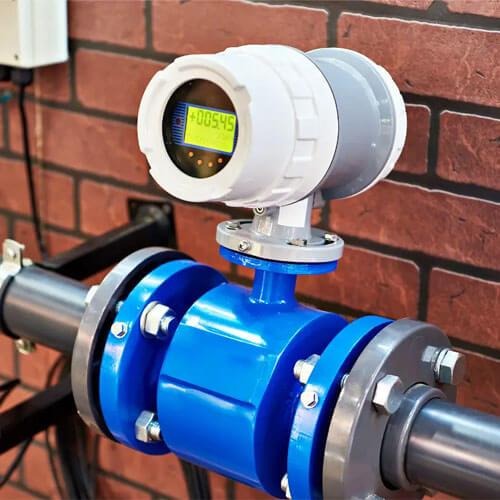
Despite it one of the most crucial resources for industrial processes, water is often taken for granted until something goes wrong. Water treatment plants, chemical factories, manufacturing facilities, and agricultural businesses all rely on a steady supply of water to carry out their daily operations. Increased operational expenses, production disruptions, and wasteful resource use are all possible outcomes of inefficient water distribution.
Water management has grown in importance as businesses become more aware of sustainability and operational effectiveness. Knowing how much water they buy or use is no longer of relevance to businesses. Additionally, they want to know where it goes, how efficiently it is used, and whether their current systems function as they should.
Understanding the Importance of Water Flow Monitoring
Water rarely passes through a single pipeline in an industrial setting. Cooling, cleaning, production, wastewater treatment, and other processes may have their own distribution networks in a typical facility.
It can be challenging to spot unusual consumption or distribution issues without adequate monitoring. For instance, it may take weeks for somebody to notice a noticeable rise in water bills due to a minor leak in an underground conduit.
Businesses can detect these issues earlier with regular measurement. Operators can compare actual usage with anticipated requirements by monitoring water movement at key locations throughout a facility.
One practical approach to do this is to install adequate flow meters. By measuring the flow of water through pipelines and other distribution systems, these devices provide data that can aid in resource planning, maintenance, and operational
Comparing specifications simply is not sufficient to choose the appropriate equipment, though. It is important to take into account the water’s characteristics, pipeline conditions, the required measurement range, and the surrounding environment.
Different Industries Have Different Measurement Requirements
Wastewater treatment facilities face another set of challenges. Their systems often handle liquids containing suspended solids and other impurities. Measurement equipment must therefore be suitable for the characteristics of the medium rather than selected solely on price.
Understanding these differences helps businesses invest in equipment that can perform reliably under actual operating conditions.
Common Problems Caused by Poor Water Monitoring
There is no universal answer for every use of water measurement. For example, the needs of a municipal wastewater facility may differ significantly from those of a food processing company.
Maintaining constant water use in food and beverage production is crucial to both product quality and hygienic conditions. Operators can prevent needless consumption and maintain process conditions with the use of precise measurements.
Water distribution in agriculture must be carefully regulated, particularly in regions with limited irrigation resources. Farmers can find inefficient distribution and enhance scheduling by keeping an eye on the flow of water circulating through pipes and irrigation canals.
Many issues with industrial water management arise gradually. They might not result in a closure promptly, but they may eventually raise expenses.
Undetected leakage is one prevalent problem. When a leak persists for an extended period of time, even a little leak can cause substantial water losses.
Inaccurate estimation is another issue. The measurements could not accurately reflect actual operating conditions if an instrument is not appropriate for the application or has been mounted improperly. This could result in poor choices regarding resource allocation, equipment performance, and consumption.
Water distribution can also be impacted by changes in pressure. Unexpected pressure changes at facilities that has several connected pipelines could be a sign of equipment failure, a blockage, or a valve issue.
These issues demonstrate why routine industrial maintenance ought to involve reliable measurement techniques and regular inspections.
Technology Is Making Water Management Easier
Monitoring methods that exclusively rely on manual readings are rapidly being replaced in industrial facilities. Operational information is becoming increasingly readily accessible due to digital instruments and linked monitoring networks.
Electrical output signals from contemporary measurement equipment can be connected to industrial data platforms, monitoring systems, or controllers. As a result, operators don’t need to visit each installation location to evaluate important measurements.
Centralised monitoring can be especially helpful for larger operations. Businesses can gather key indicators in one location as opposed to collecting data from many departments individually.
Furthermore, this method makes it easier to compare previous data, spot odd patterns of change, and identify areas for improvement.
Practical Ways to Improve Industrial Water Efficiency
It is not always necessary to completely overhaul an existing system in order to increase water efficiency. A few useful adjustments can often yield significant outcomes.
1. Perform routine system inspections
Periodic inspections are necessary for storage tanks, pumps, valves, and pipelines. Early detection of minor leaks or damaged parts can save more serious issues.
2. Keep an eye on consumption at key moments
Businesses can determine what processes use the most resources by measuring water usage across various production regions.
3. Keep measurement tools in good working order
The manufacturer’s recommendations should be followed when checking and taking care of instruments. Measurement reliability is maintained through calibration and regular inspections.
4. Examine past consumption information
Unexpected changes can be found by comparing current consumption with historical records. When looking into leaks, equipment problems, or ineffective operating procedures, this information is helpful.
5. Train staff
Employees in charge of operating water systems should be knowledgeable of how the machinery works and be aware of what to do when strange readings show up.
Looking Ahead: Building More Sustainable Industrial Operations
An increasingly crucial aspect of prudent industrial development is water conservation. Companies are under pressure to reduce operating expenses while optimising the use of natural resources.
The knowledge required to accomplish these goals is provided by accurate measurement. tBusinesses can detect wasteful use, enhance service planning, and make better decisions regarding system upgrades when they comprehend how water flows through their facilities.
In the end, having the newest equipment is not enough for efficient water management. It necessitates a combination of suitable technology, routine upkeep, and a thorough comprehension of resource usage.
Businesses that adopt these measures are in a better position to run effectively and lessen their impact on the environment.
How Connected Technology Is Changing the Way Industries Operate

When you visit a modern manufacturing plant, you could note that it differs from more conventional industrial settings. These days, machines no longer function as fully autonomous creatures. Sensors continuously gather operational data, equipment may exchange information, and managers can use digital dashboards to keep an eye on critical processes.
This alteration is a part of a broader shift occurring across the industrial world.
Businesses have relied on equipment, human knowledge, and planned inspections to maintain operations for decades. Even though these techniques are still crucial, they might make it challenging to find issues fast, especially in large plants with intricate production systems.
These days, businesses can see more clearly what is going on throughout their operations thanks to connected technologies. Additionally, they are altering how companies handle resource management, productivity, and maintenance.
Why Industrial Businesses Need Better Connectivity
In a traditional factory, different departments may use separate machines and monitoring systems. Production teams focus on output, maintenance employees look after equipment, and management reviews performance reports.
The challenge is that information does not always move easily between these departments.
For example, a production machine might begin operating at an unusual temperature. If the relevant information is not shared with the maintenance team, the problem may continue until it causes equipment damage or interrupts production.
Connected systems help reduce these communication gaps by making operational information more accessible.
Through IIoT, industrial equipment, sensors, and control systems can exchange data and provide a more connected view of business operations.
This allows companies to move beyond reacting to problems after they occur and start identifying potential issues earlier.
How Connected Industrial Systems Work
The concept of industrial connection is quite simple. Information is gathered by physical devices, transferred by communication technologies, and interpreted by software systems.
Nonetheless, a number of components cooperate to enable this procedure.
1. Sensors and Networked Devices
Data collecting is the first step in the process. Various operational characteristics are measured by sensors installed on industrial systems and devices.
Temperature, pressure, vibration, liquid levels, movement, and water quality can all be monitored, depending on the application.
An industrial motor’s temperature sensor, for instance, can assist operators in spotting anomalous heating. In a similar vein, information on shifting operating conditions can be obtained from a pipeline’s pressure sensor.
The basis for improved industrial monitoring is established by these metrics.
2. Networks of Communication
Information must get to the proper monitoring system after it has been collected.
Depending on their needs, industrial facilities employ a variety of communication methods. While wireless solutions can be useful for remote equipment or places where laying cables is challenging, wired networks are typically found in settings where reliable communication is crucial.
The decision is based on a number of factors, including reliability, environmental conditions, network coverage, distance, and data transmission requirements.
3. Platforms for Processing and Tracking Data
It’s not always simple to comprehend raw measurements. Incoming data is organised and presented in a practical manner via a monitoring platform.
Operators can compare performance over time, view equipment conditions, or get alerts when specific measures surpass predetermined limits.
Additionally, some systems use edge devices or industrial gateways to process data locally. In the event that cloud connectivity is unavailable, this can minimise communication delays and enable crucial monitoring operations to continue.
4. Evaluation and Decision
Converting gathered data into useful advances is the ultimate goal.
Companies can use historical data to understand equipment performance, spot odd trends, and find ways to enhance manufacturing procedures.
In the long run, advanced analytical instruments can assist businesses to arrive at superior operational choices.
Real-World Applications Across Different Industries
Manufacturing is not the only utilisation of connected industrial devices. It is used in many different industries.
Production and manufacturing
Manufacturers can manage to track production conditions, keep an eye on machine performance, and spot equipment issues before they become serious disruptions. Managers can better comprehend production efficiency across departments with the aid of connected systems.
Management of water and wastewater
Treatment facilities are able to maintain a watch on pumping systems, tank levels, pipeline issues, and water quality. It is simpler to operate facilities with several treatment stages or geographically dispersed installations when this information is accessible remotely.
Management of energy
Industrial energy users and power plants can track use, spot odd usage trends, and enhance resource planning. Increased visibility makes it easier for companies to recognise areas where energy is being squandered.
Farming
Connected soil sensors, weather monitoring devices, and irrigation controls can help modern agricultural businesses manage resources more effectively. Rather than relying solely on manual observation, farmers can make judgements based on actual field conditions.
Logistics and transportation
Vehicle whereabouts, equipment condition, and shipment movement are all monitored by connected tracking systems. This facilitates better asset utilisation and operational coordination for logistics firms.
Predictive Maintenance: A Major Advantage
Predictive maintenance is one of the most beneficial innovations in connected industrial operations.
In the past, businesses have either waited until a machine displayed obvious signs of malfunction or adhered to set maintenance plans. Both strategies have drawbacks.
While reactive maintenance may allow minor issues to escalate into costly repairs, scheduled maintenance may occasionally lead to needless service.
An additional choice is provided by connected monitoring.
Think of an industrial pump that runs all day long. Its temperature, pressure, and vibration can all be tracked using sensors. Maintenance staff can look into the matter if the measurements progressively deviate from typical operating trends.
While technology doesn’t always pinpoint the precise mechanical issue, it does offer helpful information that aids professionals in determining whether an inspection is necessary.
This can improve the company’s level of maintenance planning and lessen unplanned downtime.
The Role of Data Security in Connected Industries
Protecting industrial facilities’ systems becomes more crucial as they become more interconnected.
Industrial networks, in contrast to regular office networks, may support machinery that is necessary for production processes. Unauthorised system access or problems in communication could have detrimental effects on operations.
As a result, companies should start any digital transformation project with security in mind.
Controlling access to monitoring platforms, keeping software up to date, separating vital operational networks from general business networks, and keeping an eye out for strange network behaviour are examples of basic precautions.
Choosing trustworthy technology suppliers and setting up precise repair protocols for linked devices are also crucial.
Security should not be viewed as something that should only be addressed after a system has been set up.
Challenges That Come With Industrial Digitalization
While connected technology has numerous benefits, putting it into practice is not always easy.
It’s possible that older industrial buildings have equipment that was never intended to interact with contemporary monitoring systems. Additional sensors, communication gateways, or equipment changes might be needed to integrate these systems.
Managing a lot of data presents another difficulty. Increased data collection may not always translate into better company achievement. Businesses must determine which metrics are truly helpful and make sure staff members can accurately interpret them.
Training is just as vital. Employees should be aware of how linked systems work and how to react to alerts or anomalous readings.
It is frequently more sensible to apply a strategy gradually rather than attempting to modernise a facility all at once.
What Does the Future Look Like?
The method of industrial digitalisation is still ongoing, and new technologies are opening up new possibilities.
Advanced analytics, machine learning, and artificial intelligence are being investigated more and more for applications including quality control, equipment monitoring, and production optimisation.
Analytical systems, for instance, might potentially discover intricate patterns in machine performance that would be challenging to spot through routine inspections.
Another emerging field is digital twins. They let companies to build virtual models of actual machinery or procedures, enabling the examination of operational conditions and the assessment of possible enhancements.
However, reliable information, appropriate infrastructure, and personnel who are informed about the industrial processes under observation will still be necessary for successful implementation.
Final Thoughts
The industrial world is evolving, and modern corporate operations increasingly depend on communication. Businesses are finding new ways to gather data, enhance equipment visibility, and make better operational decisions in everything from manufacturing plants to water treatment facilities.
Having more linked devices is not the true advantage. It is having access to useful information that aids workers in problem-solving, maintenance scheduling, and productivity enhancement.
Businesses can create more dependable and effective operations without losing sight of the human expertise that keeps industrial systems operating if they approach digital transformation with defined objectives and appropriate technology.



Leave a Reply