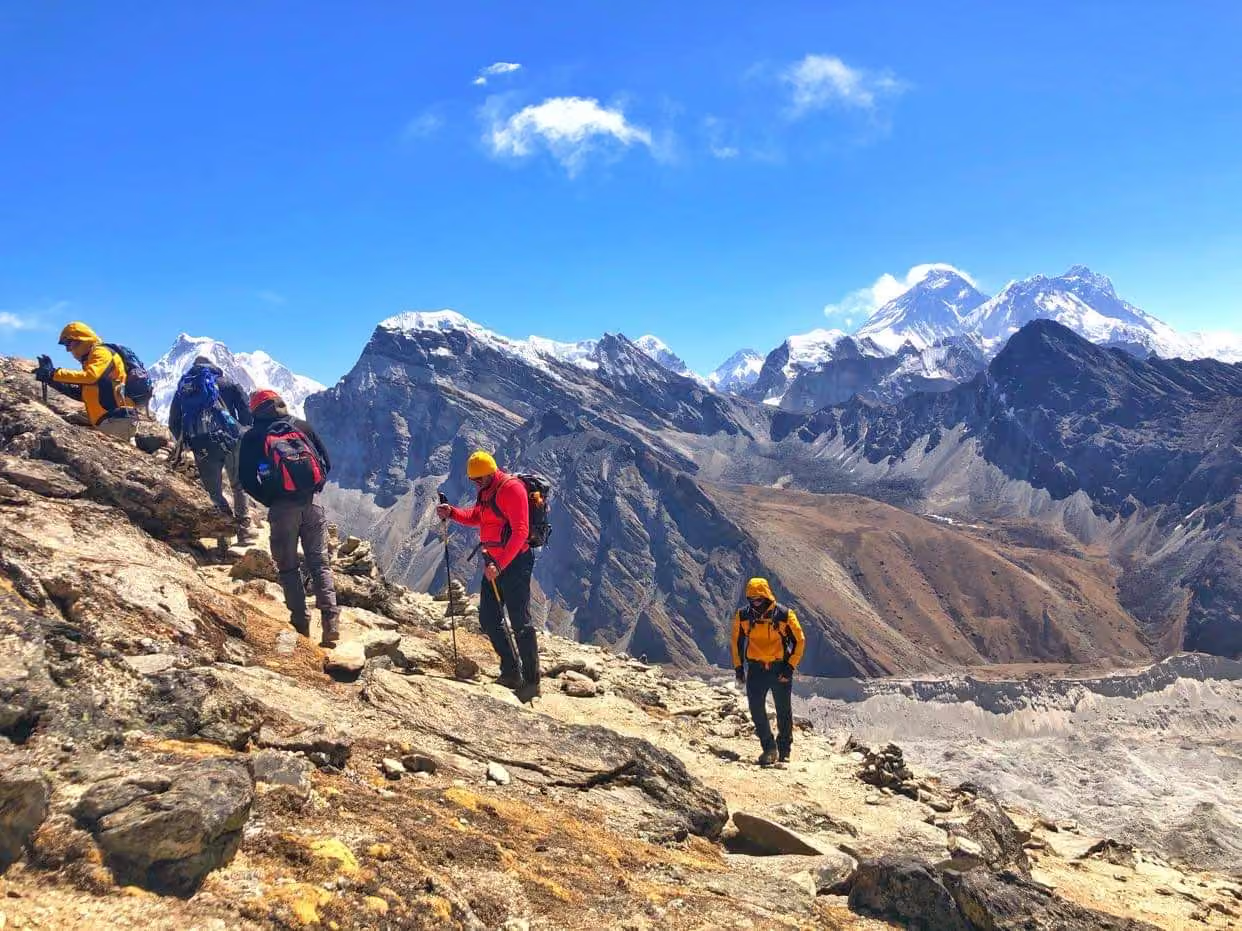
Three Himalayan Trails, but Which Experience Are You After?
Nepal has a lot of famous trekking routes, and choosing one is harder than it looks. The tallest peak or the most photographed viewpoint isn’t really the question. What matters more is how many days you can spare, how your legs and lungs cope with climbing, and what you want to bring home: one huge view, a week of village life, or a quiet trail you nearly have to yourself. Mountain scenery is everywhere here. It tells you very little about what walking feels like.
The Everest Base Camp Trek is the heavyweight. It heads into the Khumbu, past Sherpa villages and stone-walled yak pastures, and keeps climbing until the air thins out and every uphill step asks a bit more of you than you planned for.
The Annapurna Base Camp Trek goes another way. Forest, terraced farms, Gurung villages and river valleys come first, then the trail opens into the Annapurna Sanctuary, a ring of peaks around you. The Langtang Valley Trek sits north of Kathmandu, reached by road, with Tamang heritage and usually fewer people on the path.
Below I compare all three: trail conditions, culture, logistics, and what you can realistically expect once you’re out there.
Everest Base Camp Trek: High Trails and Daily Life in the Khumbu
The Everest Base Camp Trek finishes at roughly 5,364 meters, deep in Nepal’s Khumbu region. Seeing Everest is only part of the point, and it isn’t guaranteed anyway. The rest is the walk itself: glacier valleys, mountain villages, and a landscape shaped by people who live at altitude year-round.
Most itineraries start with a flight into Lukla, then move through Phakding, Namche Bazaar, Tengboche, Dingboche, Lobuche and Gorak Shep. Expect steep climbs out of the Dudh Koshi valley, long stone staircases, and suspension bridges that sway a little more than you’d like. Higher up, the thinner air slows everyone down, fit or not.
This is Sherpa country, and it shows in the details: prayer wheels, mani walls, and Tengboche Monastery sitting above the forest. Many families here run the lodges, carry the loads and keep the trails in shape, so the trek is as much their working landscape as a route for visitors. Walking clockwise around prayer wheels and mani walls, and asking before photographing people, goes a long way.
On a common Lukla-to-Lukla plan you’re looking at about 12 to 14 days, including acclimatization stops. Teahouses are basic, flights can be delayed by weather, and in busy months some of them leave from Ramechhap instead of Kathmandu, so leave a spare day or two. Base camp itself doesn’t give a proper view of Everest’s summit. Most trekkers climb Kala Patthar for that, weather permitting.
The route suits people who are happy with a longer itinerary, cold nights, and steady effort day after day, and who’ll take acclimatization seriously instead of rushing it.
Highlights of the Everest Base Camp Trek
- Walk through Sagarmatha National Park and the Dudh Koshi valley.
- Explore Namche Bazaar and traditional Sherpa settlements.
- Visit Tengboche Monastery and learn about local Buddhist traditions.
- Experience the high-altitude landscape around Dingboche and Lobuche.
- Reach Everest Base Camp at approximately 5,364 meters.
- Hike toward Kala Patthar for views of Everest and surrounding peaks, when conditions permit.
Annapurna Base Camp Trek: From Village Trails to the Annapurna Sanctuary

The Annapurna Base Camp Trek climbs into the Annapurna Sanctuary and tops out at around 4,130 meters. The payoff is the arrival. You walk into a natural amphitheater with Annapurna I, Annapurna South, Hiunchuli and Machhapuchhre standing around you, and it feels a lot closer than most mountain views do.
Many people start from the Pokhara side and pass through Ghandruk, Chhomrong, Bamboo, Deurali and Machhapuchhre Base Camp. The trail is mostly stone steps and forest paths, with plenty of river crossings, and the scenery changes noticeably as you gain height. Farmland gives way to bamboo and rhododendron, then to rock and snow.
Gurung villages give this trek its human side. Hillside farming, stone-and-slate houses, home-cooked meals and community-run lodges make the lower sections feel lived in. Ghandruk is the easiest place to see it, and it feels quite different from the stark upper sanctuary.
Most itineraries take roughly 7 to 12 days, depending on where you start. Don’t let the lower altitude fool you into thinking it’s easy. The stairs go up and down, then up again, trails get wet and slippery, and snow and avalanche conditions near the sanctuary need checking before you go in. Still, it packs varied landscapes and village encounters into a shorter trip than the standard Everest route.
Highlights of the Annapurna Base Camp Trek
- Walk through traditional Gurung villages, including Ghandruk on selected routes.
- Experience forests, terraced hillsides, rivers, and changing vegetation.
- Climb the stone staircases and steep trails around Chhomrong.
- Pass through the Modi Khola valley toward Machhapuchhre Base Camp.
- Reach Annapurna Base Camp at approximately 4,130 meters.
- Enjoy close mountain views of Annapurna South, Hiunchuli, and Machhapuchhre.
Langtang Valley Trek: Tamang Heritage and a Quieter Trail

The Langtang Valley Trek starts north of Kathmandu and doesn’t need a domestic flight, which already simplifies things. It appeals to people who care about village life and a landscape that changes from forest to open high country without a lot of fuss.
From Syabrubesi the trail follows the river through forest, past Lama Hotel and on to Langtang Village, then climbs to Kyanjin Gompa at about 3,870 meters. Somewhere along the way the trees thin out and the valley opens up into alpine terrain with glaciers hanging above it.
The valley is Tamang heritage country, with Tibetan Buddhist influence, simple hospitality and food built around local livelihoods. Langtang Village was devastated by the 2015 earthquake, and many lives were lost. What you see today is mostly a community that has rebuilt, so go there as a respectful guest, not a spectator.
Plan on 7 to 10 days, including the road trip from Kathmandu and a gradual climb. Kyanjin Ri and Tserko Ri are optional hikes for bigger views. Road conditions and weather can affect access, so check ahead. Quieter doesn’t mean risk-free: altitude sickness, sudden weather changes and long uphill days still apply. For travelers who want a shorter Himalayan trip with real cultural contact, it works very well.
Highlights of the Langtang Valley Trek
- Travel overland from Kathmandu to the Syabrubesi trailhead.
- Walk through the forests and river valleys of Langtang National Park.
- Learn about Tamang traditions and local mountain communities.
- Visit Langtang Village and understand its ongoing community story.
- Explore Kyanjin Gompa and the surrounding alpine landscape.
- Consider Kyanjin Ri or Tserko Ri for higher mountain views, depending on fitness and conditions.
Everest, Annapurna, or Langtang: How Do the Three Treks Compare?
| Trekking factor | Everest Base Camp | Annapurna Base Camp | Langtang Valley |
| Main destination altitude | 5,364 m | 4,130 m | Kyanjin Gompa, ~3,870 m |
| Typical duration | 12–14 days | 7–12 days | 7–10 days |
| Main cultural experience | Sherpa communities | Gurung communities | Tamang communities |
| Common starting access | Flight to Lukla | Road from Pokhara | Road from Kathmandu |
| Trail characteristics | High-altitude valleys and glacier terrain | Forests, stone steps, alpine sanctuary | Forests, river valleys, alpine terrain |
| Main challenge | Sustained high altitude | Steep ascents and descents | Long climbs and optional high viewpoints |
Difficulty depends on more than the number on the map. Daily distance, acclimatization, weather, your fitness and how the itinerary is paced all count. A shorter trek isn’t automatically easier, and the highest route isn’t the right pick for everyone.
When Is the Best Time to Trek in These Himalayan Regions?
Spring (March to May) and autumn (September to November) are the usual favorites, with steadier weather and clearer trails. Spring brings rhododendron blooms on the lower slopes, while autumn tends to give crisp mountain views. Temperatures and trail traffic differ between the two seasons, and popular routes can get busy in both.
Winter means snow and serious cold, and the monsoon brings rain, slippery paths, landslides and cloudy views. Conditions vary between the Khumbu, Annapurna and Langtang regions, so check local forecasts and recent trail reports before you commit to dates.
Practical Planning: Permits, Teahouses, Guides, and Altitude Safety
Permits and guides
Each region has its own national park or conservation area permits, plus local fees, and the rules on guides have been changing. Requirements can change again, so confirm everything shortly before you leave.
Teahouses
You’ll sleep in teahouses, usually in shared or private rooms. Meals are simple, charging and hot showers are often extra, and prices rise and comforts shrink as you go higher.
Altitude and insurance
Gain height gradually, build in acclimatization days, and learn the early signs of altitude sickness: headache, nausea, poor sleep, unusual tiredness. Pack proper layers and carry insurance that covers evacuation. Local operators such as Escape Himalaya can be a useful place to check route logistics, guide arrangements and seasonal conditions.
Which Himalayan Trek Should You Choose?
Pick Everest Base Camp if the Khumbu is what you’re after and you can give it the extra days that altitude demands. Pick Annapurna Base Camp if you like the idea of forests, village life and a big mountain arena in one trip.
Langtang Valley makes sense for shorter schedules, overland access and Tamang culture. In the end, the best trek is the one that fits you, not just the one that gets you highest.
Frequently Asked Questions About These Three Himalayan Treks
Which is more difficult, Everest Base Camp or Annapurna Base Camp Trek?
Everest is harder overall: higher altitude and more days. Annapurna has fewer days but steeper repeated climbs and descents.
Is Langtang Valley Trek suitable for first-time trekkers?
Yes, with decent fitness. The itinerary is manageable, but pace yourself and take altitude precautions seriously.
Can you see Mount Everest from Everest Base Camp?
Not really. The summit is hidden from base camp, and Kala Patthar is the usual viewpoint.
How many days do you need for Annapurna Base Camp Trek?
Roughly 7 to 12 days. Where you start the walk changes the length.
Which trek offers the strongest cultural experience?
Each is different: Sherpa in the Khumbu, Gurung around Annapurna, Tamang in Langtang. None ranks above the others.
Do these three treks require a trekking guide?
Rules change by region and over time. Check current guide and permit requirements before you travel.


Leave a Reply