Everest has a way of getting into your head long before you ever see it. A photograph, a documentary, some old expedition story, and suddenly you’re wondering what it would feel like to stand near the top of the world. The Everest Base Camp Trek is the route most people choose to find out, and it’s easy to see why. But the walk through the Khumbu region isn’t just a countdown to one famous viewpoint.
Along the way you pass yak caravans on stone-paved paths, teahouses with a stove burning in the middle of the room, and villages where kids walk to school beneath peaks most of us only know from posters. That odd mix of ordinary mountain life under extraordinary mountains is what tends to stay with people. This article looks at the landscapes, Sherpa communities, monasteries and history that give Everest Base Camp Nepal its real character.
Entering the Khumbu: The Changing Landscapes of the Everest Region
The trek starts low, which surprises a few people. Around Lukla and Phakding you’re walking through pine and rhododendron forest, crossing high suspension bridges over the Dudh Koshi River, which is milky, loud and never far from the trail in those first days. The air feels almost soft. Then you climb towards Namche and things start to shift.
Trees thin out. Terraced fields give way to stone-walled yak pastures, and the valley opens up enough for the big peaks to finally show themselves. Thamserku comes first, sharp and close. Ama Dablam arrives later and, honestly, steals most of the attention with its steep ridges and hanging glacier. Lhotse and Everest itself appear in pieces, often half hidden behind the long wall of Nuptse.
Above Dingboche, plants shrink to low scrub and then mostly rock. The wind turns colder, the light gets hard and clear. It feels like four or five different landscapes stitched into one walk, which is really what the Everest region is.
Sherpa Culture: The People and Traditions Behind the Everest Journey
Sherpa communities moved into this part of the Himalaya from Tibet some centuries ago, bringing Tibetan Buddhism and a way of living already suited to cold, thin air. Families grew barley and potatoes, herded yaks and traded across the high passes. Over time that knowledge of altitude became something the outside world needed, and Sherpa climbers and porters ended up at the centre of Himalayan expeditions. Plenty of famous ascents rested on their skill and quiet persistence, even when the credit went elsewhere.
Namche Bazaar shows how that heritage meets the present. It sits in a bowl-shaped hillside and was long a trading stop where goods moved between Tibet and the lower hills. A Saturday market still runs. These days bakeries, gear shops and lodges line the stone steps, and tourism supports a lot of local families. Yet you’ll still meet monks, grandmothers spinning prayer wheels and children in school uniforms on the very same lanes. The mix isn’t always tidy, but it’s real, and it’s a big part of why the Khumbu feels like a living place rather than a trekking backdrop.
Monasteries, Prayer Flags and the Spiritual Landscape of Khumbu
Faith is everywhere in the Khumbu, though it rarely announces itself. Mani walls, long stacks of stones carved with prayers, split the path in two, and the usual courtesy is to pass with the wall on your right. Chortens mark ridges and village entrances, prayer wheels turn by hand, and prayer flags fade slowly in the wind.
Tengboche Monastery is the spiritual heart of the region, perched on a ridge with Ama Dablam, Lhotse and Everest around it. Monks gather for prayers, and visitors can often sit quietly at the back and just listen. The monastery is also known for the Mani Rimdu festival. In Sherpa belief many mountains are sacred, not simply scenery, and that changes how you walk past them.
The History of Everest: From Early Exploration to Modern Mountaineering
For a long time Everest was a puzzle to outsiders. It was measured from far away, sat behind closed borders, and early British expeditions approached it from the Tibetan side. When Nepal opened to foreigners in the early 1950s, the southern route through the Khumbu came into play.
In 1953 Edmund Hillary and Tenzing Norgay reached the summit as part of a large team, one that relied heavily on Sherpa climbers carrying loads and preparing the way. Tenzing is still a household name here.
That success reshaped the region. Expeditions brought work, and Sherpa climbers built careers and reputations that passed down through families. Everest Base Camp itself began as a staging area, tents on rock and ice where climbers waited and acclimatised. Eventually trekkers started walking up just to see it, and lodges followed. In spring the camp still belongs to the expeditions, with trekkers visiting around the edges.
The High Himalayan Environment: Glaciers, Wildlife and Fragile Mountain Ecology

Much of the route lies inside Sagarmatha National Park, protected for its mountains and its delicate ecosystems. Lower down you’ll see rhododendron, birch and fir. Higher up, juniper and low shrubs hang on wherever they can. Himalayan tahr, a stocky wild goat, often shows up on steep slopes. Musk deer live in the forests but keep out of sight. Snow leopards exist in the region too, although almost nobody sees one, so don’t count on it.
The Khumbu Glacier flows down towards Gorakshep, its surface covered in rock and grit so it looks more like a rubble field than ice. Glaciers across the Himalaya are retreating as temperatures rise, and this one isn’t exempt. Rubbish and heavy foot traffic add pressure. Small habits matter here: carrying out non-biodegradable waste, choosing lodges that manage it properly, and being patient with limited hot water and fuel.
The Mountain Villages and Landscapes Along the Route to Everest Base Camp
Each stop tells a slightly different story. Lukla is the gateway, with a short runway tilted against the mountainside, and it’s loud, busy and a bit chaotic. Phakding, a short walk on, sits in the forested Dudh Koshi valley and feels calmer. Namche is the commercial heart, built in stepped rows.
Tengboche is quieter, a monastery and a handful of lodges under big peaks. Dingboche is where altitude really shows. Stone walls shelter small fields of barley and potatoes from the wind, and houses sit low with thick walls. Beyond it Lobuche feels bare, all moraine, boulders and glacier close by. Gorakshep is basically the last cluster of lodges before base camp, on a sandy flat at the end of the valley.
Notice how the buildings change too. Lower down you get timber and generous windows. Higher up it’s thick stone, small windows, and yak dung drying in stacks for fuel. People adapt, and the villages show it.
Everest Base Camp and Kala Patthar: Two Different Perspectives of Everest
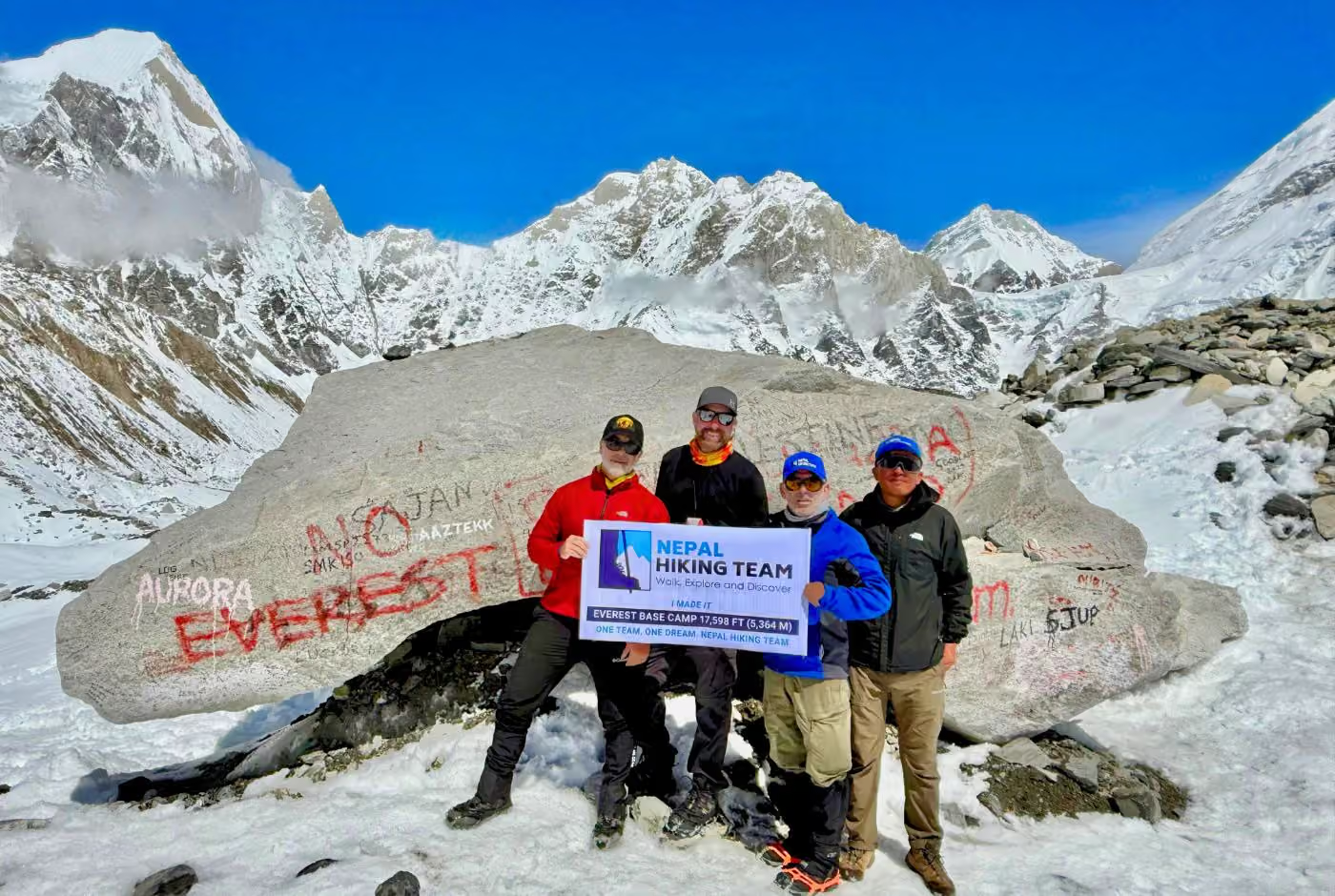
Everest Base Camp sits at roughly 5,364 metres, right beside the Khumbu Glacier. During climbing season the tents, flags and the groaning of shifting ice give it a busy expedition feel. One odd fact: you can’t actually see Everest’s summit from the camp, because Nuptse blocks it. Even so, standing there feels different from looking at the peak from far away. You’re in the place where climbers wait and plan.
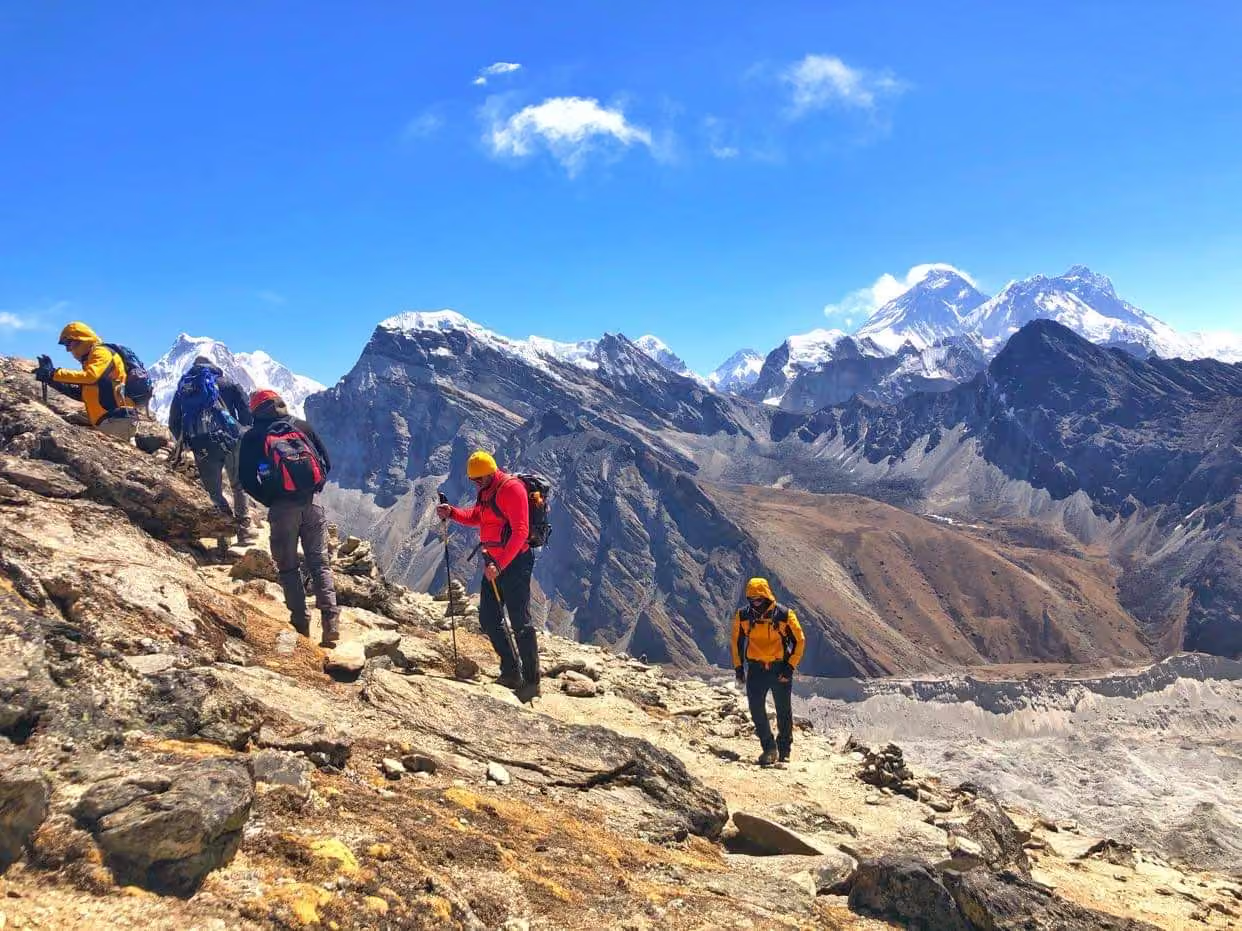
Kala Patthar, at around 5,545 metres, fills in the picture. This dark rocky ridge gives a clear view of Everest, Nuptse and Lhotse, with Pumori close by. Most people go at sunrise or late afternoon, when the light is softer.
So the two complement each other. Base Camp is about atmosphere and context. Kala Patthar is about the view.
What Makes the Everest Base Camp Trek More Than a Mountain Journey?
Once you’ve stood at both places, the trek looks different. The mountains matter, obviously, but they only make full sense alongside the people who live under them. Sherpa families shaped how Everest is climbed and visited, and mountaineering history shaped the trails you walk. The physical effort is real, yet the lasting memories tend to be small ones: a stranger’s cup of tea, a prayer wheel turning, a bridge swaying over the river.
If you finish wanting more, the Everest Three Passes Trek, the Gokyo Lakes Trek and the Everest View Trek show other sides of the Khumbu.
Final Thoughts: Experience the Mountains, Culture and Spirit of Everest
Everest will always be famous, but the Khumbu is bigger than its best-known mountain. The villages, monasteries, glaciers and Sherpa traditions are what make the Everest Base Camp Trek worth doing slowly and respectfully. Nepal Hiking Team is a trusted company in Nepal with solid knowledge of the country’s trekking destinations, and it can help you plan a journey that pays attention to culture and environment as much as summit views. Come and discover the Everest region with Nepal Hiking Team, and bring plenty of curiosity.
Frequently Asked Questions About the Everest Base Camp Trek
Where is Everest Base Camp located in Nepal?
In the Khumbu region of eastern Nepal, inside Sagarmatha National Park.
What is the elevation of Everest Base Camp?
About 5,364 metres.
Which mountains can you see during the Everest Base Camp Trek?
Thamserku, Ama Dablam, Lhotse, Nuptse, Pumori and Everest, partly hidden at times.
What is the cultural significance of the Sherpa people in the Everest region?
They carry the region’s Buddhist traditions, mountain knowledge and hospitality.
Why is Tengboche Monastery important to the Khumbu region?
It’s the main monastery and a centre of Sherpa religious life.
What is the difference between Everest Base Camp and Kala Patthar?




Leave a Reply