When an evacuation notice arrives, there may be little time to collect belongings and leave. Wildfires can spread quickly, hurricanes can cause sudden power outages, and floods can make familiar roads difficult to navigate. In these situations, a well-organized go-bag helps families leave with essential supplies instead of searching through drawers in the dark. A reliable light deserves a place near the top because it can help with packing, walking, checking surroundings, and finding other supplies when electricity is unavailable.
Preparing a go-bag is not only about deciding what to pack. It is also about making sure essential items work after months of storage. A light that has a depleted battery or is buried beneath clothes and food may not be useful when every minute counts. Choosing a suitable model, storing it where it can be reached quickly, and checking it on a regular schedule can make the bag more dependable when an emergency happens.
Minutes to Leave: Why Go-Bags Fail at Night
Many emergency bags are assembled carefully but then left untouched in a closet, vehicle, or storage area. Over time, batteries can lose charge, items can shift, and family members may forget where important supplies are stored. When an evacuation happens at night, these small problems can become serious obstacles. A useful go-bag should be organized around quick access, not just the number of items it contains.
Keep the bag in a location that household members can reach without moving heavy objects or searching through several rooms. Everyone should know where it is and understand which items are needed first. If authorities issue an evacuation order, follow their instructions promptly rather than delaying departure to collect extra belongings or test equipment.
What Belongs in the Top Pocket
The top pocket should hold items that may be needed immediately, such as a light, essential medications, a small first-aid kit, and a way to contact family members. The exact arrangement depends on the bag’s design, but the goal is simple: frequently needed supplies should not be buried under heavier items. Keep the light in a secure, easy-to-reach compartment where it will not turn on accidentally or become damaged by other equipment.
A dependable flashlight can help family members check their route, read emergency instructions, locate supplies, and move through a dark building during a power failure. Choose a model that is comfortable to hold and straightforward to operate. If children or older adults may need to use it, make sure they can understand the controls before an emergency occurs.
Do not rely on a phone’s built-in light as the only source of illumination. A phone may be needed for emergency calls, official alerts, maps, and family communication. Keeping a separate light in the go-bag helps preserve phone battery power for those more important tasks.
A Flashlight That Wakes Up After Months in Storage
A go-bag light may sit unused for weeks or months, so its storage condition matters. Rechargeable batteries can gradually lose charge, while battery performance can be affected by temperature and storage conditions. Even a light that worked perfectly during the last test may need attention before the next emergency season. Follow the manufacturer’s instructions for charging, storage, and battery care rather than assuming the device will remain ready indefinitely.
During routine checks, turn the light on and test its main functions. Look for signs of physical damage, inspect the charging port or battery compartment as applicable, and confirm that the switch works properly. Recharge the light according to the manufacturer’s guidance and return it to the same easy-to-reach location. A simple reminder on the family calendar can help prevent these checks from being forgotten.
Why a Powerful Flashlight Tail Switch Helps Under Stress

When people are stressed, tired, or working in poor visibility, simple controls can make a real difference. A tail switch can allow a user to activate a light from a familiar grip without searching along the body for a small side button. For a go-bag, this can be useful when one hand is occupied with a bag, a door, or another essential item. However, every family member who may use the light should practise operating it before an emergency.
A powerful flashlight may offer useful reach or brightness for certain tasks, but maximum output is not always the best setting for every situation. A lower mode can be more comfortable for reading a map or checking items nearby, while a brighter setting may help when looking farther ahead. Learn how the controls work in advance and avoid shining bright light directly into another person’s eyes.
The most important feature is one the user can operate correctly when it matters. Read the instructions, understand how to switch between modes, and learn how to prevent accidental activation while the light is packed. Never delay evacuation to troubleshoot a device; if the light fails, use another available source and continue following official directions.
Signaling for Help: Red SOS and Strobe
Some lights offer emergency signaling functions, including SOS patterns or strobe modes. These may help attract attention when a person needs assistance, but they should not replace a phone, emergency radio, or instructions from local authorities. If a family becomes separated, agree in advance on a communication plan and meeting point that follows local emergency guidance. Keep important contact details written on paper in case phones lose power or service becomes unavailable.
A red SOS light can provide a distinct visual signal, while a strobe function can create repeated flashes that may be noticeable in some conditions. Their usefulness depends on visibility, surroundings, battery condition, and whether rescuers can see the signal. Learn how to activate these functions before packing the light, and use them when appropriate rather than assuming they guarantee that someone will notice.
Strobe lighting can affect people differently, including those who are sensitive to flashing lights. Use it thoughtfully and avoid directing it toward drivers or others who need clear vision. During an evacuation, move toward a safe location and follow instructions from emergency personnel instead of remaining in a hazardous area to signal.
Olight ArkTac as a Go-Bag Light

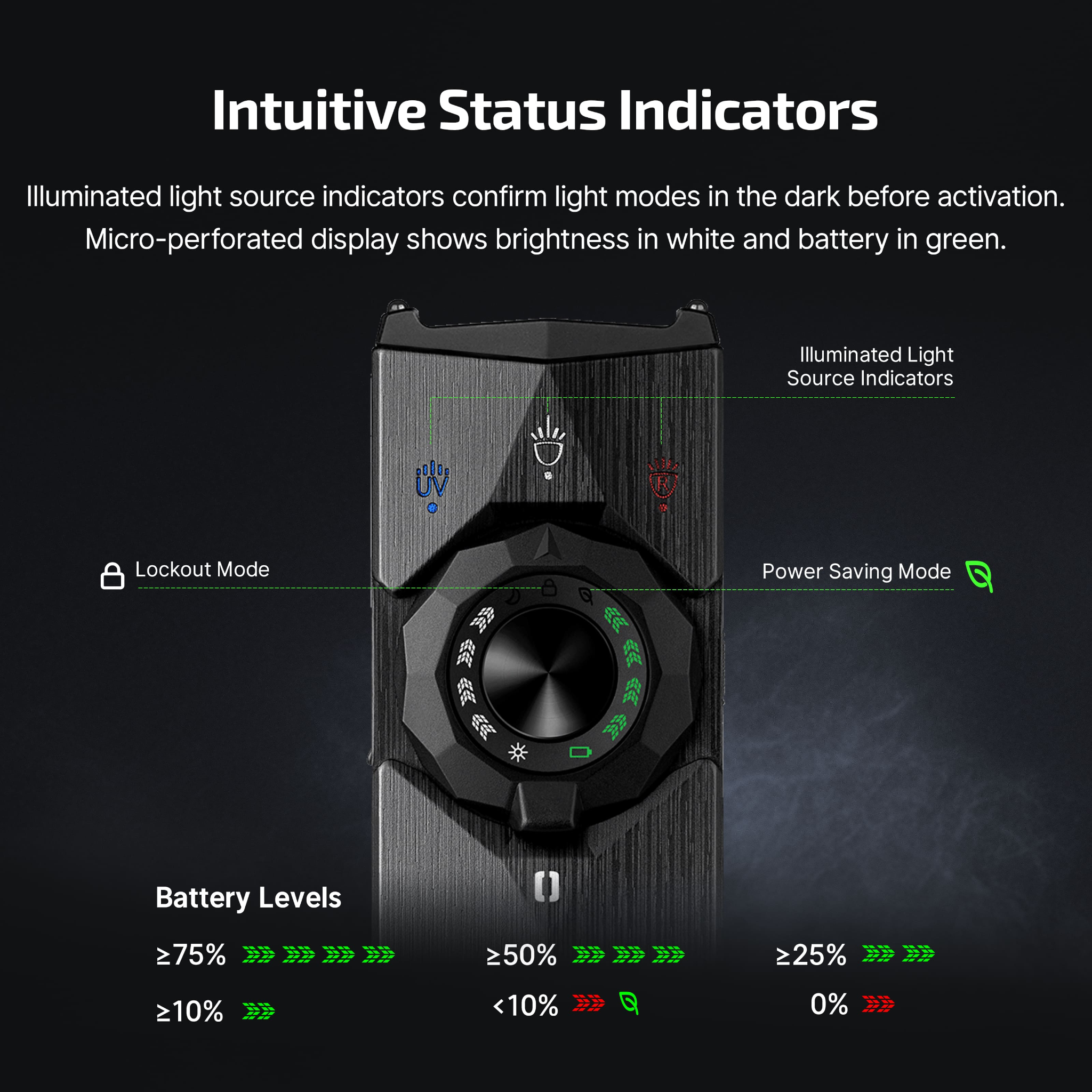
The Olight ArkTac is worth considering for a go-bag because its listed features include a Dual-Stage Tail Switch, a red SOS light, Instant Strobe, low-battery protection mode, an IPX7 water-resistance rating, and 1.5-meter drop resistance. The product information also lists up to 24 months of standby time. Standby time is not a guarantee that a light will be ready after two years in every storage condition, so periodic testing and maintenance remain essential.
The Dual-Stage Tail Switch is designed to provide access to lighting functions through different levels of pressure. For an emergency bag, a control that can be learned ahead of time may be easier to use than one that requires a user to search through several menus. The red SOS and Instant Strobe functions may also be useful in selected signaling situations, while the low-battery protection mode can help the user recognize the need to manage remaining power. Review the current official instructions to understand the exact operation of each feature.
An IPX7 rating describes a defined level of water resistance under specified test conditions; it does not mean that a light is indestructible or suitable for every water-related emergency. Likewise, drop resistance should not be treated as permission to handle equipment carelessly. Keep the light protected in the bag, follow the manufacturer’s charging and storage instructions, and confirm that the selected model and its included accessories meet your needs before buying.
Twice-a-Year Go-Bag Check: Charge, Test, Repack
Set aside time twice a year to inspect the entire emergency bag, and check the light more often if its instructions recommend it. Turn it on, test the available modes, and recharge or replace batteries as directed. Check the body for damage and make sure the switch has not become stuck or obstructed. If the light uses a rechargeable battery, use the recommended charging equipment and avoid storing it in extreme heat or cold.
Most importantly, make sure everyone knows when to leave and where to find official evacuation information. A go-bag supports an emergency plan; it does not replace one. Follow evacuation orders, use designated routes where directed, and never risk personal safety to retrieve a bag or recover equipment.
A light stored at the top of a go-bag is a small choice that can make a difficult situation easier to manage. With accessible placement, familiar controls, regular checks, and a clear family plan, it is more likely to be ready when the power fails and time is limited.



Leave a Reply