A strong product demonstration should not need five separate shoots to explain the same feature to shoppers in five languages. The challenge is keeping each version accurate when product names, measurements, offers, and viewing habits vary by market. With a clear master video and a repeatable review process, an e-commerce team can reuse the demonstration while giving each listing a version that makes sense to its intended buyers from the start.
What should teams prepare before AI video translation?

Start with a product video whose claims and demonstration are already approved. Using AI video translation for product demos can help reuse that footage for different language audiences. Pollo AI describes preserving the original duration, which makes the source edit an important constraint when planning every version.
Translation creates localized video assets; the team still needs to prepare listing text, product details, and publishing settings. Treat those as connected tasks. A shopper who hears one offer in the video and reads another on the page has good reason to hesitate.
If the only master contains embedded captions, first look for a clean export. When that is unavailable, use a video subtitle remover to clear old captions, then inspect the affected area carefully. Keep product labels and packaging information intact: they are part of the demonstration, not disposable captions.
How do you plan five language versions without multiplying mistakes?
Build one shared localization brief before creating the versions. It should identify the exact product variant, approved features, target markets, and the person responsible for each language review.
Give each of the five versions its own row in a tracking sheet. Include language, destination listing, approved terminology, local offer, reviewer, and status. Keep “translated,” “language approved,” and “published” as separate statuses, so a generated file cannot be mistaken for a finished listing asset.
Choose markets using actual business needs
Select languages based on where the product is sold and where customer support can help buyers. Existing traffic, orders, and customer questions are better starting points than a generic list of widely spoken languages.
Five languages do not automatically mean five identical markets. A language may serve several regions with different currency, delivery, or warranty information. Record those differences in the brief rather than asking the video translation step to resolve them.
Create a small product glossary
Document model names, materials, sizes, and terms that need consistent treatment. Mark brand names that should stay unchanged and phrases that a reviewer should check especially closely.
For example, a storage-container video might mention capacity, lid type, and dishwasher instructions. Those details should match the listing and product documentation in every version. A fluent sentence is not enough if it describes the wrong variant or overstates how the item can be used.
How does the translation workflow work in Pollo AI?

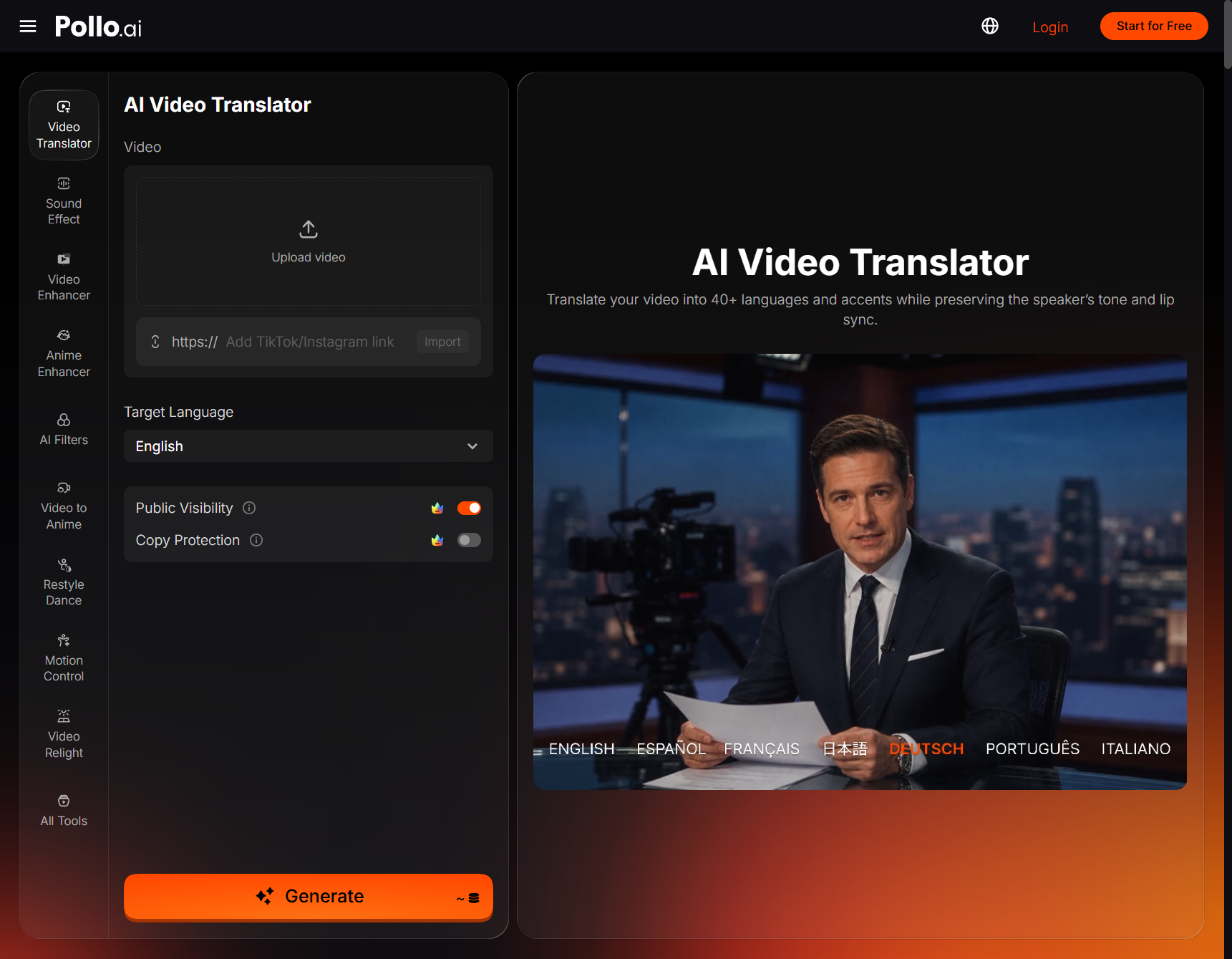
Upload the master or provide a supported video URL in Pollo AI, choose the first target language, and generate the translated version. After that version passes review, repeat for the other four languages. Keep each output associated with its source and review notes so corrections reach the right version.
Use a short pilot before processing the entire set. Pick a passage that includes the main benefit and an important product term. Have the relevant reviewer assess meaning and delivery, then resolve any source-message problems before repeating them across the remaining versions.
Keep filenames readable. A pattern such as BOTTLE01_de-DE_v02 identifies the product, intended locale, and revision. Use it consistently across the export and review notes. If the capacity claim changes later, you can quickly find all five affected versions instead of guessing which “final” file was published.
What needs localizing beyond the spoken words?
The full buying message needs to agree across audio, visuals, and the listing page. Check the opening frame, packaging close-ups, demonstrations, end card, and any promotional text already visible in the footage.
Review words embedded in the picture separately from translated speech and subtitles. Prices, measurements, delivery promises, and regional offers deserve particular attention because they can change the practical meaning of the video.
Consider a reusable bottle demonstration. The pouring action can remain the same, while the listing may require a different capacity presentation or a market-specific shipping message. Keeping temporary offers outside the reusable demonstration makes future updates easier.
Also check mobile readability. Longer translated subtitles can crowd a small frame or cover the feature being demonstrated. Watch each export at the size shoppers are likely to see on the product page.
How should teams approve and publish the versions?
Use two reviews: a language reviewer checks meaning and naturalness, and a product owner checks factual accuracy. One person may fill both roles, but the responsibilities should remain explicit.
Watch the complete export rather than approving only a transcript. Verify subtitle timing, speech pace, visible product details, and the final call to action. Confirm that the language and market match the listing receiving the file.
After publication, compare engagement and customer questions within each market. Differences can reflect traffic quality, pricing, or listing design as well as the video, so avoid attributing every change to translation alone.
Start with one product worth reusing
Choose a clear demonstration for a product already attracting interest, prepare its glossary, and validate one translated version before building the full set. Try that first localization in Pollo AI, then use the approved workflow to give shoppers in the other four languages the same clear understanding of what the product does.




Leave a Reply