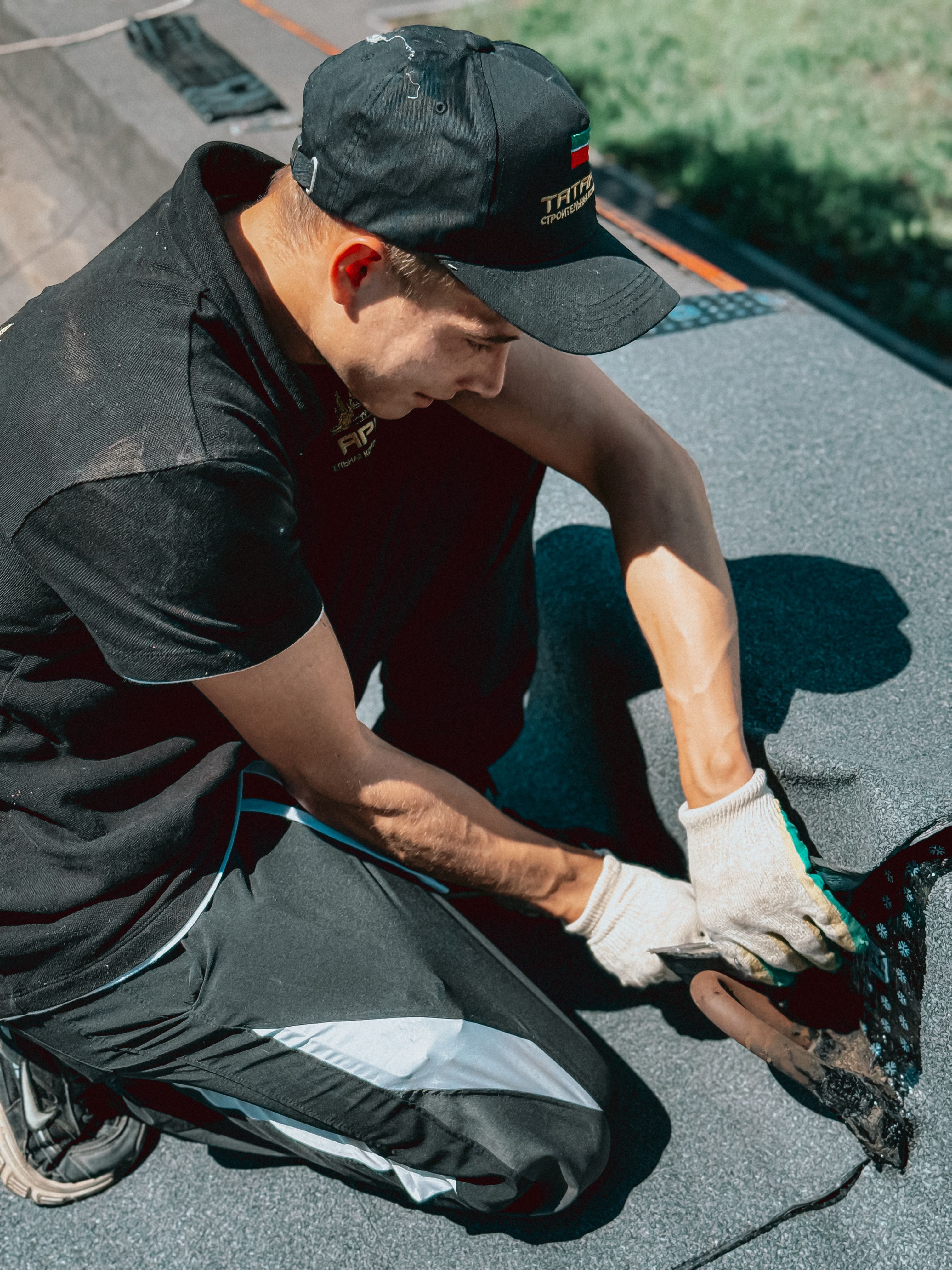
Rain has been coming through the drop ceiling of unit C since Thursday, and the bucket under it is a mop bucket now. Call it the third patch in two years, the same conversation the roofers Milwaukie OR landlords trust have every wet season. You own 6,000 square feet of strip retail, four tenants, a low-slope membrane that ponds after every real storm, and a capital line that will not stretch past $25,000. Here is the argument in one sentence: once a flat roof has taken a third patch, the cheapest option measured per year of service is almost never a fourth.
Patch pricing feels cheap because each invoice is small. Cost per service year is the number that actually decides this, and it appears on none of those invoices. Divide what you have spent by the months of dry ceiling it bought, then set that against a quote with a warranty attached. The argument stops being about roofing and starts being about capital.
Patch Invoices Hide The Real Cost Per Year
Three patches at $1,400, $2,100, and $900 do not read like a capital project. They read like maintenance, which is the problem, because maintenance is the budget line nobody defends and nobody tracks. The case we see most often is an owner who has spent north of $4,000 across two winters with nothing durable to show for it. Each visit bought four to eight months of dry ceiling before the next call. Every patch is rent on a roof you already own.
Contractors understand this arithmetic better than owners do, and the incentives are less crooked than you might assume. An APOC benchmark study of 118 commercial roofing projects, reported by Roofing Contractor in May 2026, found restoration produced about $8,000 in gross profit per crew day against $4,300 for reroofing. Restoration pays a crew better because it is fast and does not tear your building open for a week. Read that as alignment, not a warning.
Nobody is asking you to go up there and look. Send a contractor onto the roof with a moisture meter or an infrared scan, and have the crew take core cuts wherever the deck feels soft to them. What usually turns up on a roof this age is saturated insulation spreading well past the seam that leaked, and no patch reaches it. The drip in unit C stops while the wet field under the deck keeps growing.
Run The Math On Coating Versus Patching
Ponding is the tell. Water standing more than 48 hours after the rain quits is pointing at drainage, not at a hole. Purdue’s civil engineering course notes on built-up roofs set the baseline plainly, calling for a minimum of two drains on any roof area under 10,000 square feet, with no more than 75 feet of spacing in any direction. The roofers Milwaukie OR owners hire start there too, because a wet market punishes bad drainage faster. Your 6,000 feet needs two drains that work. Count what the plans show, then ask whether a patch crew has ever pulled the strainers.
Run it yourself. Say a reinforced silicone coating quotes at $3.50 per square foot across 6,000 square feet, which is $21,000, plus $1,800 to correct the ponding, so $22,800 all in and under your line. A system like that carries a 15-year manufacturer warranty when it goes down to spec, so the cost per service year works out to $1,520. Now price the other side. Three patches and $4,400 over two years is $2,200 a year, and the fourth is already on the calendar, scheduled by weather nobody consulted you about.
Here is the rule of thumb worth remembering. If the wet insulation covers less than about a quarter of the deck and the membrane still has seams worth saving, coat it. Above that, coating seals the moisture in and replacement wins on service years even though the invoice hurts more (nobody enjoys that meeting). The framework does not change with the zip code, only how often the weather tests it.
Buy Service Years, Not Another Emergency Visit
Coating is not free money, and scale moves the price hard. An IIBEC life-cycle cost analysis prices a white elastomeric coating on a 100,000 square foot low-slope roof at $0.75 per square foot, or $75,000 as a capital cost. That is the figure a facilities director sees on a distribution center. You will not get that per foot rate on 6,000 feet. What the analysis has right is the framing: coating is capital with a service life attached, and patching is an operating expense with nothing attached at all.
So decide it once, in the dry stretch, on paper. Ask every bidder for cost per service year on all three paths, patch, coat, and replace, and make each of them write the expected life next to the price. If the coating buys 15 years at $1,520 annually while the patch treadmill runs $2,200 with no end date, the decision defends itself at the bank and to your tenants. Book the inspection before the freeze, not the week the ceiling finally gives out. That is the difference between owning an asset and paying by the month for one you already bought.




Leave a Reply