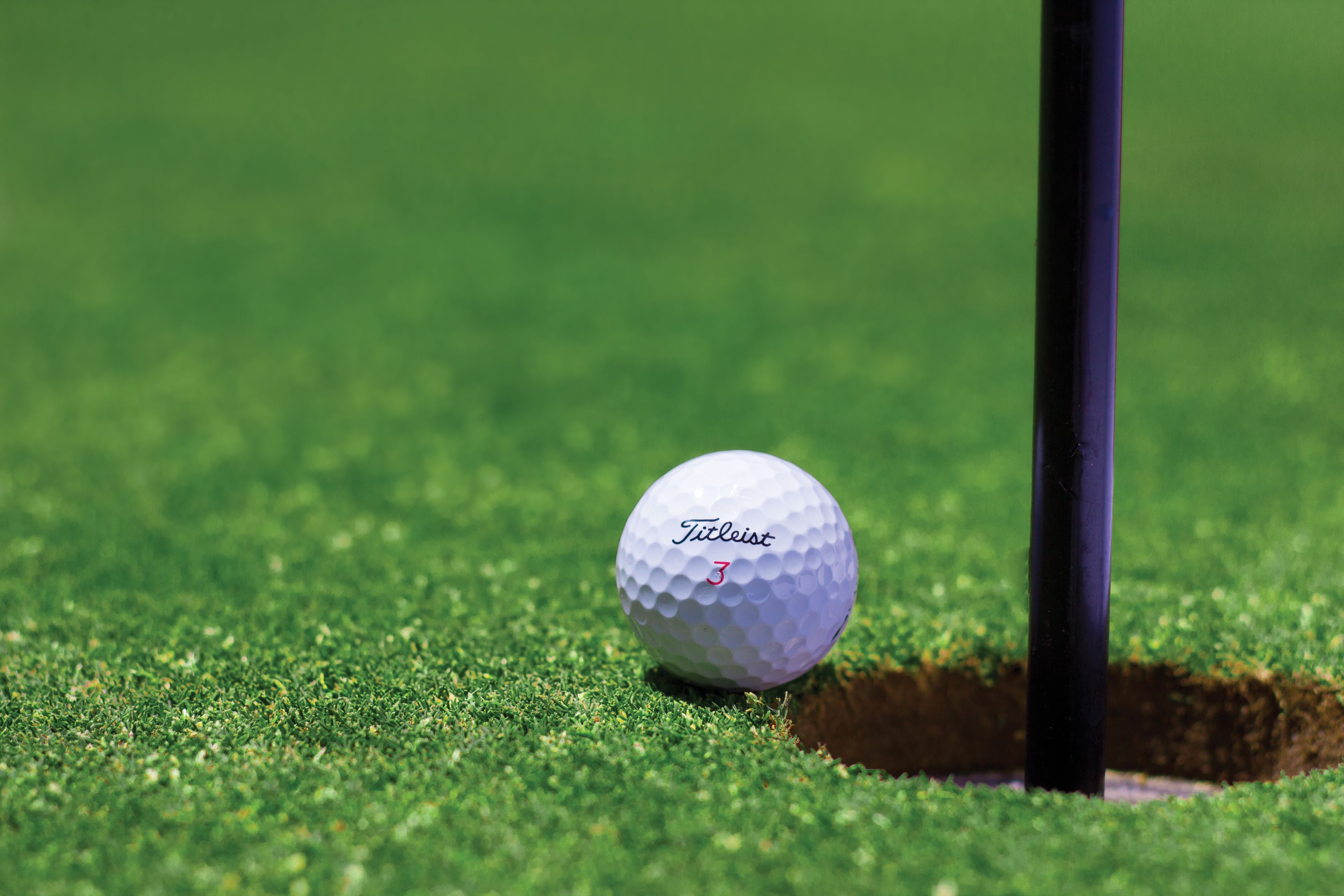
You lose roughly four golf balls per round. At $4 a pop for a premium new ball, that is $16 gone every Saturday, and if you play twice a month, you are burning close to $400 a year on balls you will never see again. Most weekend players do not need that math to hurt. They feel it every time they reach into the bag and realize they are down to their last clean sleeve by the back nine.
Here is the thing nobody argues about: buying used balls is the smartest way to cut that cost. The real question is what condition grade you should actually buy, and where the line sits between a smart bargain and a ball that will misbehave on the greens when you need it most.
Why New Balls Are Overkill for Most Rounds
Let me be direct about this. If you are shooting in the 90s or 100s, a brand new Pro V1 is not lowering your score. Tour professionals switch balls constantly because they notice microscopic differences in spin and feel. You probably do not. The ball is not the weak link in your game, and pretending otherwise just drains your wallet.
What actually matters is consistency. A ball that performs the same on hole three and hole fifteen helps you build a repeatable game. The condition of the cover, not the brand, determines that consistency. Scuffs alter aerodynamics. Cuts change how the ball rolls on the green. Cosmetic ink and logos, on the other hand, change absolutely nothing about flight or feel.
So the first decision is easy: buy used, save 50 to 70 percent, and put that money toward lessons or range time, which will actually move your scores. The second decision, picking the right grade, takes a bit more thought. And what the USGA calls the “uniformity of performance” standard is a useful baseline here, even for recreational play. Balls need to fly and roll predictably, and grading exists to tell you how close a recovered ball sits to that ideal.
Decoding the Grade Scale Like a Smart Shopper
Every used ball seller uses a letter or number system, and they do not all mean the same thing. The scale below matches what most reputable graders follow, and it is the framework worth memorizing before you click “add to cart.”
| Grade | What It Looks Like | Best Use |
|---|---|---|
| 5A / Mint | Like new. No scuffs, no marks, no discoloration. Often lost on the first hit. | Tournament play or match rounds |
| 4A / Near Mint | Small cosmetic scuffs or player markings. Cover is fully intact. | Casual rounds and club play |
| 3A / Good | Noticeable scuffs, logos, or discoloration. Still fully playable. | Practice, shag bags, water-hole risks |
| 2A and below | Heavy wear, cuts, or cracks. Performance no longer reliable. | Skip these entirely |
Here is my honest take after doing this math for years: 4A is the sweet spot for the weekend player. You get near-new performance at a fraction of the price, and you will not throw a fit when you slice one into the treeline on the seventh. Mint is fine if you have a big match coming up, but it costs more for a benefit you will rarely feel. And 3A? That is range fodder. Nothing wrong with it, but do not expect it to hold a line into a headwind.
The One Thing to NEVER Confuse: Recycled vs. Refurbished
This is where the industry gets sneaky, and I want you to read closely because it saves real money.
Recycled balls are found in the woods, water hazards, and rough, then cleaned and sorted by condition. The original manufacturer’s cover and finish stay intact. A recycled 4A ball plays exactly the way it did when it left the factory, minus a cosmetic scuff or two. The performance is predictable because nothing was altered.
Refurbished or refinished balls are a different animal. These are battered balls that get stripped down, repainted, and given a new clear coat to look fresh again. The problem is the cover, which controls spin and feel, has been sanded or chemically treated. The result can look great in the box and play terribly on the course. Many serious golfers describe refurbished balls as unpredictable, and once you hit one, you will understand why.
The rule is simple. Buy recycled, and avoid refurbished unless you only need practice balls and do not care about behavior. Check the product listing for the word “recycled” specifically. If a seller is vague about how they restored the balls, that vagueness is your answer. Move on.
How Course Conditions Change Your Grade Choice
Your home course should influence what you buy more than any marketing page will tell you. Courses with tight fairways and firm greens punish any inconsistency in ball response, so a mint or near mint ball earns its keep there. But if your regular track has thick rough, narrow landing zones, and water everywhere, you are losing balls no matter what you play. In that case, 3A balls for everyday rounds make total sense, and you can keep the nicer grades for when you travel to a course you actually like.
There is zero shame in this. The R&A’s rules on equipment note that players are responsible for the ball they put into play, and part of smart play is choosing a ball suited to the conditions in front of you. A lake on the left means you do not need a $5 ball in your pocket. You need a plan.
I know one golfer who keeps a separate pouch of 3A balls strictly for the par 3 island hole at his club. He has lost eleven balls to that pond in two seasons. That pouch has saved him over forty dollars. That is not cheap behavior. That is course management.
A Simple Buying Checklist Before You Checkout
Grab your phone, pull up the product page, and run through these five checks before you pay:
- Confirm the word “recycled” appears in the description. If it says refinished or refurbished, close the tab.
- Match the grade to the course. Tight course or tournament round means 5A or 4A. Casual local rounds can handle 3A.
- Check for brand mixing. A lot of budget deals bundle random brands together, which changes feel on every shot. Find a listing that keeps a single model, like all Pro V1 or all Callaway, for consistent performance.
- Buy from sellers with clear photos. If the listing shows actual product condition examples, that is a good sign. Stock photos only means you are guessing.
- Do the math on savings per ball. If the discount is under 40 percent, you might as well buy new and get the full guarantee.
Sellers that grade honestly and show you exactly what they mean, like golf ball monkey, make this process painless because the quality bar is right there in the description. You are not gambling on mystery inventory. You are choosing a specific condition and paying for exactly that.
The Environmental Angle Worth Mentioning
There is a quieter reason to buy recycled that has nothing to do with your scorecard. Golf balls take hundreds of years to break down in water hazards and woods. The National Park Service highlights how microplastics accumulate in natural areas over time, and lost golf balls are a real contributor to that problem on courses surrounded by undeveloped land.
Buying recovered balls keeps that inventory in play instead of letting it sit in a pond. The retrieval process itself cleans hazards and rough. It is one of the rare consumer choices where your wallet and the environment want the same thing. That should make the decision feel even better the next time you save sixty bucks on a season’s worth of balls.
So What Should You Actually Do Next Saturday
Open your bag and look at what is in there. If you are hoarding premium balls for a round that never matters, stop. Sort them out, keep the mint ones for the one or two rounds a season where you really want to test your game, and fill the rest of the bag with solid 4A recycled balls that match your usual course.
You will lose just as many balls as before, obviously. But losing a $2 ball instead of a $5 ball changes the entire emotional math of a bad hole. That alone is worth the switch. The score does not change. The sting does.
What condition grade are you currently playing, and have you ever compared it side by side against a fresh ball off the same tee? That experiment might surprise you.




Leave a Reply