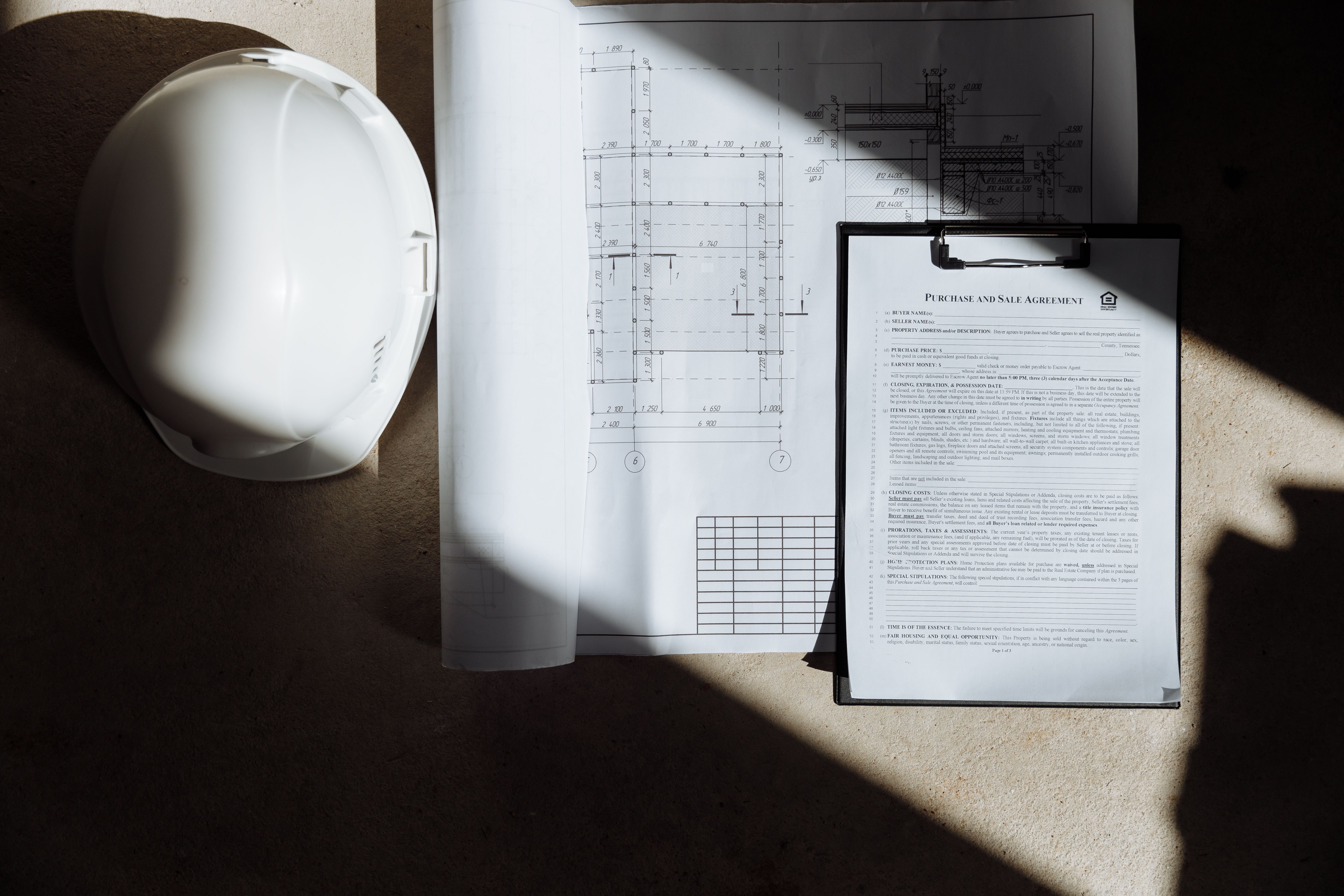
Most New York renovation budgets treat the permit as a formality. In practice it is the item that sets the schedule, decides which contractors are eligible to do the work and determines whether the finished apartment can be sold or refinanced without complications.
The rules are not intuitive. A full cabinet replacement may need no Department of Buildings filing at all, while moving a sink three feet triggers drawings, a licensed plumber and an inspection. This guide sets out where the line falls in 2026, what each step costs, how long it takes and what happens when the permit is skipped.
What needs a permit and what does not
The Department of Buildings, known as DOB, exempts a short list of minor alterations and ordinary repairs. Almost everything else needs a filing.
| Type of work | DOB permit | Who does the work |
| Painting and plastering | No | Licensed home improvement contractor |
| New cabinets and countertops in the same layout | No | Licensed home improvement contractor |
| Resurfacing floors | No | Licensed home improvement contractor |
| Replacing a faucet, sink or toilet in the same position | No | Licensed master plumber |
| Moving or adding plumbing fixtures | Yes | Licensed master plumber |
| Rerouting gas piping or relocating a range | Yes | Licensed master plumber |
| New circuits, added outlets or a panel upgrade | Yes, electrical permit | Licensed electrician |
| Removing or building walls | Yes | Contractor working from filed drawings |
| Combining apartments or changing the use of a space | Yes, may affect the certificate of occupancy | Contractor working from filed drawings |
The practical test is whether the work touches plumbing, gas, electrical wiring, ventilation or walls. If it does, assume a filing is required. DOB guidance states that most kitchen and bathroom renovations need an alteration application filed by a registered architect or professional engineer.
Two points catch owners out. Exempt work is still regulated: the contractor must hold a home improvement contractor license from the Department of Consumer and Worker Protection, and even a like for like fixture swap must be done by a licensed master plumber. And a kitchen that keeps every appliance in place can still need a permit if outlets are added or the gas line is altered.
The filings behind a typical renovation
| Filing | Formerly known as | Used for |
| Alteration | Alt-2 and Alt-3 | Most apartment renovations: several work types with no change to use, egress or occupancy |
| Alteration-CO | Alt-1 | Work that changes use, egress or occupancy and requires a new or amended certificate of occupancy |
| Limited Alteration Application | LAA | Plumbing, fire suppression piping and oil burner repair or replacement with no construction work |
| Electrical permit | Unchanged | Wiring work, filed by the licensed electrician |
Filings are made online through the DOB NOW portal. An alteration application must be prepared by a registered architect or professional engineer, while limited alteration and electrical filings are submitted by the licensed trade doing the work. Architects, contractors and building staff still use the old Alt-2 label, so expect to see both names in proposals and board packages.
What the permit costs
| Item | Typical cost |
| DOB filing fee | About 1 percent of estimated construction cost |
| Architect or engineer drawings and filing | 8 to 20 percent of construction cost for full service |
| Expeditor | 2,500 to 8,000 USD |
| Asbestos investigation and report | 500 to 1,500 USD |
| Landmarks filing, where applicable | Separate fee scaled to construction cost |
| Plumbing and electrical permits | Usually carried in the trade price |
DOB notices have described the standard alteration fee for buildings other than one to three family homes as 225 USD covering the first 3,000 USD of work plus 10.30 USD for each further 1,000 USD. On that basis a 100,000 USD renovation carries a filing fee of roughly 1,225 USD. One to three family homes pay a lower rate. Fee schedules are revised from time to time, so confirm the current figure with the filing professional before fixing the budget.
How long approval takes
| Step | Typical duration |
| Drawings and scope definition | 3 to 8 weeks |
| Co-op or condo board review | 4 to 12 weeks |
| Asbestos investigation | 1 to 2 weeks |
| DOB approval, professionally certified filing | Several days to 2 weeks |
| DOB approval, standard plan examination | 4 to 8 weeks, longer if objections are issued |
| Landmarks review, where applicable | 1 to 6 weeks |
Professional certification is the main lever on DOB time. The architect or engineer certifies that the drawings comply with code, and DOB accepts the filing without a full plan examination, subject to audit. Standard review means an examiner reads the drawings and may issue objections that have to be resolved one by one.
The longer delay is usually inside the building. The application needs sign off from the building side as well as from the apartment owner: the corporation in a co-op and the board in a condo. In practice the DOB filing cannot be completed until the alteration agreement is approved. Running the board package and the DOB drawings in parallel, from the same set of documents, is what keeps a renovation from losing a season.
Approvals that are easy to miss
| Requirement | When it applies | What it involves |
| Asbestos assessment | Buildings constructed before April 1987 | A certified asbestos investigator inspects and reports before DOB issues the permit. Disturbing more than 10 square feet or 25 linear feet of asbestos material triggers formal abatement first |
| Landmarks approval | Individual landmarks and historic districts | Work that needs a DOB permit also needs Landmarks Preservation Commission approval. Interior work usually qualifies for a certificate of no effect |
| Lead safe work practices | Homes built before 1978 | Contractors disturbing painted surfaces must be certified under the federal renovation rule |
| Alteration agreement | Co-ops and most condos | Insurance certificates, deposits, permitted work hours and review by the building engineer |
The asbestos step is the one most often discovered late. It applies even to modest jobs, it has to be carried out by an investigator certified by the Department of Environmental Protection, and if abatement is required the construction permit waits until that work is complete.
What happens if you skip the permit
| Situation | Consequence |
| Unpermitted work in a one or two family home or inside a co-op or condo unit | Civil penalty of six times the permit fee, minimum 600 USD, maximum 10,000 USD |
| Unpermitted work in other buildings | 21 times the permit fee, minimum 6,000 USD, maximum 15,000 USD |
| Stop work order | All work halts until the violation is resolved |
| Most serious class of violation | Fines of up to 25,000 USD plus additional penalties |
| Sale or refinancing | Unpermitted work has to be legalized or removed |
The penalty itself is rarely the real cost. Legalizing work after the fact means hiring an architect to document what was built, opening finished walls for inspection and paying the original filing fees on top of the penalty. In a co-op, unpermitted work is also a breach of the alteration agreement, which gives the board grounds to stop the job entirely.
Choosing a contractor who can pull the permit
Permits are issued to licensed and insured contractors, not to owners, so the credential check belongs at the start of the process and not after a bid has been accepted. Confirm the home improvement contractor license, the trade licenses of the plumber and electrician who will actually be on site, and current general liability and workers compensation coverage. Starting from a directory of licensed general contractors in New York that shows license details and active status turns that check into a matter of minutes.
The permit drawings also solve the hardest part of pricing. Once an architect has defined the scope for DOB, the same document can be issued to every bidder, which removes the differences in assumptions that make renovation quotes impossible to compare. A construction bidding platform applies that principle directly: the project is described once, contractors respond against the same scope and the bids arrive ready to compare line by line.
Frequently asked questions
Do I need a permit to renovate a kitchen in NYC?
Not if the work is limited to new cabinets, countertops, flooring and paint with every appliance and fixture staying where it is. A permit is required as soon as the project moves plumbing, alters the gas line, adds electrical circuits or outlets, or changes a wall.
Do I need a permit to renovate a bathroom?
Replacing fixtures and tile in the same positions is generally exempt, although the fixture work must be done by a licensed master plumber. Moving the toilet, tub or shower, adding a bathroom or changing the ventilation requires a filing.
Can a homeowner file the permit application personally?
No. Alteration applications are filed by a registered architect or professional engineer, and plumbing and electrical filings are submitted by the licensed trades. The owner authorizes the filing and remains responsible for the property.
How long does a DOB permit take in 2026?
A professionally certified alteration can be approved within days to two weeks once the documents are complete. Standard plan examination typically takes four to eight weeks. Board review and the asbestos report usually add more time than DOB itself.
What is the penalty for renovating without a permit?
For a one or two family home or the interior of a co-op or condo unit, six times the permit fee with a minimum of 600 USD and a maximum of 10,000 USD. For other buildings it is 21 times the fee, between 6,000 and 15,000 USD. Stop work orders and the cost of legalizing the work come on top.
Does co-op board approval replace the DOB permit?
No. They are separate approvals with separate purposes. The board enforces the rules of the building through the alteration agreement, and DOB enforces the construction codes. Most renovations that move plumbing, gas, wiring or walls need both.




Leave a Reply