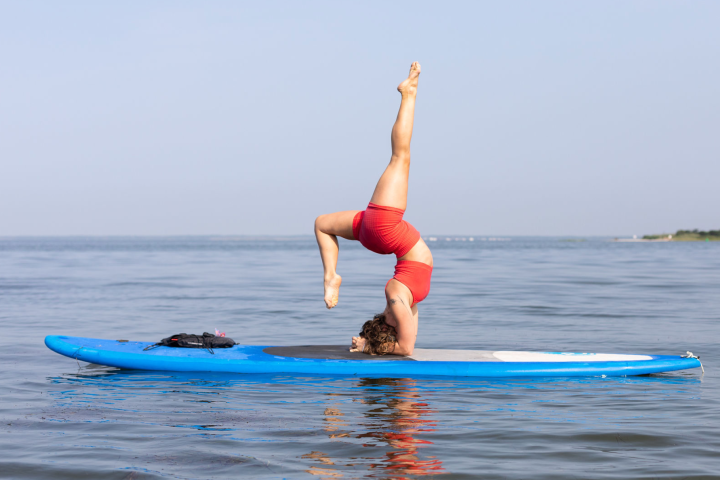
Long Beach Island (LBI), New Jersey, is known for its beaches, coastal scenery, and calm waterways along Barnegat Bay. These surroundings make it a popular setting for outdoor activities, including paddleboarding and water-based fitness. The quieter bay areas can provide a pleasant environment for people interested in combining exercise with time outdoors.
A SUP yoga class in LBI takes traditional yoga poses onto a floating stand-up paddleboard. Practicing on the water adds a different physical challenge because participants must adjust their posture as the board moves gently beneath them.
Stand-up paddle yoga can improve balance and flexibility by engaging stabilizing muscles, encouraging controlled movements, and supporting gradual stretching. It also develops body awareness because participants must pay attention to their alignment and movement throughout each pose.
How SUP Yoga Improves Body Balance
A paddleboard is less stable than a traditional yoga mat. Even small movements caused by water or changes in body position require participants to make adjustments to stay balanced.
These adjustments engage muscles around the abdomen, hips, legs, and back. Regular practice can help improve coordination and stability, although progress depends on individual fitness levels and consistency.
Core Strength Supports Stability
The abdominal and lower-back muscles help keep the body steady during different yoga positions. On a paddleboard, these muscles remain active as participants shift between standing, kneeling, and seated poses.
Beginner-friendly movements such as tabletop poses, modified planks, and seated stretches can help develop core control without requiring advanced skills.
How Paddleboard Yoga Builds Flexibility
Yoga encourages muscles and joints to move through comfortable ranges of motion. A paddleboard session can include familiar poses that stretch the hamstrings, hips, shoulders, and back.
Forward folds, gentle lunges, and seated twists are examples of movements that can support flexibility. Participants should move gradually and avoid forcing a stretch, especially when adjusting to the floating surface.
Controlled Transitions Encourage Better Mobility
Moving slowly between poses helps participants focus on alignment and muscle engagement. This approach can improve awareness of how the body moves and where tension develops.
With consistent practice, participants may find certain everyday movements more comfortable. Flexibility gains vary, so steady progress is more useful than attempting difficult poses too early.
The Added Challenge of Practicing on Water
Unlike a studio floor, a paddleboard responds to movement, small waves, and changing water conditions. This creates an additional balance challenge and encourages participants to make continuous adjustments.
Calm water is generally more suitable for beginners. Strong winds, boat wakes, and rough conditions can make it harder to maintain stable positions, so the instructor’s guidance is important.
Tips for Beginners Attending a SUP Yoga Session
A few preparations can make the first experience more comfortable:
- Choose an instructor familiar with both yoga and paddleboarding.
- Begin with basic poses and progress gradually.
- Wear comfortable clothing that can get wet.
- Apply water-resistant sunscreen and bring drinking water.
- Follow instructions about board positioning and water safety.
- Tell the instructor about any movement limitations before class.
Key Takeaways
- Paddleboard yoga challenges stabilizing muscles and supports better balance.
- Core engagement helps maintain steady positions on the board.
- Gentle poses can improve flexibility and joint mobility.
- Slow transitions encourage body awareness and controlled movement.
- Beginners should start with simple poses in calm water and follow instructor guidance.




Leave a Reply