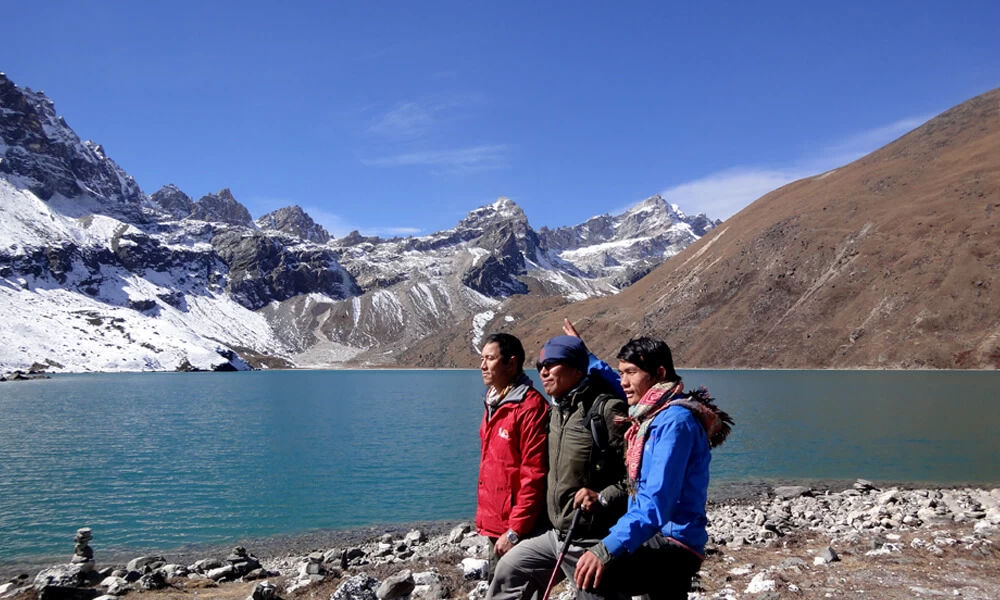
The Himalaya Beyond Its Famous Peaks
Ask most people what comes to mind when they hear “Nepal,” and you’ll get the same answer: Everest. But the mountains are only the opening line of a much longer story. Behind every ridge sit stone villages, prayer flags faded by wind, terraced fields cut into steep slopes, and families who have worked this land for generations. That’s the part brochures tend to skip.
Trekking in Nepal works best when you treat it as a way of reading the country, region by region, rather than a race to a famous viewpoint. The Khumbu feels nothing like Manaslu. Annapurna has its own rhythm, and the far east is something else. Each area has its own languages, food, beliefs, and way of coping with altitude and weather. This article walks through that variety, looking at landscapes, people, and cultural heritage together, because in the Himalaya you can’t pull one away from the others.
The Mountain Heritage of Nepal: Where Geography Shapes Everyday Life
Nepal’s geography isn’t a backdrop. It decides where people live, what they grow, and when they move. Villages sit on river terraces and sheltered shelves of land, because flat ground is precious up here. Barley, potatoes, and buckwheat fill the higher fields, while rice and millet take over lower down. Yaks and their hybrids carry loads and graze summer pastures, and families shift herds upward as the snow retreats.
Trade followed the same logic. For centuries, salt, grain, and wool crossed paths on the backs of animals, and some of those habits survive. The communities along these routes are diverse: Sherpa in the Khumbu, Gurung around Annapurna, and Tamang in the central hills. None of them are interchangeable. Generations of mountain living have built a body of local knowledge about weather, livestock, and safe paths, and that knowledge is why the landscape here feels lived in, not just looked at.
Everest Region: Sherpa Heritage and Life Beneath the World’s Highest Mountain
Walk up the Khumbu valley, and the Sherpa identity is everywhere, though not in a staged way. It’s in the stone-walled potato plots, the yak-hair tents of summer pastures, and the chortens that appear at every bend. Namche Bazaar sits in a steep, horseshoe-shaped bowl, and for a long time it has been the valley’s trading heart, where people from lower villages and higher settlements meet to buy, sell, and swap news.
Buddhism shapes daily life here. Mani walls carved with prayers are passed on the left, prayer flags snap along ridgelines, and monasteries such as Tengboche hold ceremonies that travellers are sometimes welcome to quietly observe.
The Everest Base Camp Trek threads through all of this. The route links villages, family-run lodges, monasteries, and bare high-altitude terrain, so the scenery changes as quickly as the culture does. Tourism has become a main livelihood for many families, which brings income, but it also raises questions about how traditions are kept alive. Choosing local lodges and listening before photographing goes a long way.
Remote Himalayan Villages: Discovering the Human Side of Mountain Travel
Step off the headline trails,, and the Himalaya gets quieter and more interesting. Small settlements are built from local stone and timber, with flat roofs stacked with firewood and fodder for winter. Terraced fields climb the slopes in neat steps. Paths are narrow, often shared with mules and goats, and you learn to step aside early.
Daily life is visible here. Nothing is staged. Someone is hauling barley, a yak herder is heading uphill, and a family is running a tiny teahouse out of their own kitchen. That’s the real reason villages matter: reaching a viewpoint tells you what a mountain looks like, while an evening in a village tells you how people live beside it.
A few habits help. Ask before taking photos, dress modestly, walk clockwise around mani walls, and buy from local shops when you can.
Manaslu Region: Tibetan Influences, Ancient Villages and Changing Landscapes

Manaslu feels like a different country from the Khumbu. The trail follows the Budhi Gandaki river through steep gorges, passing forested hills and terraced villages before the valley opens into higher, harsher ground. Warm, almost subtropical slopes give way to pine, then to cold, treeless terrain with big views of the 8,163-meter peak.
The Manaslu Circuit Trek is the main way to see it, and the cultural shift is as noticeable as the scenery. Villages like Samagaun and Samdo are built of stone, with monasteries, long mani walls, and strings of prayer flags that reflect strong Tibetan Buddhist roots. Many families in the upper valleys have their own ties to Tibet, and for generations trade, religion, and marriage moved back and forth across the border passes.
The contrast is the draw. Lower down you walk through green fields and warm air; higher up, the air thins, the houses huddle together against the wind, and life becomes more austere. It’s a region that really rewards slow travel and a bit of curiosity.
Annapurna Region: Cultural Diversity Across the Himalayan Foothills
Annapurna is where Nepal’s variety shows up most clearly. In a single trek you can pass rhododendron forest, rice terraces, river gorges, and dry, wind-scoured slopes, with snow peaks hanging over all of it.
Gurung and Magar villages are the cultural center of gravity in many parts of the region. Their houses are often neat stone buildings with slate roofs, grouped tightly along the hillside, and community life revolves around shared work, festivals, and a long tradition of serving in the military abroad.
Farming and tourism sit side by side. Families grow millet, maize, and potatoes, then host walkers in lodges of their own. Trails link the two worlds, passing through forest, farmland, and valley floors before climbing toward viewpoints. It’s a good reminder that Nepal isn’t one landscape or one culture.
Kanchenjunga: The Eastern Himalaya and Its Remote Mountain Communities

Far to the east, near the Sikkim border, Kanchenjunga is quieter than anywhere else on the main trekking map. The world’s third-highest mountain rises above deep valleys, rhododendron and bamboo forest, and long stretches of trail where you may meet more yaks than people.
Kanchenjunga trekking is a slower, more remote affair. Villages are small and far apart, lodges are simpler, and the landscape shifts as you climb from warm lower slopes through forest into alpine meadows and glacial moraine. The region is part of a conservation area, and its biodiversity is a big part of the story, with rare mammals and plenty of birdlife.
Culturally, eastern Nepal belongs to the Limbu and Rai communities, alongside Sherpa and other groups higher up. Their languages, rituals, and farming habits differ from the west, which is exactly the point. This corner of the Himalaya offers another angle on Nepal’s mountain heritage.
Food, Monasteries, and the Everyday Traditions of Himalayan Life
Food tells you where you are. In the Khumbu, you’ll see thukpa, potato dishes, and butter tea, a salty, oily drink that tastes strange at first and makes sense at altitude. Tibetan-style bread turns up at breakfast, and momos appear everywhere. Dal bhat, rice with lentils and vegetables, is the backbone of most trekking days.
Sharing a meal in a family lodge, usually beside the stove, connects you to the household. Monasteries add another layer: morning prayers, butter lamps, and the low sound of horns carry through many settlements, and visitors can often sit quietly at the back.
Keep in mind that menus change by region. Limbu food in the east, Gurung cooking in Annapurna, and Tibetan-influenced dishes in Manaslu are not the same thing.
Beyond Nepal: The Wider Himalayan Cultural Connection with Tibet and Bhutan
Nepal doesn’t stand alone. Buddhism, trade, and family ties link its northern valleys with Tibet, and further east, the Himalayan culture of Bhutan shares some of the same religious roots. Prayer flags, stupas, monastery architecture, and the habit of circling sacred sites clockwise appear across all three.
Geography explains a lot. Mountain passes were never sealed walls; they were routes where salt, wool, and ideas travelled, and communities on either side often had more in common with each other than with distant capitals.
Still, similarity shouldn’t be overstated. Bhutan has its own language and dress, Tibet its own long history, and Nepal’s mountain groups their own identities. Seen together, they form a wider cultural landscape, not a set of trekking destinations.
Festivals, Local Knowledge, and the Importance of Community Heritage
Festivals keep Himalayan communities stitched together. Mani Rimdu in the Khumbu, Lhosar for the new year, harvest celebrations, and local village gatherings mark the seasons and give people reasons to travel home, dress up, and eat together.
Elders and local guides carry the knowledge that holds all of this together: which path is safe after rain, why a certain hill is sacred, and how a ritual should be done.
If you happen to arrive during a festival, watch respectfully, ask before filming, and don’t treat it as a show put on for you. Community-led tourism, where lodges, guides, and decisions stay in local hands, helps traditions continue on their own terms.
Understanding the Himalaya Through Travel: More Than a Trekking Experience
Put it all together, and a pattern appears. Mountains shape villages, villages shape customs, and customs shape how visitors are welcomed. Everest shows Sherpa trading life, Manaslu shows Tibetan-influenced heritage, Annapurna shows farming and Gurung culture, and Kanchenjunga shows a quieter east. Trekking is more than distance or altitude; it’s a chance to really understand how people live in extreme countries.
Local knowledge makes that much easier. Outshine Adventure, for instance, works across Nepal’s mountain regions with local travel knowledge and a solid understanding of Himalayan destinations, which helps travelers connect with places instead of just passing through.
Discovering the Living Heritage of the Himalaya
The Himalayas are defined by their people as much as their peaks. From Everest’s Sherpa heritage and Manaslu’s Tibetan-influenced villages to Annapurna’s farming communities and Kanchenjunga’s remote valleys, each region offers a unique cultural experience.
Outshine Adventure Nepal, a local travel agency in Nepal, works in partnership with Viajes a Nepal to organize authentic trekking adventures and cultural journeys for Spanish-speaking travelers.
If you are dreaming of discovering Nepal’s mountain landscapes, rich traditions, and remote communities, Viajar a Nepal is a great place to start planning your Himalayan adventure with us.

Leave a Reply