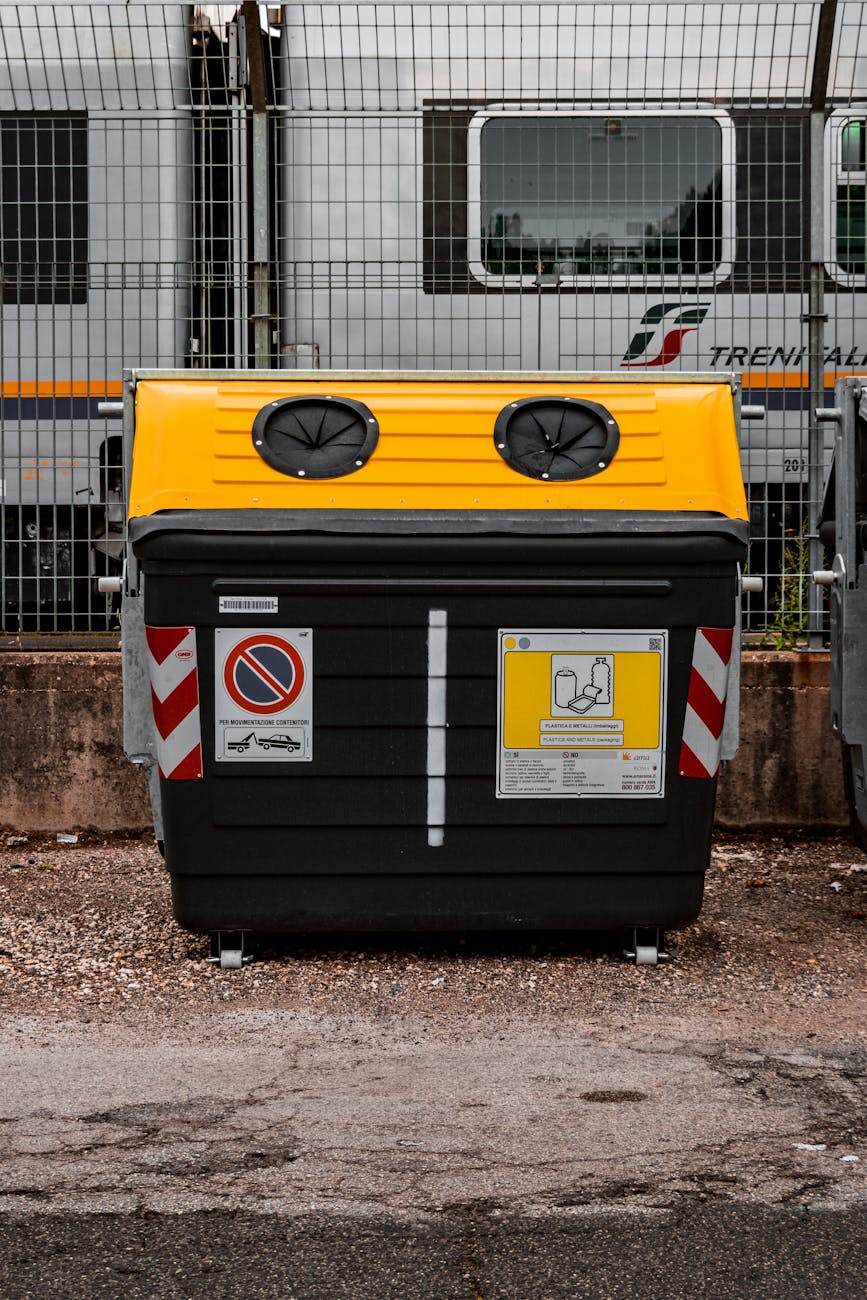
Skip bins serve essential roles in waste management for construction sites, commercial facilities, and industrial operations where hiring bins repeatedly becomes cost-prohibitive. Purchasing quality skip bins for sale provides long-term value for businesses generating consistent waste volumes. Industry analysis shows that companies producing more than 8-10 cubic meters of waste weekly typically recover their skip bin investment within 18-24 months compared to ongoing rental costs. Material composition, weld integrity, and design features significantly impact skip bin longevity and operational efficiency.
Steel Grade Selection and Material Properties
Commercial skip bins use high-strength steel ranging from 3mm to 6mm thickness depending on capacity and intended use. Most manufacturers utilize Grade 250 or Grade 350 structural steel offering yield strengths of 250-350 MPa. This matters because thinner gauge steel saves material costs but reduces useful lifespan significantly.
Testing by materials engineers shows 3mm steel performs adequately for light waste like office materials or green waste. However, construction debris with sharp edges or heavy materials like concrete requires minimum 5mm steel to prevent punctures and deformation. A 4-cubic-meter bin made from 5mm steel typically weighs around 250-300 kg, providing necessary rigidity under load.
Weld Quality and Structural Integrity
Skip bin longevity depends heavily on weld quality at stress points—particularly where floors meet walls and lifting pockets attach. Industrial welding standards require full-penetration welds at these critical joints to prevent failure under load cycles.
Inferior manufacturing uses spot welds or incomplete penetration that looks adequate but fails prematurely. Studies of failed skip bins show 60-70% of structural failures originate at poorly welded joints. Quality manufacturers employ certified welders and use continuous weld beads with backup plates at high-stress areas. This construction withstands thousands of loading-unloading cycles without cracking or separation.
Lifting Pocket Design and Forklift Compatibility
Standard skip bins incorporate pockets that accept forklift tines for handling. Pocket dimensions should accommodate standard forklift tines (100mm x 40mm) with adequate clearance—typically 110mm x 50mm internal dimensions. The pocket floor must be reinforced with backing plates to distribute load forces.
Engineering calculations show concentrated loads at lift points create stress concentrations 8-10 times higher than distributed floor loads. Without proper reinforcement, lifting pockets tear out of the bin structure within months of regular use. Quality bins use 10mm+ backing plates extending 200mm beyond the pocket opening to spread these forces adequately.
Capacity Ratings and Volume Efficiency
Skip bins are rated by volume in cubic meters, but actual usable capacity depends on design. A 4-cubic-meter bin should measure approximately 3.8m³ internal volume accounting for wall thickness and structural elements. Some manufacturers overstate capacity by measuring external dimensions rather than actual waste volume.
Bin depth affects loading efficiency too. Deeper bins (1.2-1.5m) utilize vertical space better but become difficult to load manually. Shallower bins (0.8-1.0m) suit hand-loading but require more frequent emptying. Commercial operations typically prefer 1.0-1.2m depths balancing these factors.
Paint Systems and Corrosion Protection
Bare steel oxidizes rapidly in outdoor conditions, with significant rust developing within weeks. Quality skip bins receive multi-stage coating systems starting with blast cleaning to SA 2.5 standard (near-white metal), followed by zinc-rich primer, then topcoat.
Accelerated corrosion testing shows properly prepared and coated bins maintain structural integrity for 10-15 years in typical conditions, while poorly coated bins show significant degradation within 3-5 years. Zinc-rich primers provide 50-75 microns of protective coating, offering sacrificial protection even if topcoat gets scratched.
Powder coating offers superior durability compared to liquid paints. The electrostatic application process creates uniform coverage including corners and edges where liquid paints often run thin. Impact testing shows powder coated surfaces resist chipping and abrasion significantly better than conventional paints.
Design Features for Operational Efficiency
Well-designed skip bins include features that improve handling and waste management. Angled walls (typically 5-10 degrees from vertical) prevent waste from binding when dumping. This seemingly minor detail reduces dumping problems by 40-50% according to waste management operators.
Drainage holes prevent water accumulation from rain, particularly important for bins storing materials outdoors. However, hole placement matters—bottom corner locations allow complete drainage while preventing loss of smaller waste materials. Holes should be 15-20mm diameter, large enough for water flow but small enough to retain typical waste.
Wheels and Mobility Options
Larger skip bins benefit from wheel systems enabling repositioning without machinery. Heavy-duty castors rated for 400-500 kg per wheel suit bins up to 6 cubic meters when loaded. The wheels should be pneumatic or solid rubber rather than hard plastic that cracks under load and damages floors.
Swivel castors on one end with fixed wheels on the other provide optimal maneuverability. All-swivel configurations make bins difficult to control when loaded, while all-fixed wheels prevent turning. The mixed configuration allows controlled movement even with partial loads.
Cost Analysis Versus Rental Options
New skip bins typically cost $800-2,500 depending on size and specifications. Weekly rental rates run $50-150 for similar sizes. Operations generating consistent waste volumes reach break-even within 16-50 weeks of ownership.
The calculation becomes more favorable considering that purchased bins provide flexibility in waste accumulation timing, avoiding urgent rental needs or early pickup fees. Additionally, owned bins can be sold used, recovering 30-40% of initial investment after 5-7 years of service.
Custom Specifications for Specialized Applications
Standard skip bins suit general waste, but specialized applications benefit from modifications. Drop-down doors simplify loading heavy items. Internal dividers enable waste segregation for recycling operations. Locking lids prevent unauthorized dumping or access to hazardous materials.
Manufacturers offering customization typically charge 15-30% premiums over standard bins, but these features often pay for themselves through operational efficiency. A bin with a drop-down door might save 20-30 minutes daily in loading time compared to lifting materials over high walls.




Leave a Reply