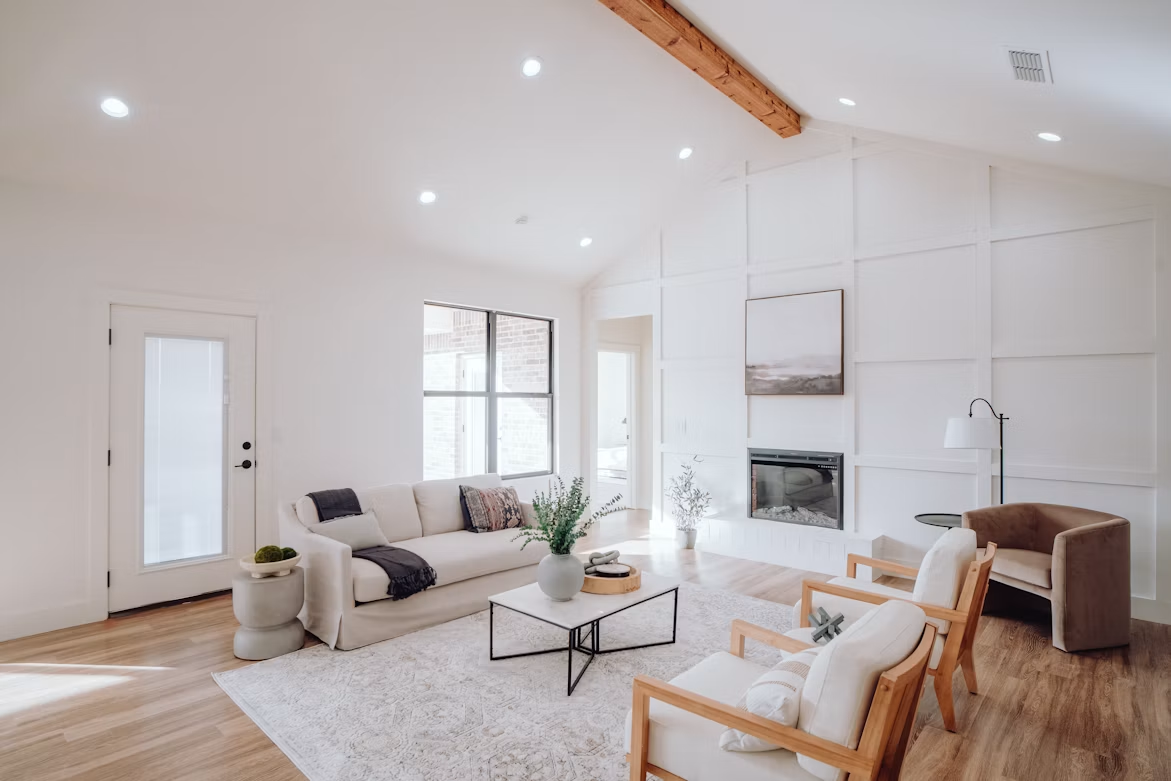
A well-lit room isn’t just bright; it’s functional, comfortable, and inviting. The right mix of light sources can completely change how a space feels, making it seem larger, cozier, or more dramatic.
But many homes still rely on a single, harsh overhead light that doesn’t really serve the room’s many uses. Thinking about lighting smartly helps you create a home that not only looks better but also works better for your daily life.
Understanding Layered Lighting
To get a beautifully lit space, you need to master the art of layered lighting. This means combining three different types of light to create a balanced and flexible environment.
Instead of just one central light, you’ll use a mix of ambient, task, and accent lighting. Each layer has its own job, and together they give you the flexibility for any activity or mood. Having multiple lights on different switches or dimmers makes it easy to change the room’s feel from bright and energetic to soft and relaxing.
Ambient Light for Comfort
Ambient light is the base of your lighting plan. It provides general, non-directional light so you can see and move safely around a room. This is your main lighting, often from a central fixture like a chandelier, a flush-mount ceiling light, or recessed cans. The goal of ambient light is to create a comfortable level of brightness without glare.
In a living room, this might be a soft, warm glow from several lamps, while a kitchen might need brighter, more even light from recessed fixtures. Dimmers are especially useful for ambient lights, letting you instantly adjust the mood.
Task Lighting for Function
Task lighting is focused light aimed at a specific area where you’re doing something. It’s brighter than ambient light and designed to reduce eye strain and improve visibility for detailed work. Think of under-cabinet lighting in the kitchen for chopping vegetables, a desk lamp in a home office for paying bills, or a floor lamp next to an armchair for reading.
In the bedroom, a pair of bedside wall lights provides perfect light for reading without bothering a partner. When picking task lighting, consider what you’ll use it for and place it where it will get rid of shadows and give clear, direct light.
Accent Lighting for Drama
Accent lighting is the most creative layer, used to add style and drama to a room. Its job is to draw your eye to specific things, like a piece of art, a textured wall, a plant, or an architectural feature. This type of lighting is usually three times brighter than the surrounding ambient light to really make a focal point stand out.
Common examples include track lighting aimed at a gallery wall, picture lights above a favorite painting, or uplights placed behind a large plant to create interesting shadows on the ceiling. These effective lighting design techniques can add depth and dimension, making a room feel more dynamic and professionally designed.
Matching Fixtures to Style
Beyond the light they give off, the fixtures themselves are important decorative elements. The style, material, and finish of your lamps and light fixtures should match your home’s overall look.
For a modern, minimalist style, you might choose sleek, simple fixtures in matte black or chrome. A home with a more traditional or rustic feel could benefit from fixtures in warm metals like bronze or antique brass. Don’t be afraid to mix and match, but try to keep a cohesive feel within each room. A statement chandelier can be the centerpiece in a dining room, while subtle, sculptural sconces can add elegance to a hallway. The fixture is just as important as the bulb inside it.
You don’t need to change all your home’s lighting at once. Start with one room, like the living room or bedroom, and try adding a new layer of light. A simple new floor lamp or a set of accent lights can make a surprising difference in how you experience the space.




Leave a Reply