Preparing clothes for a newborn can easily turn into buying far more than the baby will actually wear. Tiny outfits are tempting, but the first weeks are usually shaped by feeding, sleeping, diaper changes, short periods of awake time, and a surprising amount of laundry. A useful newborn wardrobe should make those ordinary routines easier rather than filling drawers with pieces saved for the right occasion.
One practical approach is to build the wardrobe around a small rotation of bamboo baby clothes that can cover both daytime comfort and sleep. PatPat’s current BambooCloud™ baby collection includes two-way zip footies and other bamboo pieces, with the brand describing its 93% bamboo and 7% spandex fabric as soft, stretchy, breathable, and able to release heat and moisture. Instead of thinking in terms of dozens of outfits, parents can think about three simple jobs: clothes for awake time, sleepers for long stretches of rest, and a few next-size pieces waiting for growth.
Build the Wardrobe Around Changes, Not Occasions
Newborn clothing gets changed for practical reasons much more often than for social ones. A diaper leak, milk spill, warm room, cooler evening, or messy feeding can send one outfit straight into the laundry. This means the most useful wardrobe is not necessarily the one with the widest variety. It is the one with enough comfortable pieces in rotation that parents are not worried about running out before the next wash.
Repeating the same useful garment type is perfectly reasonable. If a soft footie works well for both resting and being carried around the house, having several versions may be more valuable than having separate “day outfits” that are harder to put on. A simple newborn wardrobe reduces decisions because parents already know which pieces are easy to change, comfortable for the baby, and practical enough to wash repeatedly.
Use a Three-Basket System Instead of One Full Drawer
A newborn wardrobe becomes easier to manage when clothes are divided by purpose rather than packed together by color or style. The first basket can hold the pieces currently used during the day, including soft one-piece garments and simple layers. The second can hold sleep-focused clothing so parents can reach it quickly during the evening or after an unexpected nighttime change. The third can contain the next size up, keeping larger clothes available without mixing them into pieces that fit now.
This simple separation can also reduce one common newborn problem: forgetting what the baby owns until it is already too small. Babies grow quickly, so checking the next-size basket every few weeks makes more sense than filling the current drawer with clothing that will not fit yet. Parents can then move pieces forward gradually instead of replacing the whole wardrobe at once.
Choose Fabric With Long Hours of Wear in Mind
A newborn may spend much of the day in the same general type of clothing, so fabric feel matters beyond the few minutes it takes to get dressed. PatPat describes its BambooCloud™ baby fabric as 93% bamboo with 7% spandex, combining a smooth feel with stretch for rolling, wiggling, and ordinary movement. The collection also highlights breathability and moisture management as part of the fabric design.
Those qualities are useful to consider, but fabric is only one part of comfort. Parents still need to think about room temperature, layers, fit, and the baby’s individual needs. A breathable garment does not mean a baby should automatically be dressed the same way in every room or season. The more practical goal is to choose a comfortable base layer and then adjust the rest of the clothing or sleep setup to the actual environment.
Two-Way Footies Can Earn More Drawer Space
Newborn wardrobes benefit from clothes that remove small steps from repeated routines. PatPat’s current bamboo baby collection includes many BambooCloud™ two-way zip footies, while its dedicated sleeper collection also centers heavily on two-way zip footie styles. A two-way zipper can be useful because the lower part of the garment can be opened for a diaper change without fully undressing the baby.
That kind of detail may sound minor before the baby arrives, but repeated nighttime changes can make simple closures much more valuable. Parents choosing between two equally comfortable garments may therefore want to look beyond color and print and compare how each piece opens, whether the zipper is protected from the skin, how cuffs are designed, and whether the garment can be changed easily when the baby is sleepy.
A Yellow Sloth Set Belongs to the Next Stage
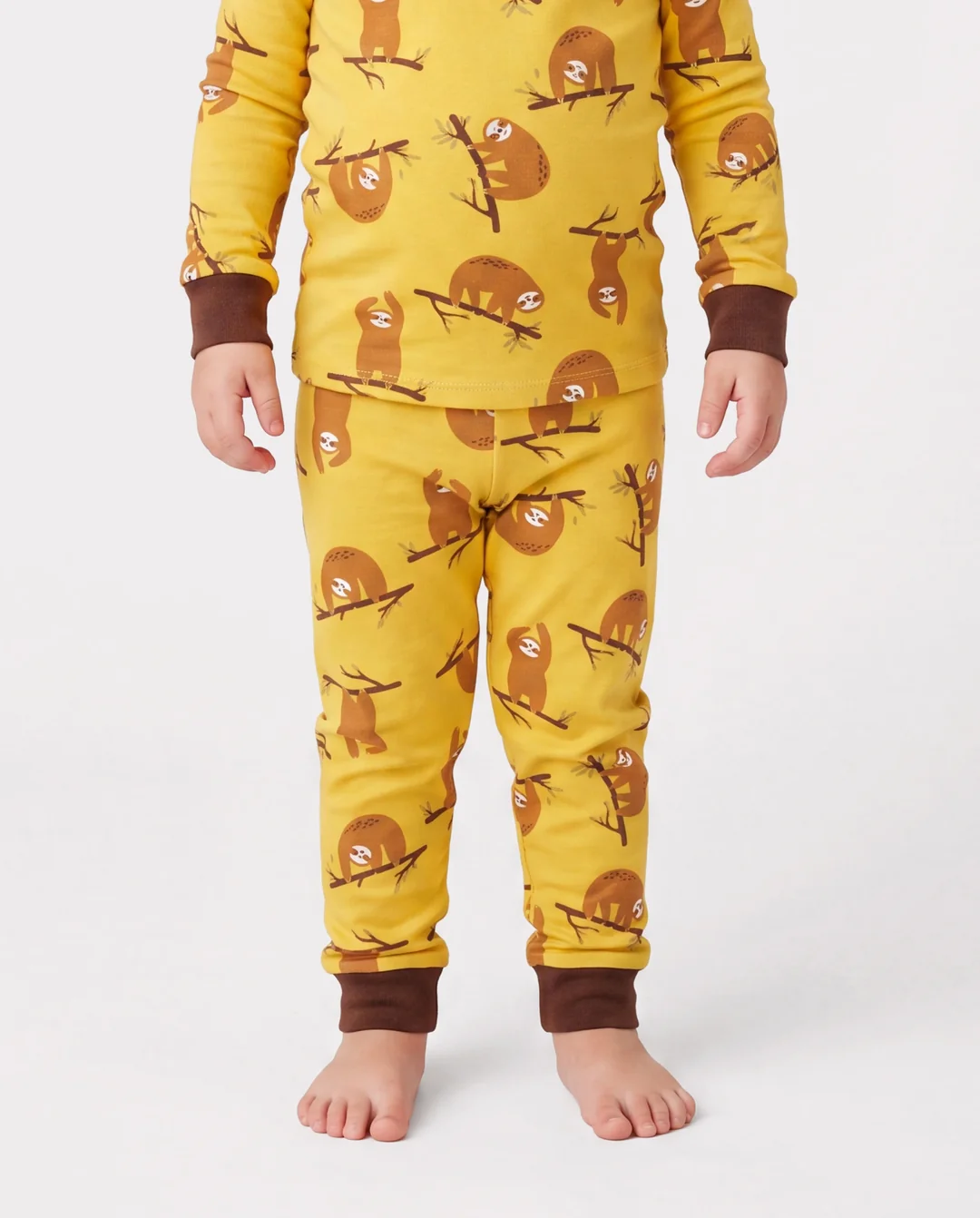
The supplied PatPat product currently leads to Baby/Toddler Unisex 2-Piece Sleepy Sloths Pajamas in warm yellow. This is important to clarify because it is not a newborn sleeper: the currently listed sizes begin at 6–9 months and continue through toddler sizing. The set includes a long-sleeve top and full-length pants with an elastic neckline and cuffs, flat seams, a heat-pressed tagless label, and pre-shrunk construction. PatPat lists the BambooCloud™ knit as 93% bamboo fiber and 7% spandex and describes it as soft, stretchy, breathable, and moisture-wicking.
That makes this product more useful as an example of what the wardrobe can grow into rather than something to buy specifically for the newborn period. The current listing identifies it as snug-fitting children’s sleepwear and notes that it is not flame resistant; PatPat says the close fit is part of its sleepwear safety design. For a newborn capsule, parents would instead look at age-appropriate footies or sleepers from the baby collections, then consider two-piece sets like the yellow sloth pajamas once the child reaches the listed size range.
Sleepers Deserve Their Own Small Rotation
The value of bamboo baby sleepers becomes clearer when parents think about how often sleep clothing may need to be changed. PatPat’s current sleeper collection includes a wide selection of BambooCloud™ two-way zip footies in solid colors and prints, along with multi-packs and other baby sleep options. Rather than buying one special sleeper and expecting it to cover several nights, a small rotation gives parents another clean option when laundry does not go according to plan.

The exact number needed will depend on washing frequency and the baby. A household doing laundry often may need fewer pieces, while another family may appreciate a larger buffer. The better question is not how many sleepers appear on a generic newborn checklist, but how many clean changes the household realistically wants available between washes.
Buy Less in the Smallest Size
One of the easiest ways to overbuild a newborn wardrobe is to buy too many pieces in the smallest size. Babies do not all arrive at the same size, and they do not remain in newborn clothing for the same length of time. Filling an entire drawer before seeing how the baby grows can leave perfectly good clothing with a very short window of use.
A more balanced plan is to begin with a modest number of newborn and early-infant basics, then keep several larger pieces ready. The wardrobe can expand after parents learn what they actually prefer. Some may discover that they reach for two-way zip footies constantly, while others may prefer a different mix for daytime. Buying in stages allows those real habits to shape later purchases.
Keep the Color Palette Easy to Mix
Newborn clothing does not need a strict matching palette, but a small group of compatible colors can make the drawer easier to use. Soft neutrals, muted colors, or a few favorite shades can be mixed with simple layers without requiring parents to think about complete outfits during a busy morning.
Prints can still add personality. A floral footie, animal design, or cheerful food print can sit beside solid pieces without turning the wardrobe into a collection of unrelated special outfits. PatPat’s current bamboo baby and sleeper ranges include both solid and printed footies, which makes it possible to keep the garment type consistent while changing the design. The practical structure stays the same even when the drawer looks more playful.
Laundry Habits Should Shape What You Buy
A newborn capsule wardrobe only stays simple if it matches the household’s laundry routine. Parents who wash baby clothes every day or two can work with a smaller rotation, while families who prefer fewer laundry days may need more backups. Spit-up, diaper leaks, and other everyday messes can make the theoretical “one outfit per day” calculation unrealistic.
Fabric care matters here as well. The featured yellow sloth pajama set calls for machine washing cold and tumble drying low, with no bleach or dryer sheets. Parents should still check the care instructions on each baby garment rather than assuming every bamboo item is identical, particularly when different products may use different trims, closures, or fabric blends.
Day Clothes and Sleep Clothes Can Overlap Carefully
New parents do not necessarily need a completely separate wardrobe for every hour of the day. A comfortable baby footie can often make sense during naps, feeding, cuddling, and quiet awake periods, reducing the number of outfit changes performed simply because morning has become afternoon.
The distinction becomes more important as the child grows and clothing categories become more specialized. That is where products such as the featured two-piece snug-fit pajamas begin to have a clearer sleepwear role. During the newborn period, the priority is usually easier access, appropriate fit, comfort, and clothing that works with frequent diaper changes rather than creating a strict daytime-versus-nighttime fashion system.
Save Space for the Baby You Actually Meet
Before birth, every clothing choice is based on an imagined routine. After a few weeks, parents usually know much more. They know whether their baby tends to feel warm, which closures they prefer during nighttime changes, how quickly sizes are changing, and which garments keep returning to the top of the laundry pile because they are used so often.
That is why leaving some empty drawer space can be surprisingly useful. Instead of completing the entire first-year wardrobe before the baby arrives, parents can add pieces after learning what works. A simple bamboo wardrobe can then grow with the child: soft baby footies for the early months, additional sleepers as needed, and eventually two-piece bamboo pajamas when the child reaches the appropriate size and stage.
A Simple Wardrobe Is About Fewer Decisions
The best newborn wardrobe does not need to look impressive when every piece is laid out together. Its real value appears during a tired nighttime diaper change, a busy laundry day, or a morning when the baby needs a clean outfit quickly. A small group of reliable clothes can make those moments easier because parents already know what fits, what washes well, and what they reach for most.
Bamboo baby clothes can form part of that practical rotation, while dedicated bamboo sleepers give parents sleep-focused options such as two-way zip footies. The supplied yellow sloth two-piece set belongs later in the size journey rather than in the newborn drawer, which is exactly why planning by stage matters. Start with what the baby needs now, keep the next size nearby, and allow real family routines to decide what gets added after that.
A newborn wardrobe becomes simpler when every piece has a reason to be there. It does not need twenty different looks; it needs enough comfortable, age-appropriate clothing to cover feeding, sleeping, changing, growing, and all the laundry in between.




Leave a Reply