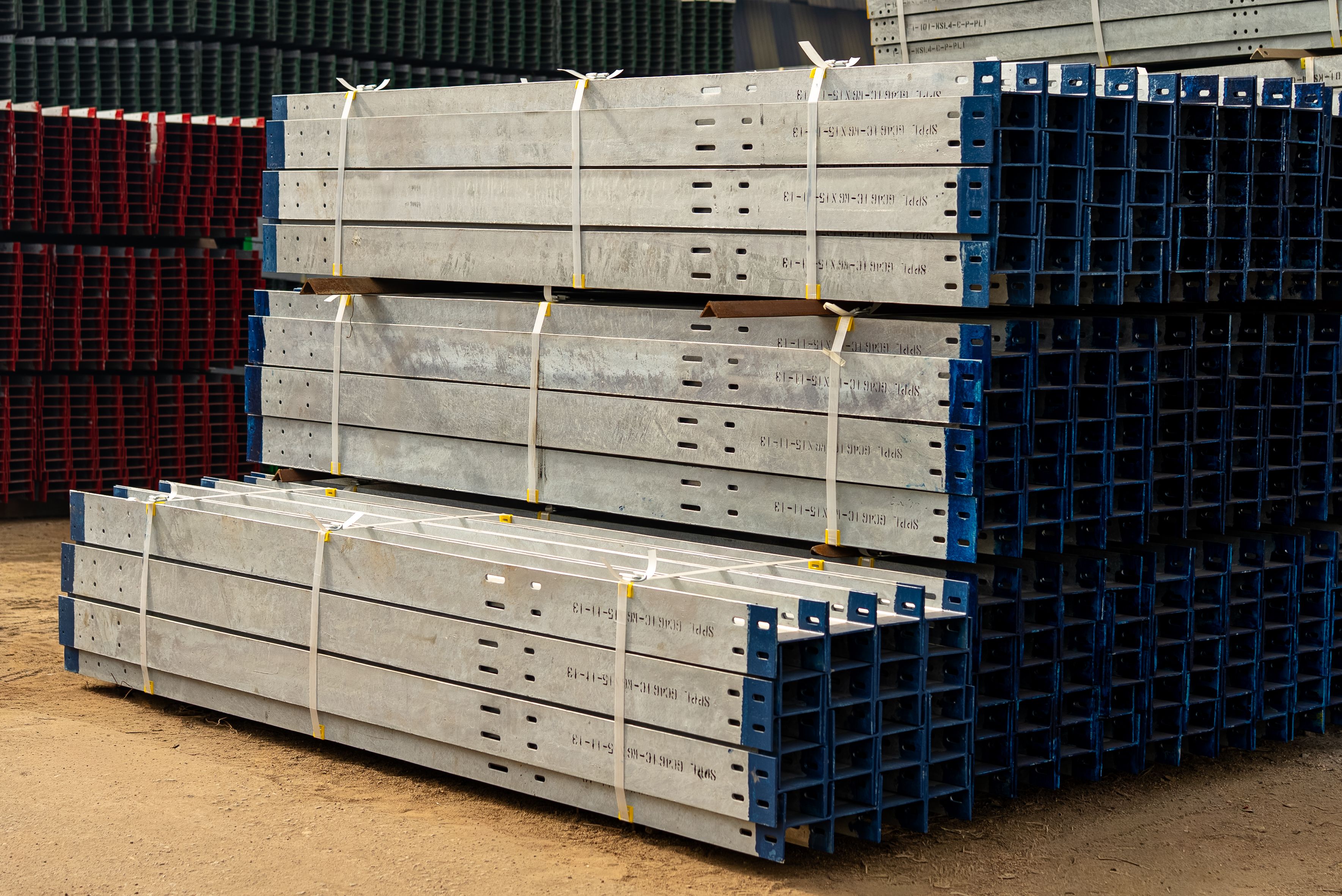
At 6:45 on a Tuesday morning, the first truck rolled through the gate of a construction site with a load of steel strapped across its trailer. The site supervisor looked at his watch. “That’s the first delivery?” “Yep.” He walked over, checked the paperwork, then looked back at the building taking shape behind him.
There was nothing glamorous about the moment. No ribbon cutting. No finished facade. Just lengths of steel, a forklift, a couple of tired-looking workers, and a delivery driver waiting for someone to tell him where to put everything. But this is often where a project starts revealing whether the planning was good.
The wrong section, missing documentation, or badly timed delivery can cause trouble long before anyone notices the problem. For builders and fabricators, structural steel suppliers are therefore part of a much bigger conversation than simply buying steel at the right price.
The Order Is More Complicated Than It Looks
Someone unfamiliar with construction might imagine a steel order as a fairly straightforward transaction. Here is the drawing. Here is the list. Send the steel. It rarely works that neatly.
A structural package can involve different sections, grades, lengths, quantities, and project-specific requirements. Then there are questions about fabrication, identification, surface treatment, delivery sequence, and whether the material arriving on site matches what was actually specified.
Australia produces more than five million tonnes of steel each year, according to Standards Australia, and the domestic distribution network includes more than 300 outlets. There is plenty of material moving through the industry. Availability, however, isn’t the same thing as suitability.
Good structural steel suppliers need to understand what the fabricator or contractor is actually asking for before an order is processed. A cheaper alternative isn’t automatically an appropriate alternative. Sometimes the difference is hidden in a grade, dimension, or specification that doesn’t jump out on a basic quote.
A Beam Is Not Just a Beam
The engineer’s drawings are where the conversation gets more serious. AS 4100:2020 is a key Australian standard for structural steel design and is referenced by the National Construction Code. That matters because structural steel isn’t selected simply because a particular beam looks about right.
The material has to correspond with the engineering requirements of the project. This is where communication between engineers, fabricators, contractors, and Structural Steel Suppliers becomes important.
Daniel Mercer, senior procurement manager at an Australian structural steel contractor, describes the difference rather well: “The best steel supplier isn’t simply the one who can quote quickly; it’s the one who understands exactly what the fabricator needs before the first piece of steel leaves the yard.” That sounds like a procurement lesson.
Really, it is a timing lesson. A mistake discovered while the steel is still being ordered is inconvenient. The same mistake discovered after fabrication is a different problem altogether.
The Paperwork Travels With the Steel
There is a particular sound construction workers recognise. A forklift moving steel. Metal scraping. Someone shouting, “Watch the end!” Among all that noise, paperwork doesn’t seem especially important. It is.
Documentation and identification help project teams establish what has arrived and whether it corresponds with the required specification.
AS/NZS 5131:2016 also brings fabrication and erection into the wider quality conversation. Welding, bolting, fabrication, surface preparation and erection aren’t isolated activities. They form a chain.
If something is unclear at the supply stage, the confusion can follow the steel down that chain. That is why experienced structural steel suppliers tend to be judged by more than their ability to fill an order. Can they provide the required information?
Can they communicate when stock isn’t available? Can they coordinate delivery? Can they identify a potential issue before it becomes a site problem? These questions don’t make particularly exciting advertising copy. On a busy construction site, they can make a considerable difference.
Timing Has Weight
Steel takes up space. A lot of it. A delivery that arrives too early can become a storage problem. A delivery that arrives too late can leave a fabrication crew waiting or disrupt the sequence of work on site. Neither problem necessarily appears on a supplier’s original quote. That is why delivery planning matters.
The contractor may need certain members first. The fabricator may need another batch before the next stage can begin. A crane or forklift may only be available at particular times. Suddenly, the conversation isn’t just about steel. It is about logistics.
Good structural steel suppliers understand that the delivery schedule sits inside a larger construction programme. The steel has somewhere to go. More importantly, it has a particular time when it needs to be there.
Steel Has a Life After the Building
There is another part of the story that tends to get overlooked. Steel doesn’t necessarily become useless when a building reaches the end of its life. The Australian Steel Institute reports that more than 95% of structural steel is recovered for reuse or recycling. That makes steel an interesting material from a circular-economy perspective.
It also changes how procurement can be viewed. Material efficiency isn’t only about reducing waste during construction. It can involve choosing suitable quantities, avoiding unnecessary offcuts and thinking about what happens to materials later.
For structural steel suppliers, this creates another layer to the conversation. The supplier isn’t responsible for the entire life of a building, obviously. But the choices made at the beginning can influence what happens further down the line.
Back at the Gate
By 7:20, the first bundle had been unloaded. The supervisor checked the delivery sheet again. “Everything there?” The worker looked at the stack. “Looks like it.” “Don’t tell me it looks like it.” The worker laughed and started checking the tags.
One by one. The truck eventually pulled away, leaving tyre marks in the damp ground. Nothing dramatic had happened. That was the good news. The steel was where it needed to be. The paperwork matched. The next crew could start working.
And that is often the real value of structural steel suppliers from NewGen Steel. You don’t notice a good supply chain when everything arrives correctly, at the right time, with the right information attached.
You notice it when something doesn’t. On this morning, nobody had to make the phone call nobody wanted to make. The building kept moving.




Leave a Reply