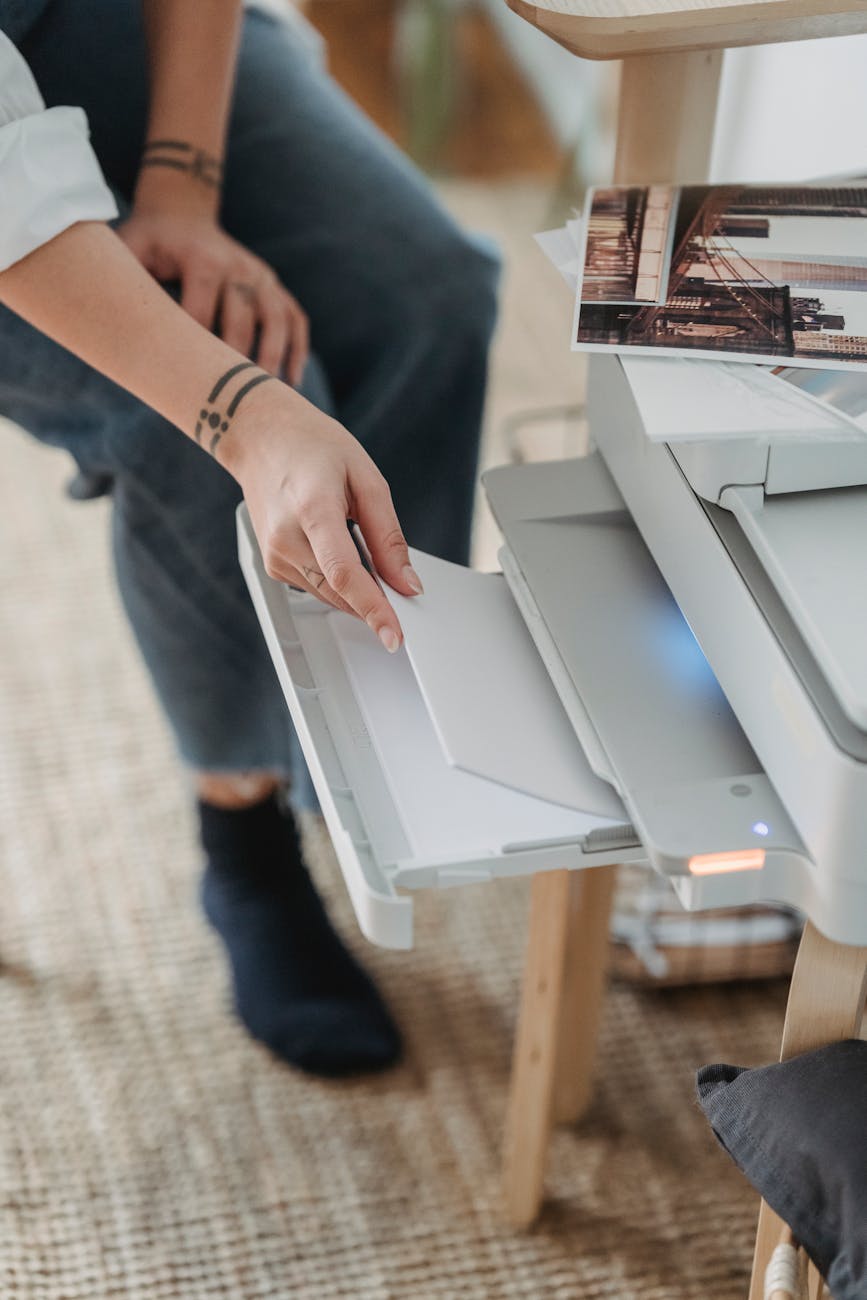
The printing industry has completely transformed over the last decade, and high-performance flatbed printers are leading that change. These machines can print directly onto materials that would jam a regular printer in seconds – think wood, metal, glass, ceramics, and plastic sheets up to several inches thick. For businesses looking to expand their services or bring production in-house, the capabilities are pretty remarkable.
What Sets High-Performance Flatbed Printers Apart
Regular desktop printers move paper through rollers, which limits you to thin, flexible materials. Flatbed printers work completely differently – the material stays stationary on a flat bed while the print heads move across the surface. This opens up possibilities that just weren’t feasible before.
The “high-performance” designation usually refers to printers that can handle substrates up to 2-4 inches thick, print at resolutions of 1440 dpi or higher, and maintain consistent quality at production speeds. We’re talking about machines that can print a full-color image on a piece of metal as easily as printing on paper.
The UV curing technology is what really makes this possible. Instead of using regular ink that needs to be absorbed by the material, UV flatbed printers use special inks that cure (harden) instantly when exposed to UV light. This means the ink sits on top of the surface and bonds to pretty much anything.
Material Versatility and Application Range
This is where things get interesting for business applications. You can print directly on corrugated plastic for outdoor signs, aluminum sheets for industrial labeling, wood panels for custom furniture, or glass panels for architectural applications. The same machine handles all of these without any special setup or material preparation.
I’ve seen businesses use these printers for everything from custom phone cases to architectural glass panels. One local sign shop went from outsourcing all their rigid substrate work to handling everything in-house, including jobs they couldn’t even quote before like textured metal signs and custom ceramic tiles.
The thickness capability is a game-changer too. Being able to print on materials up to 4 inches thick means you can work with thick acrylic blocks, wooden planks, or even small objects like promotional items without any special mounting or preparation.
Production Speed and Quality Considerations
High-performance flatbed printers balance speed and quality in ways that weren’t possible a few years ago. Most models can run in different quality modes – draft mode for prototypes and proofs, standard mode for most production work, and high-quality mode for critical applications.
In production mode, a good flatbed printer can output about 200-400 square feet per hour depending on the design complexity and quality settings. That might not sound fast compared to roll-to-roll printers, but remember you’re printing on materials that couldn’t be printed on at all before.
The quality is genuinely impressive too. Modern UV inks have excellent color gamut and can produce smooth gradients and fine details that rival traditional printing methods. The UV curing process actually makes the prints more durable than many conventional printing methods.
Cost Structure and Business Impact
The economics of flatbed printing are pretty compelling for the right businesses. These machines typically cost $50,000-150,000 depending on size and features, which sounds like a lot but can pay for itself quickly in the right applications.
The markup potential on custom printed rigid materials is usually much higher than traditional printing. A piece of printed aluminum that costs $5 in materials and 10 minutes of machine time might sell for $50-100 depending on the application. Those margins are hard to achieve with commodity printing services.
Labor efficiency is another big factor. Instead of mounting prints to substrates, laminating for durability, or outsourcing specialized work, everything happens in one step on the flatbed printer. This reduces handling, eliminates outsourcing markups, and speeds up turnaround times.
Technical Capabilities and Limitations
Most high-performance flatbed printers use industrial-grade printheads from manufacturers like Ricoh, Kyocera, or Seiko. These heads can handle the thicker UV inks and maintain accuracy even when printing on uneven surfaces. The better machines have automatic height sensing to adjust for material thickness variations.
Print resolution typically ranges from 600×600 dpi up to 1440×1440 dpi. Higher resolutions look better but print slower and use more ink. For most business applications, 720 dpi provides a good balance of quality and speed.
Color accuracy is handled through ICC color profiles, just like other professional printing equipment. The better flatbed printers come with profiles for common materials, and you can create custom profiles for specialty substrates.
Maintenance and Operating Costs
UV ink costs are higher than regular ink – usually $200-400 per liter depending on the brand and color. A liter of ink typically covers 400-800 square feet depending on ink coverage, so the cost per print can add up on heavy-coverage jobs.
Printhead maintenance is probably the biggest ongoing concern. UV inks can clog printheads if the machine sits idle too long, and replacing printheads costs $1,000-3,000 each. Most businesses run automatic cleaning cycles and print test patterns daily to prevent problems.
The UV lamps need periodic replacement too – usually every 1,000-2,000 hours of operation. Lamp replacement costs about $500-1,500 depending on the system, but it’s scheduled maintenance that you can plan for.
Integration with Existing Workflows
Most modern flatbed printers use standard RIP (Raster Image Processing) software that integrates with design programs like Adobe Illustrator and Photoshop. The learning curve isn’t too steep if your staff already understands color management and print production.
File preparation is similar to other digital printing, but you do need to consider material properties more than with paper printing. Metallic substrates might need different color profiles, and textured materials might require adjusted print settings for optimal adhesion.


Leave a Reply