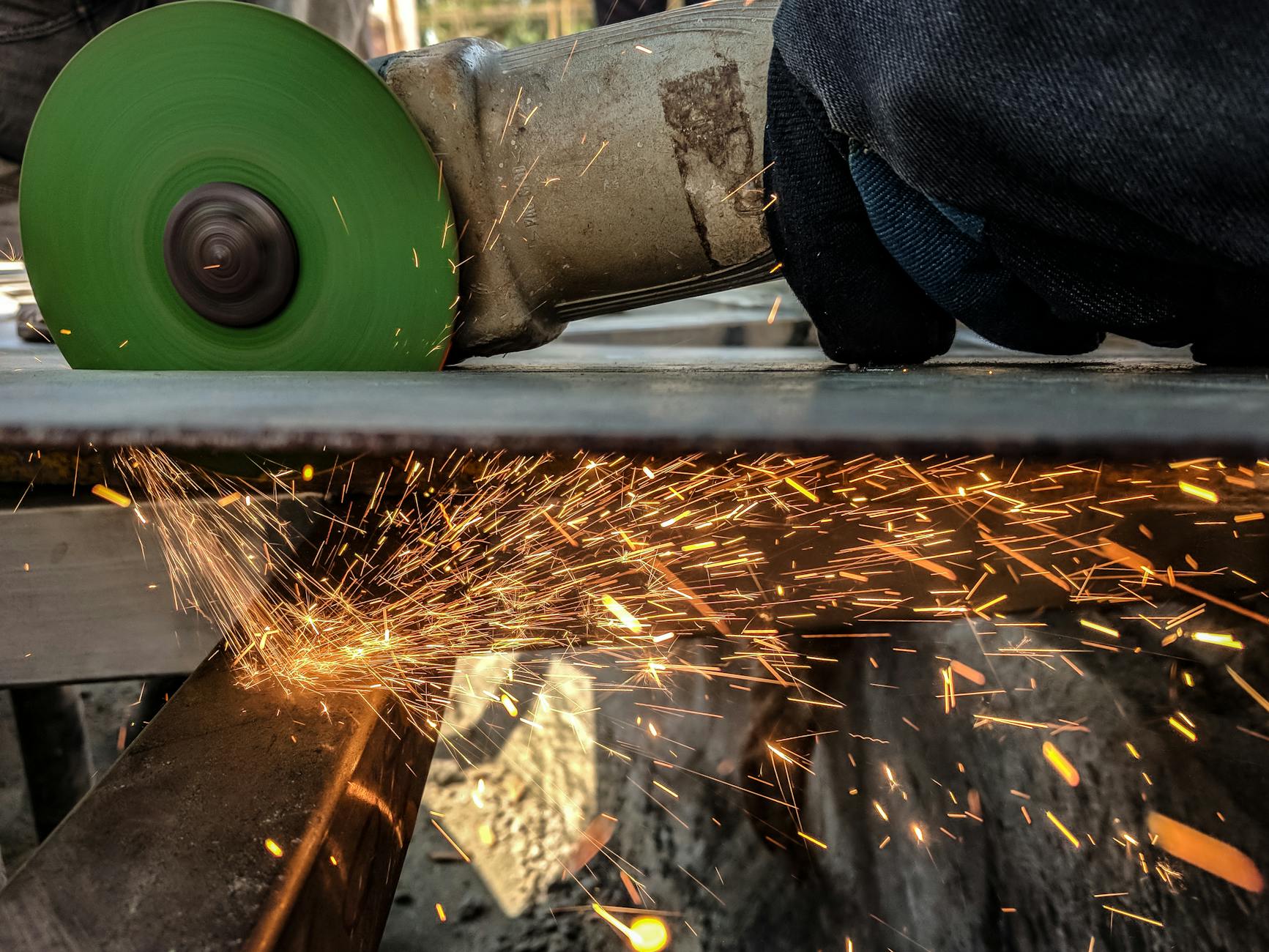
The roller door groans open before sunrise. Cold air rushes into the workshop, carrying the faint tang of iron dust left from yesterday. Boots scrape the concrete. A kettle hisses in the corner. Then, the first spark. Bright, hot, gone in a blink. And just like that, another day begins in the world of Industrial Steel Fabricators.
Most people never step inside. They see the end result: the bridge carrying trucks across a river, the warehouse stacked with goods, the stadium roof glowing under floodlights. But the hands that built those bones? They’re here, in places like this—where metal dust coats the air and steel beams wait like sleeping giants.
The Rhythm Of The Workshop
It looks chaotic at first. Sparks snapping like fireflies. Forklifts weaving between stacks of raw steel. A welder’s torch throws arcs of light that dance across the floor. But stay long enough and you’ll notice the rhythm.
Industrial Steel Fabricators don’t waste movement. Every cut has a purpose. Every weld follows a plan drawn weeks ago in an office far quieter than this. The clash of metal, the whir of machines—it’s a kind of music, rough but ordered. And in that noise, you find a strange calm.
Generations In The Craft
Ask around and you’ll hear stories. “My old man did this before me.” “Started as an apprentice at sixteen.” Fabrication runs in families. It’s a trade where skills pass hand to hand, across decades. Some of the older workers still trust their instincts more than the software. They’ll run a finger along a cut edge and know if it’s right.
But the younger crew? They’re fluent in CNC cutters, laser tech, and 3D models. For them, steel fabrication isn’t just about brute force—it’s about precision. And together, they blend the old with the new, keeping Industrial Steel Fabricators at the heart of Australia’s infrastructure.
Steel As Silent Art
Look closely at a truss before it’s hidden behind walls. The welds are smooth as glass. Angles sharp as origami. It’s easy to forget that someone stood here, helmet down, hands steady, coaxing molten metal into perfect lines.
Few fabricators would call themselves artists. But spend time in their world and you see it. Industrial Steel Fabricators don’t paint or sculpt, but they leave behind work just as lasting. Their art holds up towers. Their craft carries trains. And long after they’ve hung up their helmets, the steel still stands.
A Shift Toward Green
Here’s the twist. Among the grit and fire, something new is happening. Sustainability.
Not loud or flashy—no big speeches. Just quiet changes. Scrap sorted into recycling bins. Solar panels buzzing on the workshop roof. Machines calibrated to shave millimetres off waste. Industrial Steel Fabricators are finding ways to build strong while treading lighter.
It matters more than it seems. Steel is endlessly recyclable, which makes it one of the planet’s most resilient materials. A beam cut here today might reappear decades later in another form, another project. That loop—use, recycle, rebirth—isn’t just theory. It’s practice. And fabricators are the ones making it happen.
Why You Rarely Notice Them
Here’s the funny part: their work is everywhere, yet invisible. You drive over it, shop under it, cheer inside it. And you never think twice.
But without Industrial Steel Fabricators, the skyline would look very different. No high-rises. No refineries. No sprawling warehouses or massive stadiums. The invisible hands of fabrication hold up much of modern Australia.
And while the spotlight shines on architects, engineers, or politicians cutting ribbons, fabricators watch from the background. Proud, but quiet. Because for them, the real reward is simple: pointing to a structure and thinking, yeah, we built that.
The Road Ahead
The trade isn’t standing still. Robotics. Automation. Smarter design software. These are reshaping how workshops operate. Some worry about machines replacing people, but history shows otherwise—fabricators adapt. They’ve moved from hammers to plasma cutters, from guesswork to digital modelling. The sparks may change shape, but the human skill behind them remains.
And with Australia pushing harder into renewable energy and big infrastructure, the demand isn’t going away. Wind farms, solar plants, rail projects—all of it needs steel. All of it needs the people who know how to shape it.
Closing Sparks
If you ever get the chance, step into a workshop at dawn. Watch the first sparks light up the shadows. Smell the metal, hear the clatter, feel the hum under your boots.
That’s the heartbeat of Industrial Steel Fabricators from NewGen Steel. Rough, steady, unglamorous—but vital. They don’t just make steel structures. They make the invisible framework of our lives. Bridges that hold. Towers that stand. Futures that last.
And maybe that’s the quiet magic of it all. In a world where so much feels temporary, their work is anything but.




Leave a Reply