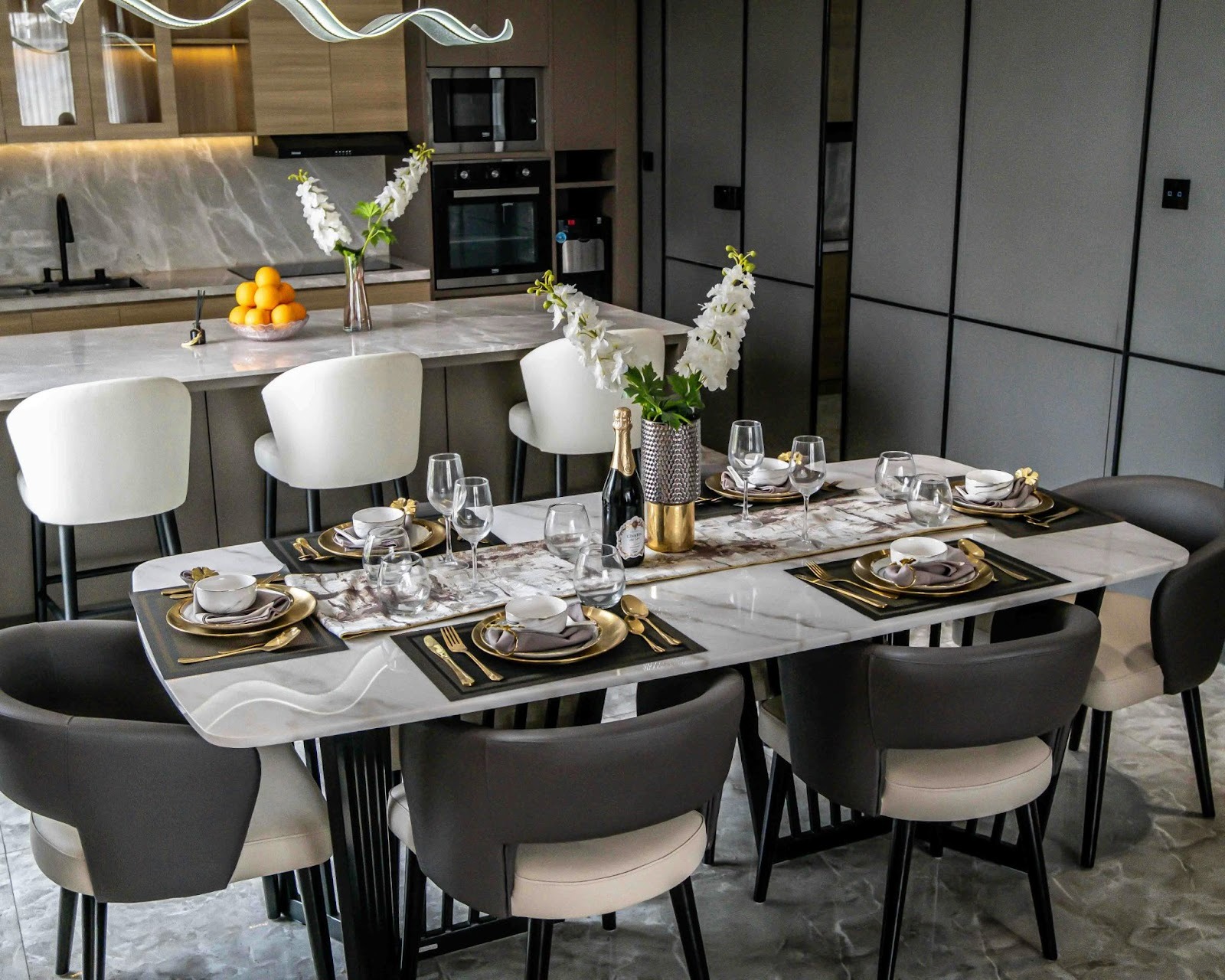
Creating a dining area that looks great and works well doesn’t have to be hard. It’s all about finding the right balance between style and function. Whether you have a big space or a small corner, smart choices can make your dining area both beautiful and practical. From picking the right furniture to using clever storage ideas, blending style and function can transform your mealtime experience. In this blog, we’ll share easy tips and creative ideas to help you design a dining space that feels inviting, organized, and ready for any occasion. Let’s dive in!
Functional Dining Room Design With Furniture That Works Harder
Every piece should justify its spot. That means tables that grow when guests arrive, seating that disappears when they leave, and storage that conceals the daily chaos.
Dining room furniture ideas for flexible seating (daily + guests)
Extendable tables and drop-leaf designs let you scale the surface up or down without stashing a second table in the garage. Bench seating works wonders along one side—especially when you need to pack in an extra kid or two—and stackable chairs that don’t scream folding furniture give you overflow capacity without clogging up corners.
Storage-forward pieces that reduce visual clutter
A sideboard beats a traditional china cabinet when you need drawers for napkins, chargers, and placemats. The closed storage first rule is straightforward: tuck the mess behind doors, display only your best pieces on open shelves. Dual-purpose finds—like a lift-top bench or a console with pull-out baskets—add serious function without eating extra square footage.
Small Dining Room Ideas That Create Space Without Remodeling
Tight quarters don’t automatically mean cramped vibes. A handful of layout shifts and clever picks can open up serious breathing room.
Buying guide: choosing dining room sets that match your space and habits
Start with a simple selection checklist: Does the table shape complement your room shape? Round tables ease navigation in tight corners; rectangles suit long walls. Count seats for daily use, not holiday gatherings. When you’re shopping for dining room sets, pay close attention to joinery quality (screws and dowels beat staples every time), finish durability (waterborne poly or sealed wood handles spills better), and whether the chairs actually feel comfortable after twenty minutes of sitting.
Mix-and-match combinations—say, a wood table paired with upholstered chairs—often look more curated than cookie-cutter bundles. Skip oversized tables that devour walkway space and trendy chairs that sacrifice comfort for social media appeal.Transition: Smart furniture solves half the puzzle, but if you’re managing limited square footage, a few strategic design moves can make your compact dining area feel twice as roomy.
Table shapes that visually open tight rooms
Round or pedestal tables eliminate sharp corners and free up legroom underneath. Oval tables bridge the gap between round and rectangular, softening circulation without sacrificing surface area. Square tables work great for two to four people and often include fold-out extensions for when you need extra seats.
Wall-friendly seating strategies for compact layouts
Banquettes reclaim precious inches by hugging one wall—or go with corner L-banquettes if your layout supports it. Armless chairs and open-back designs cut down on bulk, and a two chairs plus bench hybrid keeps your options flexible. You can tuck the bench under the table when it’s not in use, which visually clears the floor.
Vertical space upgrades (high impact, low footprint)
Floating shelves leverage wall height for both display and storage—think coffee mugs, glassware, or a compact bar setup. Wall sconces free up sideboard surface area, and a strategically placed mirror doubles natural light while tricking the eye into perceiving more square footage.
Transition: With your space optimized and furniture dialed in, it’s time to layer in personality without sacrificing the breathing room you just carved out.
Dining Room Decor Ideas That Add Style Without Adding Clutter
Decoration should support the room’s function, not sabotage it. A few intentional layers make a huge difference.
A layered focal point formula (lighting + art + centerpiece)
Pick one hero element—maybe a bold pendant light, a gallery wall, or an accent paint treatment—and keep everything else in a supporting role. Too many focal points create visual noise that clutters the space before you even set the table.
Texture stacking that looks designer (and feels warm)
Mix wood, metal, textile, and ceramic in small doses. A linen runner, brass candlesticks, a wooden bowl, and stoneware plates hit four textures without overwhelming the eye. Swap out napkins and candle colors seasonally to refresh the look on a shoestring budget.
Tabletop styling system that stays functional
Your everyday centerpiece should sit low enough not to block conversation, move easily when you need the full surface, and clean up fast. Keep a hosting-ready kit—extra napkins, placemats, candles, serving tools—tucked in the sideboard so you’re not scrambling at the last minute.
Lighting Plans That Shift From Weeknight Dinner to Hosting Mode
Lighting does more than brighten the room. It establishes mood, supports tasks, and adapts to whatever’s happening at the table.
Fixture selection based on table shape and ceiling height
Hang pendants 30 to 36 inches above the tabletop for standard eight-foot ceilings. Linear fixtures suit long rectangles; single statement pieces work over rounds. If your ceiling sits higher, drop the fixture a bit more to keep the light concentrated where you need it.
Layered lighting setup (best practice for mood + function)
Combine ambient light (dimmable overhead), task lighting (sconces or buffet lamps), and accent light (candles or LED strips). Warm bulbs (2700K to 3000K) feel cozy for meals; slightly cooler tones (3000K) work better for homework or work sessions. Dimmer switches let you dial in the right atmosphere for any occasion.
Materials and Finishes That Look Great and Survive Real Life
Durability counts when your dining table moonlights as a desk, craft station, and snack bar.
Kid- and pet-friendly surface choices
Solid wood with a sealed finish handles daily wear better than veneer. Sintered stone and quartz resist stains and scratches like champs. For chairs, performance fabrics and wipeable faux leathers outlast delicate linens, and they still look tailored.
Sound and comfort upgrades (often overlooked)
Hard floors and bare walls amplify noise. Add a thick rug pad under your area rug, hang curtains, or upholster a few seats to soften echoes. Comfort metrics—like seat height around 18 inches and a gentle chair-back angle—keep people at the table longer without fidgeting.
Your Top Questions About Dining Room Design Answered
Are round tables better than rectangular tables for conversation and tight spaces?
Round tables eliminate corners, improve flow in narrow rooms, and keep everyone equidistant. Rectangles offer more surface area for platters and paperwork, so pick based on daily habits.
How can I make my dining area look expensive on a budget?
Layer textures (linen, wood, metal, ceramic), invest in one statement light fixture, and add a large mirror. Cohesive color palette and clean lines beat pricey clutter every time.
Which dining room sets work best for open-concept living rooms and kitchens?
Choose sets with exposed legs and open backs so sightlines flow. Match wood tones or metal finishes to nearby furniture, and keep the palette neutral to unify the space.
Wrapping Up: Making Your Dining Area Work as Hard as You Do
A dining room that blends style and function isn’t about choosing between pretty and practical—it’s about finding pieces, layouts, and systems that deliver both. Start with how you actually use the space, measure twice before you buy, and layer in personality through lighting, texture, and one or two statement upgrades. Whether you’re hosting a crowd or just trying to clear the table for tomorrow’s video call, these strategies help you create a room that looks great and earns its keep every single day.



Leave a Reply