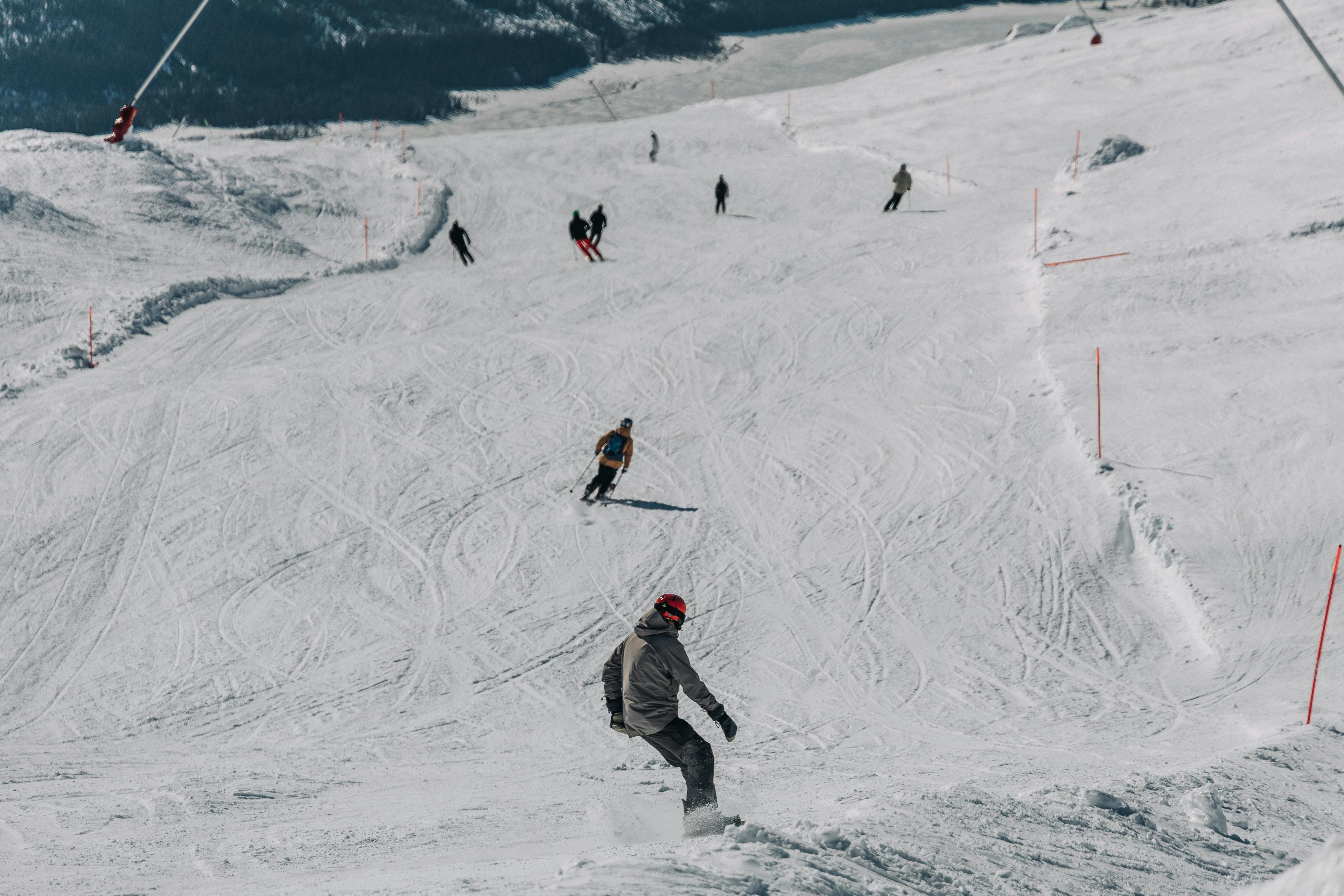
This relatively small Scandinavian country has once again confidently taken the lead in the Olympic medal standings, leaving everyone far behind at the 2026 Games in Milan and Cortina. We explain how the Norwegians manage to sweep away their competitors in winter sports.
Norway at the Winter Olympic Games
The Scandinavians burst onto the “white” Olympics from the very beginning with a serious declaration of intent. The debut Winter Games took place in 1924 in Chamonix, France, and the Norwegian team finished first in the medal count. Since then, they have participated in all 25 Winter Olympics, winning the medal standings 11 times, finishing second three times, and third twice.
Starting with the 2014 Games in Sochi, the Norwegians have consistently finished the Olympic tournament at the top of the medal table.
Norway leads in the total number of Winter Olympic medals. Before Milan and Cortina 2026, they were already the only country with a three-digit number of gold, silver, and bronze medals (148, 134, 123). In Italy, the Scandinavian team updated its own record for the number of gold medals (18), also taking home 12 silver and 11 bronze, for a total of 41 medals.
The second-place United States team has 33 podium finishes. At the same time, the American delegation at the 2026 Games was the largest — 235 athletes (including alternates). Canada sent 211 athletes to the Olympics, while the hosts were represented by 195 Olympians. Yet all these countries lost to the Norwegians, who had only 80 athletes in Milan and Cortina, and whose country’s population is just 5.7 million people.
Norwegian cross-country skier Johannes Klæbo could have had his own separate place in the overall standings. On the Olympic tracks in the Val di Fiemme valley, he won a record six gold medals. He has more victories alone than the entire Great Britain team has podiums (three gold, one silver, one bronze). The 29-year-old Klæbo added new gold medals to his previous five, becoming the most decorated Winter Olympian in history. In terms of gold medals, he is now surpassed only by legendary American swimmer Michael Phelps (13 in individual events, 10 in team relays).
Klæbo surpassed the previous record holders — who were also Norwegians. Before him, biathlete Ole Einar Bjørndalen had more Olympic victories, along with cross-country skiers Marit Bjørgen and Bjørn Dæhlie, who still lead Klæbo in total Olympic medals. Among the top five Winter Olympians, only one athlete is not from Norway — Dutch speed skater Ireen Wüst has 13 medals (six gold, five silver, two bronze).
Do you want to take a break from sports? Then here you go – https://lasatlantis.com/games/roulette Good roulette and other games are waiting for you
At the Milan and Cortina Games, the Scandinavians’ most medals came from cross-country skiing and biathlon — 14 and 11, respectively. They also won five medals in ski jumping, two each in alpine skiing and freestyle skiing, and achieved total dominance in Nordic combined — three golds out of three. The four medals in speed skating are an exception to the skiing disciplines. Norway did not win medals in other sports, but even this was enough for an overwhelming victory over their competitors.
A National Sport
The terrain and cold climate with frequent, heavy snowfall determine which type of activity people prefer. There is a popular saying: “Norwegians are born with skis on their feet.” The cult of skiing in the country is at an extreme level. There is even a Norwegian philosophy, Friluftsliv, which means “open-air living.” All Things Nordic writes that this explains the desire to spend weekends not in shopping malls but on skis — children learn to ski as early as they learn to read.
Funding
This focus on sport means its funding relies on state and public resources. A key role in this matter is played by the company Norsk Tipping — a state monopoly on gambling, which distributes approximately two-thirds of its profits between sports and public organizations. The most significant amounts — 64% — are allocated to sports. This financial model ensures stability, equal opportunities for the population, and investments in infrastructure across the country.
Accessibility and Continuity
Norwegians are not only willing to play sports because it’s customary; they can afford to. “We have a huge second-hand equipment market,” the head of the Norwegian delegation at the 2026 Olympics, Tore Øvrebø, explained to Reuters. “Many fairly good athletes use it when they are young.”
Norway would have enough money to develop even more expensive sports, but these people see no point in unnecessary spending. “We don’t do skeleton or bobsleigh because it’s too expensive. We are a very wealthy country, but we believe in a socialist approach. Success should be the result of hard work and unity,” Olympic equestrian athlete Morten Aasen was quoted as saying by The Guardian.
Infrastructure
Plenty of snow and a healthy atmosphere are not enough for results — success in elite sport is impossible without modern training facilities and a scientific approach.
After the home Olympics in 1994 in Lillehammer, Norway opened the national center Olympiatoppen. Its specialists are engaged in data collection and analysis, nutrition optimization, the study of movement biomechanics, sports physiology, and endurance science, as well as psychological preparation. The same Lillehammer recently saw the opening of the Olympic Heritage Sports Center, and another high-class facility exists at the Norwegian School of Sport Sciences in Oslo — and these are just a few of such venues.
Norwegians value their Olympic success and are afraid of losing it. Therefore, they work on innovations to ensure results.




Leave a Reply