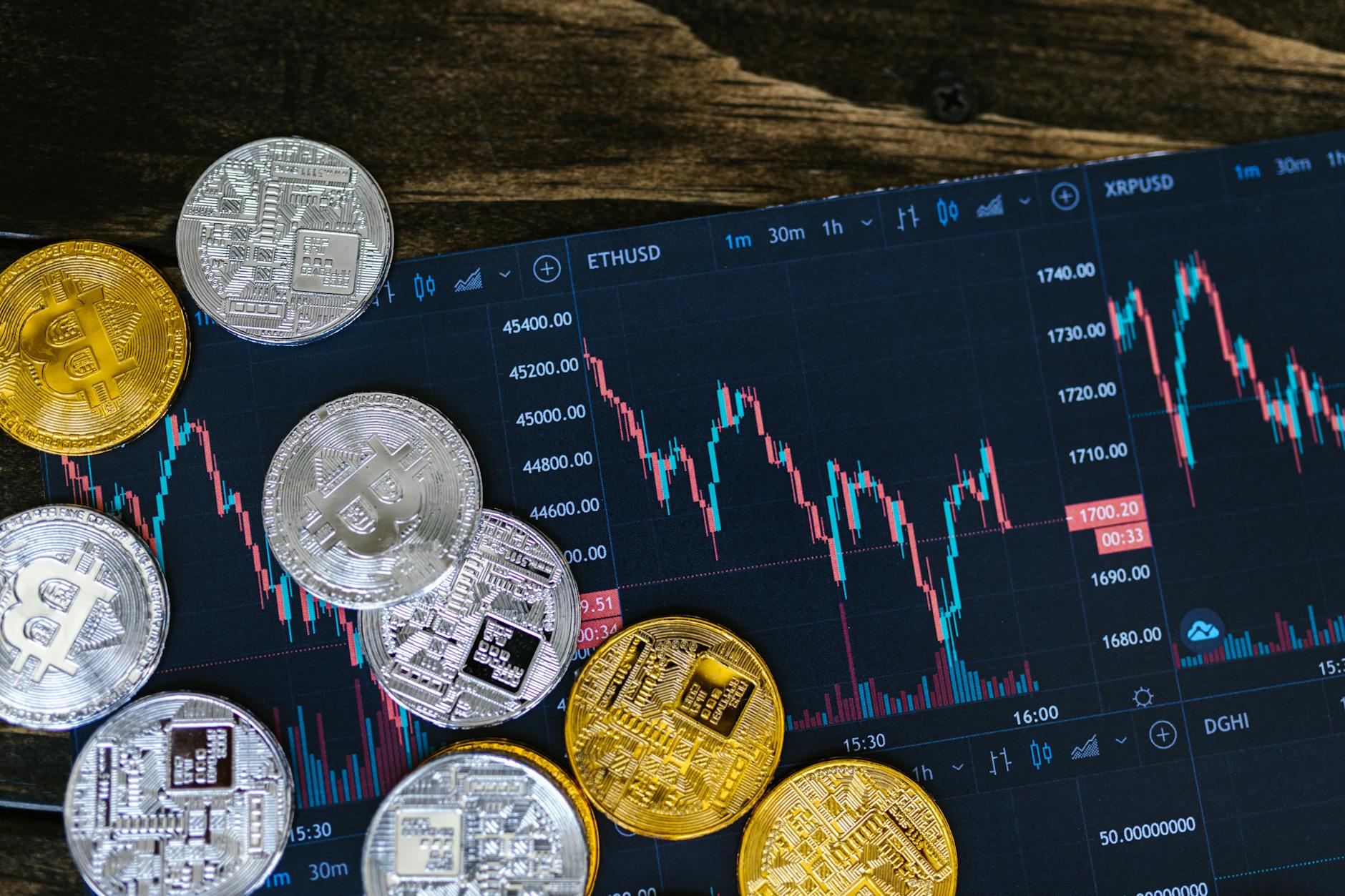
To compare market caps means to put side by side the total valuation of different cryptocurrencies and thereby ascertain how big each token’s ecosystem is relative to another. Market cap—short for market capitalization—is determined by multiplying the current price of the token by the number of tokens in circulation. By comparing market caps, you come to an understanding of what projects are more established, which still have upside potential, and which may be overpriced for themselves.
Why Comparing Market Caps Matters
Relative scaling counts: a token priced at $5 with a small supply is not “bigger” than a token priced at $0.10 with a high supply. Comparing market caps normalizes any such difference. Liquidity and stability: mostly, high market cap tokens experience huge trades and liquidity; hence, slippage and abrupt price oscillation get minimal growth potential: currency projects of relatively low market cap sometimes possess a larger progression volume but higher risk. Risk Benchmarking: comparison helps decide how much speculative or speculative relative value rests in a token.
The Components of Market Cap You Need to Know
Circulating supply: only tokens currently in active circulation matter for market cap—not total supply, including locked or reserved tokens. Price: detected as the current trading price of a token on exchanges or DEXs; price can fluctuate, thereby affecting market cap instantly. Tokenomics and supply unlocks: future supply unlocks or inflation can drastically modify the effective market cap over time.
Ways to Systematically Compare Market Capitalizations
Select similar projects or tokens (same sector, same use case) to make the comparison meaningful. Input market cap data for each token, with price and supply. Use scenario modeling to see what price a token would have to hit to match the market cap of a bigger token. Look at growth multipliers: if Token A has 10× upside to reach Token B’s cap but higher risk, the comparison gives perspective. Adjust for tokenomics: if one token has massive future unlocks, comparing raw market caps may be misleading.
Spotlight: How Cryptocalculator Space Helps in Comparing Market Cap Analysis
While Cryptocalculator Space is primarily a batch of calculator tools, it covers some auxiliary tasks necessary when comparing market cap. For example, it can deliver market cap ↔ price conversion calculators: you are asked to input a given market cap and circulating supply to see the price that would result, or vice versa. When comparing two tokens, Cryptocalculator Space can simulate what the price of each token would look like if it were to reach the market cap of the other. This allows disciplined “what if” price comparisons.
Step-By-Step: Using Compare Market Cap with Calculator Tools
Pick two tokens you want to compare: Token A (small cap) and Token B (mid cap). Look up their current price, circulating supply, and current market cap. Use the price-to-market-cap converter (like in Cryptocalculator Space) to check which price Token A should hit, should it match Token B’s market cap. Reverse: what market cap would Token B have if traded at the current price of Token A? Then factor in supply unlocks or inflation as an additional sensitivity test. Finally, compare the upside multipliers—how much your investment can grow if Token A achieves Token B’s valuation.
Case Example
Assuming Token A has a circulating supply capacity of 50 million tokens, it trades at $2, so its market cap is $100 million. Token B, on the other hand, has 500 million tokens in supply and trades at $0.50, so its market cap is $250 million. You compare market cap by asking: what if Token A matched Token B’s $250 million valuation? The price calculator reflects that Token A should trade at $5 (because in effect, 50M × $5 = $250M). Meanwhile, what if Token B actually rose up to Token A’s valuation? This would imply a price of $0.20 (because this ultimately means 500M × $0.20 = $100M). Thus, one sees that Token A has 2.5× upside to reach Token B’s cap as per current supply assumptions.
Interpreting Results Sensibly
If huge upsides come with multiplying factors, they do not assure success. Project risk, tokenomics, adoption, and execution are all at play in making Project X succeed. Lock-up schedules have to be taken into consideration: if many tokens are locked up and released on schedule, then matching market cap becomes much, much harder. Adjust comparisons according to sectors: infrastructure, DeFi, and memecoins are all different in risk profiles and valuation benchmarks. When on the conservative side, you would not consider the gadget to work in perfect conditions, with fees, and with full liquidity.
Pros and Cons of Comparing Market Cap as a Tool
Pros: Gives you a general relative valuation capture, helps you find undervalued projects, and normalizes price metrics. Limitations: Takes no consideration of utility, token usage, adoption, and technology. Variations of tokenomics or inflation always come this way and make pure market cap comparisons less effective. Real-day application, competition, regulation, and sentiment usually overpower raw numbers.
When Comparing Market Cap Can Deceive You
In one situation, when a token has a large locked supply that will soon be made available, future supply will inflate. In another scenario, one token’s use case or technology is far better, so the market might price that premium irrespective of market cap. In yet another, stale price or supply data is compared, which leads to false comparisons. Lastly, a comparison is done between tokens with two radically different use cases or two levels of progression (e.g., meme vs. infrastructure).
The Best Practices to Improve Your Compare Market Cap Analysis
Always verify up-to-date data: circulating supply, token price, unlock schedule. Use several comparison pairs and not just one to benchmark the token Scenario test varying assumptions (less growth, more growth, unlock events). Include qualitative factors: team, adoption, roadmap, and token utility. Use Cryptocalculator Space as a tool to view multiple hypothetical market cap conversions side by side.
How Comparing Market Cap Ties Into a Larger Strategy
One of the many steps in vetting new tokens or investment opportunities is to use comparison to filter opportunities: exclude tokens whose implied price to reach even moderate market caps would be unrealistic. Combine with other on‑chain metrics: active addresses, transaction volume, developer commits. After comparing, use exit or risk models—thirst for downside relative expectations—stop loss, profit targets—based. Use this to allocate capital: Give more weight to tokens whose compare multipliers seem justifiable rather than speculative.
Conclusion: The Power and Caveats of Comparing Market Cap
Comparing the market caps of different tokens is a powerful exercise in perspective, showing how tokens relate to each other in valuation, scale, risk, and upside potential. Performing the act mathematically through calculators or using tools like those in Cryptocalculator Space could bestow some needed discipline upon the intuitive comparison. Yet, while still a piece of the puzzle, comparisons must be accompanied by an analysis of tokenomics, technology, community, and execution. When done right, comparing market caps creates value opportunities, saves you from paying too much, and allows you to set expectations in an otherwise volatile market. Use comparing market cap as a tool, not a promise to be relied upon, and this will improve your decision-making capacity in the world of crypto.




Leave a Reply