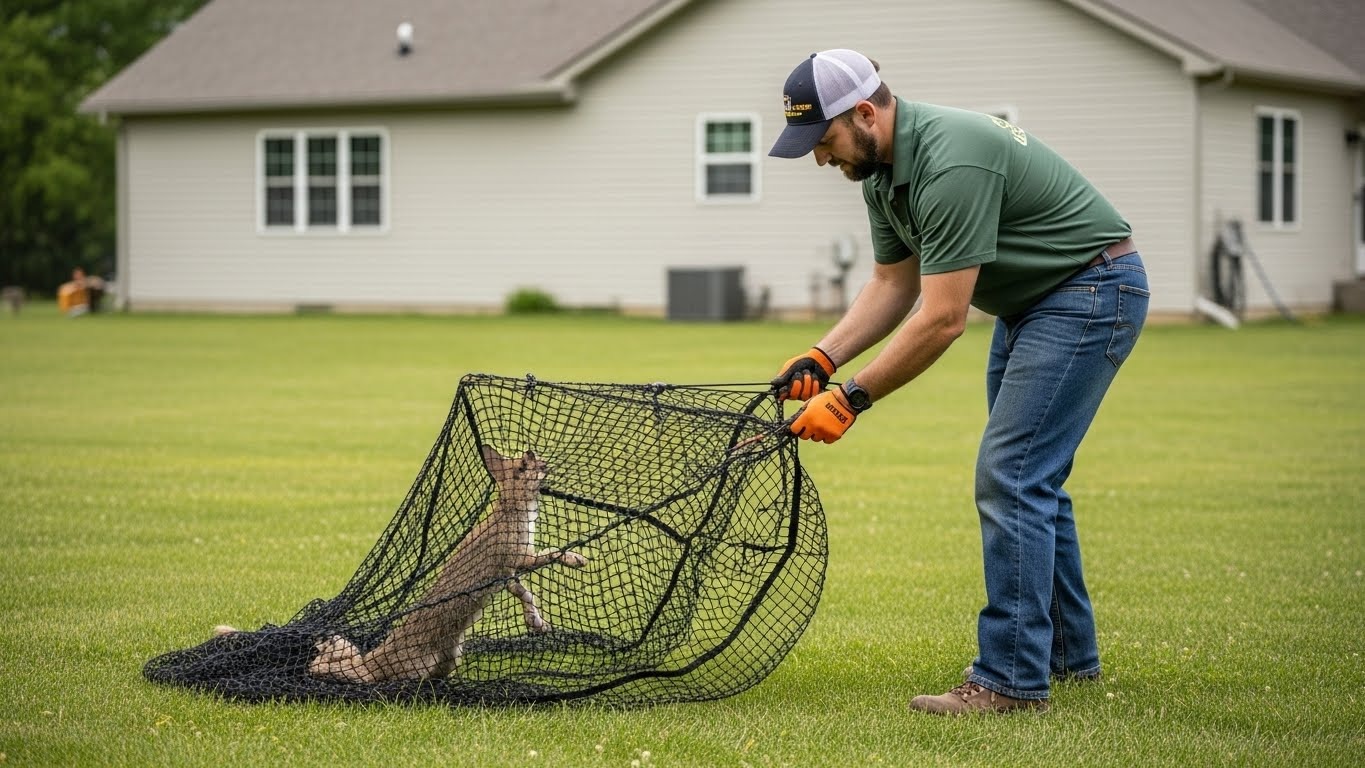
Dealing with uninvited wildlife guests can feel like a private siege on your property. Many Connecticut homeowners assume eviction is the hardest part, but the real challenge lies in prevention and compliance. In Connecticut, where the mix of dense suburban development and protected wilderness is unique, the true difficulty lies in identifying the animal, understanding local laws, and securing your home against a repeat intrusion.
The stakes are high. It’s not just about a noisy attic; it’s about structural damage, contaminated insulation, and the very real risk of diseases like rabies or leptospirosis being brought right to your doorstep. You need a strategy that moves beyond simple trapping and addresses the root cause of the infestation.

Why Is Connecticut Wildlife Removal More Complex?
Connecticut’s unique geography presents a specific set of problems that homeowners in wide-open rural states might never encounter. In this densely populated region, vast stretches of wooded land, marshes, and waterways create constant intersections between people and wildlife. Animals don’t just adapt, they thrive, turning garages, sheds, and attics into nesting sites. This proximity increases the risk of property damage and conflict, making professional wildlife removal in CT not just helpful but essential for protecting homes and families.
The animals themselves also play a part. Connecticut hosts resilient species like raccoons, gray squirrels, and bats that are highly intelligent and notoriously difficult to exclude once they’ve established a secure entry point. The challenge isn’t just wildlife presence; it’s the persistent, intelligent ways species exploit homes as long-term shelters.
How Do Homeowners Typically Misidentify Their Wildlife Problem?
The sounds and signs of an infestation can be misleading, leading to a wrong diagnosis and ineffective solution. Professionals analyze subtle evidence like droppings, damage type, and activity time to correctly identify the species. This forensic approach ensures the removal process is safe, legal, and truly effective:
Dropping Type Reveals the Intruder
The fecal matter an animal leaves behind is like a biological fingerprint. Mouse droppings are small and scattered, while raccoon droppings are larger, contain remnants, and are deposited in a communal latrine area. Identifying these differences is the first step toward confirming the species and determining appropriate clean-up protocols, especially due to health risks like raccoon roundworm.
Activity Time Narrows the Search
The timing of the noises is an immediate clue to the animal’s identity. Loud scurrying during the day usually indicates diurnal creatures, such as gray squirrels. Activity strictly starting at dusk suggests nocturnal animals like bats, raccoons, or flying squirrels. This pattern helps pinpoint entry points and set the most effective traps or exclusion devices.
Commonly Missed Entry Points
Animals exploit structural weaknesses that are often overlooked. Professionals focus on hard-to-reach areas like the intersection where the roof meets the fascia board, roof vents, uncapped chimneys, and small gaps where utility lines enter. A hole only slightly larger than a quarter is an open invitation for a rodent or a bat.
What Legal Hurdles Do Homeowners Unknowingly Face?
A major misconception many homeowners hold is that they can simply trap and relocate any wild animal. This is absolutely incorrect and, in many cases, illegal. Connecticut state law is very clear and strict about the trapping, handling, and relocation of specific species, often requiring special permits or banning relocation entirely. For example, moving a trapped animal from your property to a different location is often prohibited because it can spread diseases or simply turn a problem for one property owner into a problem for a neighboring town.
Furthermore, certain animals, like bats, are protected species. Removing them requires a very specific exclusion process during non-maternity seasons to avoid harming young pups. Attempting to manage these situations without understanding the law can result in fines and legal complications, not to mention a failed removal attempt.
Why Is Exclusion a Greater Challenge Than Removal?
The real victory in wildlife control isn’t the removal of a single animal; it’s ensuring that no other animal can ever take its place. This is the process of exclusion, and it’s the phase where most Do-It-Yourself efforts fail. A typical homeowner might use wire mesh, but a persistent raccoon can unbend it, or a rodent can simply chew through it if it’s the wrong gauge. The challenge is in using industrial-grade materials and installation techniques that animals cannot defeat.
The key is treating the structure like a fortress. You must use materials like heavy-gauge steel mesh and cement-based fillers that an animal’s teeth cannot penetrate. Moreover, you have to find and seal every single potential entry point, which can be dozens in an older home. Failing to seal a single vent or pipe gap means the problem will immediately return.

When Does a Wildlife Infestation Become a Health Hazard?
An infestation moves beyond a nuisance when it compromises the air quality and sanitation of your home. Animals often leave behind large amounts of urine and droppings that contaminate insulation in attics and walls. This not only causes pungent odors but also fosters the growth of mold and mildew, while the waste itself can harbor various bacteria and parasites. Raccoon latrines, for example, are a primary source of roundworm eggs, which can pose a severe health risk if inhaled or accidentally ingested.
Furthermore, nesting materials, shed fur, and debris can become a breeding ground for fleas, ticks, and mites, introducing a secondary pest problem into the living space. Proper remediation isn’t just scooping out the soiled insulation; it involves safely decontaminating the area, sanitizing surfaces with enzyme-based cleaners, and replacing all contaminated materials to restore a healthy environment.
What Is the Most Common Misconception About Wildlife Control?
Relocating wildlife may seem humane, but it rarely solves the problem. Trapped raccoons or squirrels released miles away often die in unfamiliar territory, and if separated from their young, the remaining animals perish inside walls or attics, leaving odor and health hazards. Effective, ethical, and legal wildlife removal relies on exclusion, not relocation.
Licensed professionals may capture and release on-site, where permitted, or humanely euthanize sick or destructive animals. The true solution is to prevent sealing entry points so your home becomes impenetrable and wildlife seeks shelter elsewhere.
Frequently Asked Questions
Why Should You Never Use Poison for Rodents or Other Wildlife?
Using poison risks the animal dying inside your walls, leading to terrible odors and requiring expensive removal. Also, a poisoned animal can cause secondary poisoning if eaten by a pet or other wildlife, creating a wider ecological and safety issue.
Is All Insulation Contaminated After a Wildlife Infestation?
Yes, if animals have been nesting there, a significant amount of insulation is compromised. Urine and feces destroy the material’s insulating capacity and create a severe biohazard. Complete removal of all soiled material and replacement is necessary for sanitation.
How Can Homeowners Prevent Squirrels from Chewing Electrical Wires?
Squirrels chew to keep their teeth filed, making wiring a target and a fire hazard. After excluding them, seal all entry points with metal or mesh. Applying a professionally formulated, non-toxic rodent deterrent to attic wiring can discourage chewing while maintaining safety.




Leave a Reply