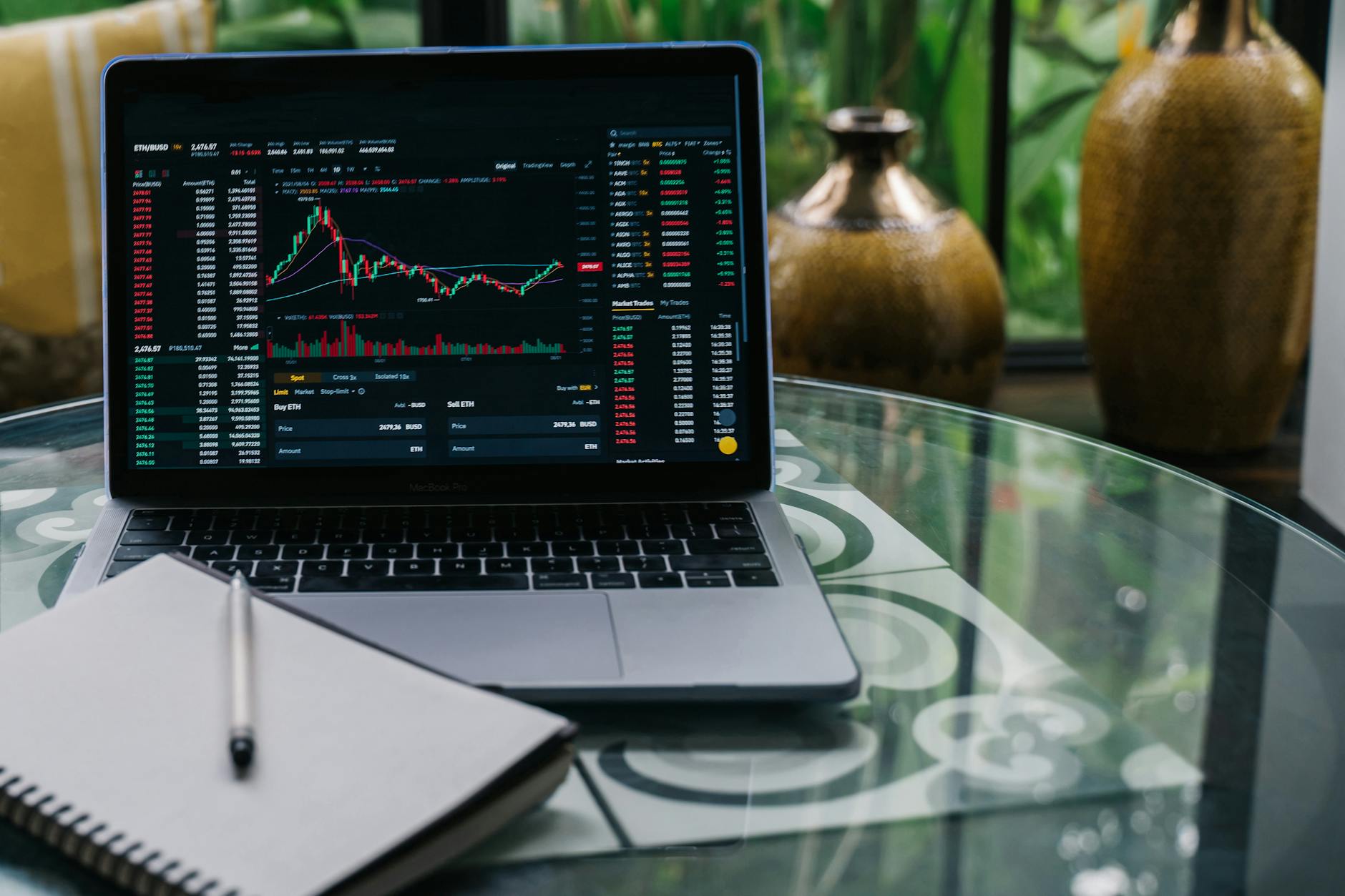
How crypto exchanges, trading pairs, order types, fees, and liquidity work for beginners
Last reviewed: August 2026
Crypto trading basics for beginners start with understanding how cash or one digital asset is exchanged for another through a trading platform. The transaction may look simple, but its completed price can be affected by the order type, available liquidity, platform fees, and market movement.
Beginners often encounter candlestick charts and technical indicators before anyone explains what happens when they press the buy or sell button. CryptoVantage approaches the subject from the opposite direction. Its educational guides begin with the transaction itself: how an exchange works, what a trading pair represents, how market and limit orders differ, and which costs can appear between depositing money and withdrawing cryptocurrency.
This foundation matters as cryptocurrency’s expanding role in investing brings more people into digital-asset markets. Broader adoption does not remove volatility or make every asset appropriate for every trader.
Buying, Investing and Trading Are Different Activities
Buying cryptocurrency means acquiring a digital asset with cash or another cryptocurrency. Someone can purchase Bitcoin once, move it to a wallet, and hold it without becoming an active trader.
Investing normally involves holding an asset according to a longer-term objective or thesis. An investor may accept short-term price changes while focusing on adoption, supply, network use, or another fundamental consideration.
Trading involves entering and exiting positions in response to market conditions. A trader might hold an asset for minutes, days, weeks, or months, depending on the strategy.
Cryptocurrency can also be purchased for practical use. Someone may acquire ETH to pay fees on the Ethereum network or obtain a stablecoin for transferring dollar-linked value. In these cases, the asset is being used rather than held solely for price appreciation.
Understanding the intended activity helps determine which platform, trading pair, order type, and storage method may be suitable.
What Beginners Need Before Their First Trade
A new trader generally needs an exchange operating in the relevant jurisdiction, a funding method, and identity documents when verification is required. Most centralized platforms also require an email address, phone number, and secure account credentials.
Security should be established before funds are deposited. That means using a unique password, enabling authenticator-based two-factor authentication, and storing backup codes securely. If an exchange offers withdrawal allowlisting, customers can restrict transfers to previously approved wallet addresses.
A trading budget should also be set in advance. Cryptocurrency prices can change rapidly, and deciding on a limit before opening the trading interface may reduce impulsive decisions.
New York residents should verify that a cryptocurrency platform and its specific services are available in the state before registering. A company operating elsewhere in the United States may not necessarily offer identical products to New York customers. Availability can also differ across Canada, the UK, Australia, and other markets.
How Crypto Trading Works Step by Step
A basic spot trade can be divided into ten stages.
1. Choose an Available Exchange
Confirm that the platform serves the user’s state or country. Compare supported cryptocurrencies, payment methods, fees, withdrawals, and security controls.
2. Complete Identity Verification
Centralized exchanges commonly require customers to provide personal information and identity documents. The exact requirements and processing times depend on the service and jurisdiction.
3. Secure the Account
Before depositing money, create a unique password and enable authenticator-based two-factor authentication. Store recovery codes somewhere secure and separate from the account password.
4. Deposit Funds
Funding methods may include bank transfers, cards, or cryptocurrency deposits. Speed, fees, and withdrawal holds vary between methods.
5. Select a Trading Pair
Choose the market connecting the two assets being exchanged, such as BTC/USD or ETH/USD.
6. Choose an Order Type
A market order prioritizes immediate execution. A limit order prioritizes price control but may not execute.
7. Review the Costs
Check the trading fee, quoted spread, and estimated amount of cryptocurrency the account will receive.
8. Confirm the Trade
Review the pair, order type, amount, and estimated cost before submitting the transaction.
9. Decide Where the Asset Will Be Held
The cryptocurrency can remain on the exchange for further trading or be withdrawn to a compatible personal wallet.
10. Record the Transaction
Retain the date, amount, price, fees, and transaction information for portfolio and tax records.
New users who want a more detailed account-creation walkthrough can follow CryptoVantage’s beginner guide to opening a crypto exchange account, which explains exchange selection, identity verification, account security, deposits and initial purchases.
How Cryptocurrency Exchanges Differ
A centralized exchange provides a marketplace or purchase service through which customers can exchange cash and digital assets. The interface and available features differ substantially between companies.
| Platform | Beginner interface | Advanced interface | Relevant distinction |
| Coinbase | Simplified purchases | Coinbase Advanced | Users should compare spreads and advanced trading fees |
| Kraken | Instant Buy | Kraken Pro | Offers separate experiences for direct purchases and order-book trading |
| Robinhood | Brokerage-style interface | Features vary by product | External-transfer support should be confirmed by asset |
| Crypto.com | Mobile application | Exchange access varies by region | Combines trading, wallet and payment-related services |
Coinbase is a publicly traded US cryptocurrency company offering retail purchases, custody, and advanced trading tools. Its simplified purchasing process and Coinbase Advanced provide different experiences, so users should compare how each presents prices and costs.
Kraken offers instant purchasing and Kraken Pro trading tools. Available cryptocurrencies, funding methods, and services depend on the customer’s jurisdiction.
Robinhood provides supported cryptocurrency trading through a brokerage-style interface alongside stocks and other investments. Customers intending to use personal wallets should verify whether deposits and withdrawals are supported for the specific asset.
Crypto.com combines trading with wallet and payment-related features through its wider application ecosystem. Access to individual services differs between markets.
Some platforms add cards, wallets, and fiat-conversion services to the trading experience. A comparison of crypto exchange apps with card and wallet features shows how these functions can be combined, although availability and usefulness depend on location.
Understanding Cryptocurrency Trading Pairs
A trading pair shows which two assets are being exchanged.
In BTC/USD, Bitcoin is traded against US dollars. BTC is the base asset, and USD is the quote asset. If the pair displays a price of $100,000, the market is valuing one Bitcoin at $100,000.
ETH/USD performs the same function for Ether and US dollars. ETH/BTC compares Ether directly with Bitcoin instead of a national currency. BTC/USDT uses Tether’s dollar-linked stablecoin as the quote asset.
A trader should check the entire pair before placing an order. Buying BTC/USDT normally requires a USDT balance or another asset that the platform can convert. Buying BTC/USD usually uses US dollars.
Similar trading pairs do not necessarily have the same liquidity, fees, or withdrawal options. Stablecoin pairs introduce additional considerations involving the issuer and the blockchain network on which the stablecoin operates.
Market Orders vs Limit Orders
Market and limit orders are two of the most important concepts for a beginner to understand.
| Order type | What it does | Main advantage | Main limitation |
| Market order | Executes against the best available prices | Speed and simplicity | The completed price may differ from the quote |
| Limit order | Executes only at the selected price or better | Greater price control | The order may not execute |
| Stop order | Activates after a trigger price is reached | Can automate part of an exit plan | Execution may differ from the trigger price |
Suppose Bitcoin is trading near $100,000. A market order attempts to buy immediately using the available sell orders. A limit order at $98,000 waits until sellers are willing to trade at that price or lower.
A limit order can remain unfilled if the market never reaches the selected level. It may also fill only partially when insufficient cryptocurrency is available at that price.
A stop order activates when a trigger is reached. It can support a predefined plan, but it cannot guarantee an exact execution price during a rapid or illiquid market.
How One Market Order Can Use Several Prices
The “best available price” may apply to only part of a larger order.
Consider this simplified Bitcoin order book:
| Available seller | Bitcoin offered | Asking price |
| Seller 1 | 0.02 BTC | $100,000 |
| Seller 2 | 0.03 BTC | $100,100 |
| Seller 3 | 0.05 BTC | $100,250 |
A market order for 0.01 BTC could be completed entirely against Seller 1 at approximately $100,000 per Bitcoin.
A market order for 0.10 BTC would need to use all three available sell orders. The completed trade would therefore have an average price above the first displayed quote.
This movement through several price levels is one way slippage can occur. The effect is normally more noticeable when an order is large relative to the available liquidity.
Spot Trading and Advanced Products
Spot trading involves buying or selling the underlying cryptocurrency for relatively immediate settlement. When someone purchases Bitcoin through a standard spot market, the exchange credits the corresponding BTC to the account.
This differs from margin trading and derivatives.
Margin trading involves borrowing funds to increase the size of a position. Futures and perpetual contracts allow traders to speculate on price changes without necessarily buying the underlying cryptocurrency in the same manner as a spot trade. Options create contractual rights connected to future prices.
These products introduce additional terminology, fees, and risks. Leverage can amplify gains, but it can also accelerate losses and lead to liquidation when the position no longer meets the platform’s collateral requirements.
Beginners should understand spot transactions, order execution and custody before considering borrowed money or derivatives. Access to advanced products also depends on jurisdiction and customer eligibility.
Fees, Spreads and Slippage
The displayed market price is not always the final price a trader receives.
A trading fee is a direct charge imposed by the platform. Some exchanges use different maker and taker fees depending on whether an order adds liquidity or executes against an existing order.
A spread is the difference between available buying and selling prices. Simplified purchasing interfaces may include a spread in the quote even when the service advertises low or no commissions.
Slippage is the difference between the expected price and the completed execution price. It can occur when the market changes quickly or when an order is large relative to available liquidity.
Funding can produce additional expenses. Bank transfers may cost less than card purchases, while cards can provide faster access. Withdrawing cryptocurrency can create both a platform charge and a blockchain-network fee.
A service described as commission-free may still earn money through spreads or other charges. Users should compare the amount paid with the cryptocurrency they will receive rather than evaluating one advertised fee in isolation.
A Simplified $500 Trade Example
Consider a hypothetical user who deposits $500 and places a Bitcoin market order.
| Transaction component | Hypothetical amount |
| Starting balance | $500 |
| Platform fee | $5 |
| Difference caused by spread or slippage | $2 |
| Approximate value entering the position | $493 |
This example is simplified. Actual platforms calculate and present fees differently, and market movement can change the result between quotation and execution.
If the trader later withdraws the Bitcoin, another platform or network fee may apply. If the asset is sold, the selling transaction can create another trading cost or spread.
The example shows why “I bought $500 of Bitcoin” does not always mean the resulting position began with exactly $500 of market value.
Why Liquidity Matters
Liquidity describes how easily an asset can be traded without substantially changing its price.
Bitcoin and Ethereum markets on major exchanges generally attract more activity than small tokens listed on only one or two platforms. More active markets often have narrower bid-ask spreads and greater order-book depth.
Reported trading volume does not always reveal how much can be bought or sold near the displayed price. Traders should also examine the available orders and the difference between the best bid and ask.
A $100 market order may execute with little noticeable slippage. A $10,000 transaction in the same thin market could move through several price levels and produce a less favorable average.
Liquidity also differs between exchanges and trading pairs. A cryptocurrency may trade actively against USDT on one service but have limited activity against US dollars elsewhere.
Exchange Custody and Personal Wallets
Active traders often leave cryptocurrency on an exchange so it remains available for future orders. This is convenient, but it creates dependence on the platform’s security and withdrawal systems.
Coinbase and Kraken custody assets held in standard exchange accounts. Customers access those holdings through their accounts rather than controlling the private keys directly.
Software wallets such as MetaMask and Exodus offer users more direct control. MetaMask is commonly used with Ethereum and compatible networks, while Exodus supports multiple assets through mobile and desktop applications.
Ledger and Trezor produce hardware wallets designed to isolate private keys from ordinary internet-connected environments. Hardware storage may suit some longer-term holders, but it creates additional responsibility for setup, backup, and recovery.
Self-custody is not automatically the right choice for every beginner. It reduces exchange exposure while transferring responsibility to the user. A trading balance and a long-term holding may therefore require different storage decisions.
Crypto Markets Operate Around the Clock
Cryptocurrency markets generally operate 24 hours a day, including weekends and holidays. There is no universal closing bell comparable to a traditional stock-market session.
Constant availability does not mean liquidity remains consistent. Trading activity can change by time, region, asset, and platform. Prices can move while a trader is asleep or away from the screen.
This creates practical pressure. A beginner may feel compelled to monitor every price movement or respond to every alert.
Defined budgets, review schedules, and order rules can reduce that pressure. Trading more frequently does not necessarily improve results, and uninterrupted access can make emotional decisions easier.
Common Beginner Crypto Trading Mistakes
Confusing Market and Limit Orders
A market order prioritizes execution, while a limit order prioritizes price. Selecting the wrong one can produce an unexpected result or leave an order unfilled.
Ignoring the Spread
A platform may advertise low commissions while using a spread between its buying and selling prices. Traders should review the complete quote.
Trading an Illiquid Pair
Thin order books can produce wider spreads and greater slippage, especially for larger transactions.
Using Leverage Too Early
Borrowed funds amplify exposure. A relatively small price movement can create a significant loss or liquidation.
Choosing the Wrong Blockchain Network
Cryptocurrencies and stablecoins may operate across multiple networks. A withdrawal network must be compatible with the receiving wallet.
Keeping More on an Exchange Than Intended
Assets left on an exchange remain exposed to that platform’s security, operations, and withdrawal systems.
Trading From Social-Media Tips
Influencer posts, private messages and online communities can promote assets without explaining compensation, liquidity or token distribution.
Chasing Losses
Increasing the size or frequency of trades after a loss can replace a defined plan with an emotional response.
Failing to Retain Records
Trading, selling, and exchanging cryptocurrency may create tax or reporting obligations. Accurate records should begin with the first transaction.
Assuming a Stop Order Guarantees a Price
A stop order triggers when a threshold is reached. The completed execution can occur at a different price during fast or illiquid conditions.
Basic Risk Controls Before Trading
No strategy removes market risk, but traders can control the amount of exposure they accept.
A modest first trade provides an opportunity to learn how deposits, orders, fees, and withdrawals work without committing a large amount. Borrowing money to trade creates additional pressure and can turn a market loss into debt.
Authenticator-based two-factor authentication, unique passwords, and withdrawal controls can reduce unauthorized account access. Wallet addresses and networks should be checked carefully because cryptocurrency transfers are generally difficult to reverse.
The SEC’s Office of Investor Education and Advocacy advises investors to exercise caution with crypto-asset securities, citing risks including volatility, illiquidity, fraud and the possible absence of familiar protections.
FINRA’s explanation of crypto-asset risks also highlights concerns involving theft, limited recovery options, and substantial price changes.
A correctly executed trade can still lose value. Understanding the transaction reduces avoidable mistakes but does not determine the direction of the market.
How CryptoVantage Removes the Technical Overload
CryptoVantage organizes beginner education around the decisions users encounter in practice.
Its coverage explains how exchange accounts are created, how platforms differ, which payment methods are available, and how wallet custody works. Other resources address individual cryptocurrencies, fees, liquidity, and trading terminology.
This structure lets readers follow a sequence rather than collect disconnected definitions. A beginner can learn how to select and secure an exchange, fund an account, interpret a trading pair, place an order, and decide where the resulting cryptocurrency will be stored.
Named writers, review dates, and affiliate disclosures provide additional context about who produced the content and how the publication may be compensated.
CryptoVantage does not operate as a trading-signal service or promise profitable outcomes. Its role is to make the mechanics easier to understand so readers can conduct additional research and make independent decisions.
Crypto Trading Basics Checklist
Before placing a cryptocurrency trade, ask:
- Is the exchange available in the trader’s jurisdiction?
- Which assets and trading pairs are supported?
- Is the transaction a spot trade or derivative?
- What does the selected order type do?
- Which trading fee applies?
- Is a spread included in the quote?
- Could low liquidity create slippage?
- Can the cryptocurrency be withdrawn?
- Which blockchain network must be selected?
- Where will the asset be stored?
- How much can the trader afford to lose?
- Are transaction and tax records being retained?
- Is the decision based on research rather than urgency?
Frequently Asked Questions
How does crypto trading work?
Crypto trading involves exchanging cash or one digital asset for another through a platform. The trader selects a pair, order type, and amount. The completed transaction depends on available prices, liquidity, and applicable fees.
What type of crypto trade is most understandable for beginners?
Spot trading is generally easier to understand than margin trading or derivatives because it involves purchasing or selling the underlying cryptocurrency. It still carries volatility, custody, and execution risks.
What is a crypto trading pair?
A trading pair identifies the two assets being exchanged. In BTC/USD, Bitcoin is the base asset and the US dollar is the quote asset. The displayed price shows how much USD is required for one BTC.
What is the difference between a market and limit order?
A market order attempts to execute immediately at available prices. A limit order executes only at the trader’s selected price or better. Market orders prioritize speed, while limit orders provide more price control.
What is spot crypto trading?
Spot trading involves buying or selling the underlying cryptocurrency for relatively immediate settlement. It differs from derivatives, which provide exposure through contracts rather than the same type of direct spot transaction.
What is slippage in cryptocurrency trading?
Slippage is the difference between the expected execution price and the completed price. It can occur when prices change quickly or when an order moves through several levels of a thin order book.
Why does crypto liquidity matter?
Liquidity affects how easily an asset can be traded near the displayed price. Low liquidity can create wider spreads, greater slippage, and difficulty exiting a position.
Does cryptocurrency trade 24 hours a day?
Cryptocurrency markets generally operate continuously, including weekends and holidays. However, liquidity and trading activity can vary by platform, asset, region and time of day.
What fees do cryptocurrency exchanges charge?
Possible costs include trading fees, instant-purchase charges, spreads, card-processing fees, currency-conversion costs, and withdrawal fees. Blockchain-network fees may also apply when assets are transferred.
Can a stop-loss order guarantee a selling price?
No. A stop order activates after a trigger is reached, but the completed trade can occur at a different price when markets move quickly or lack sufficient liquidity.
Is cryptocurrency trading available in New York?
Cryptocurrency services are available in New York, but not every platform or product offered elsewhere is available to state residents. Users should verify current eligibility and service availability before registering or depositing funds.
Learn the Transaction Before Trying to Read the Market
Beginners do not need to understand every chart pattern or technical indicator before learning the fundamentals of crypto trading. They should understand how an exchange works, what their order will do, and which fees can affect the completed transaction.
Liquidity, custody, and account security are as important as the displayed market price. Traders should also establish a budget and recognize that even a correctly executed order can lose value.
CryptoVantage makes these concepts easier to approach by connecting terminology with the actions users take on real platforms. Learning those mechanics cannot guarantee a profit, but it can prevent technical overload from becoming an avoidable source of risk.
About the Author
CryptoVantage is a cryptocurrency publication providing educational guides, news, analysis, and reviews covering Bitcoin, blockchain, exchanges, wallets, fintech, and digital assets. Its team of writers, researchers, and cryptocurrency specialists creates accessible content for both newcomers and experienced crypto users, helping readers better understand the rapidly evolving digital-asset industry.




Leave a Reply